
Have you ever wondered how much a dental appointment costs in Japan? Is it really as expensive as some travelers say? And does Japanese health insurance actually cover dental work? In this article we walk through typical prices for dentists in Japan, how the point-based billing system works, and what you should know before booking a visit.

Quick note: the prices below come from multiple sources and are meant as a rough guide for 2026. Actual costs vary by clinic, region and treatment. For a binding quote, ask the clinic directly or check with your insurer.
Contents 12
A quick overview of dental care in Japan
You may have heard that people in Japan have poor oral health and rarely wear braces because dental treatment is too expensive. That is only half true. There is a popular saying that Japan has more dental clinics than convenience stores. That is an exaggeration, but it does highlight how common dentists are in everyday life and how many of them offer fairly affordable treatment.
Cultural factors do play a role in oral health, though. Fluoride levels in tap water and many commercial toothpastes in Japan are low (more on that in our piece on fluoride in Japan), and a demanding work culture means preventive check-ups are not always a priority. These are broad trends, not a verdict on 124 million people: real outcomes vary a lot between major cities, suburbs and rural areas.
Are dentists in Japan really expensive?
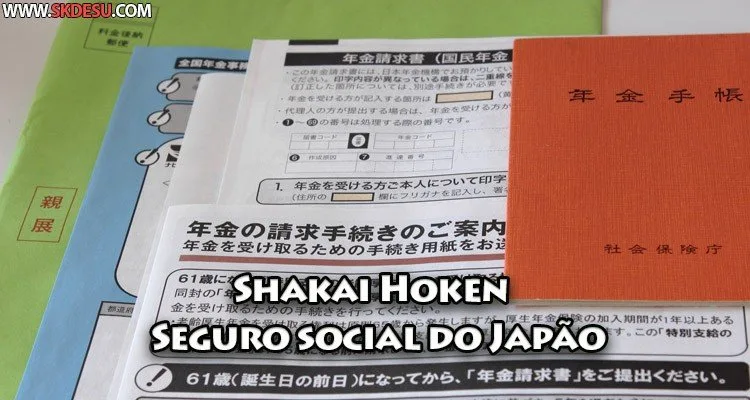
Another common myth is that Japanese health insurance does not cover dental work. It does. The shakai hoken (社会保険) and kokumin kenko hoken (国民健康保険) usually cover around 70 percent of standard dental treatments, depending on age and procedure. With the 30 percent co-pay, a routine visit stays relatively affordable for most insured residents.
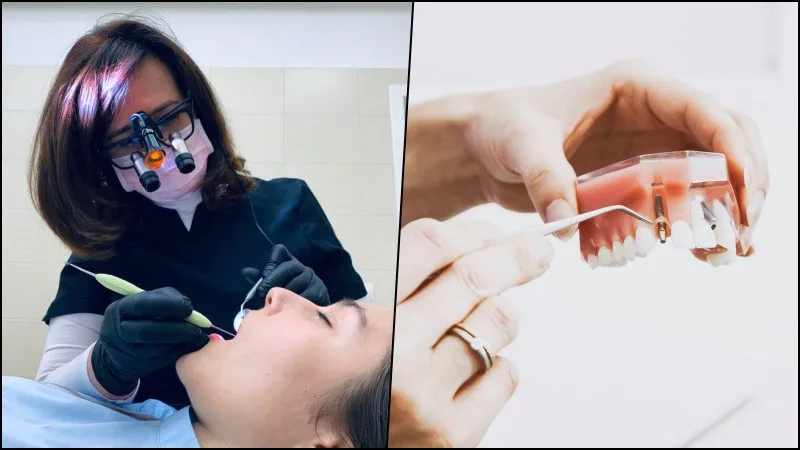
Most clinics in Japan accept public insurance, and only a small number work on a fully private basis. Cosmetic treatments, however, are usually not covered: this includes orthodontics (braces), whitening, and premium materials such as ceramic or gold crowns. If you pick those, you pay the difference between the standard and the premium option yourself.
Compared with countries that barely cover dental care at all, Japan looks fairly reasonable for insured patients. The flip side is clear too: if you are uninsured, dental bills in Japan can climb quickly.
What does Japanese health insurance cover at the dentist?
Standard treatments covered by shakai hoken include check-ups, X-rays, basic fillings (resin), tooth extractions, root canal treatment, gum disease therapy, and plastic dentures. Treatments usually not covered include orthodontics, whitening, gold or ceramic inlays, dental implants, and high-end prosthetics.
Teeth cleaning sits in a gray zone. If the cleaning is medically necessary to treat or prevent a diagnosed condition, it is typically covered. A purely cosmetic polish is usually out of pocket. Always confirm with the clinic whether the planned cleaning is billed as hoken tekiyō (保険適用) or jiyū shinryō (自由診療) before you sit down.
How billing works at a Japanese dental clinic
Unlike clinics that quote a flat fee, Japan uses a point system to calculate dental costs. Every step, material and technique generates a number of points, which is then converted into yen. For you, the practical effect is simple: the first consultation without insurance can run between 2,300 and 5,000 yen, while the same visit with insurance often comes in under 1,000 yen.
Two practical takeaways: book sooner rather than later, because earlier-stage problems score fewer points and cost less; and always ask whether the estimate is the insured or the private rate, since the difference can be 30 to 50 percent.
Booking a dental visit in Japan
Some clinics and hospitals in Japan accept walk-ins, but booking ahead is a good idea, especially in busy districts of Tokyo, Osaka or Kyoto, where walk-in waits can stretch to several hours. You can book online, by phone, or in person at the reception desk.
There are dentists in Japan who speak English, Portuguese or other languages, mostly in neighborhoods with many foreign residents. They sometimes charge a little more, but for complex procedures such as implants or root canals, being able to explain your symptoms clearly is worth the premium.
On your first visit, bring your insurance card (hokenshō / 保険証) to the reception and fill in a medical questionnaire covering allergies, existing conditions and current medication. After the exam you pay at the counter and receive a receipt (ryōshūsho / 領収書), a prescription if needed, and any certificates for work or school.
One last habit that pays off: for anything beyond a routine cleaning, compare price lists from two or three clinics and check whether the quotes include the 70 percent insurance discount or not.
How much does a dentist cost in Japan?
Prices vary by clinic, city and procedure. The figures below are rough ranges for standard treatments, without premium materials.
General price ranges
- 0 to 1,500 yen for advice on toothpaste and toothbrushes
- 1,500 to 2,500 yen for a resin filling
- 1,500 to 60,000 yen for inlays
- 3,000 to 150,000 yen for crowns or artificial teeth
- 5,000 to 900,000 yen for extractions, implants, bridges and dentures
Prices with insurance (30 percent co-pay)
- 700 to 2,000 yen – consultation fee
- 3,000 yen – dental exam with a reported symptom
- 1,500 to 3,000 yen – treatment for an early-stage cavity
- 2,000 to 10,000 yen – treatment for a standard cavity
- 7,000 to 20,000 yen – treatment for a deep cavity
- 1,500 to 3,000 yen – tooth extraction (fully erupted)
- 2,500 to 4,000 yen – tooth extraction (slightly impacted)
- 3,000 yen – basic treatment for gum disease
Price table with and without insurance
| Treatment | With insurance (30% co-pay) | Without insurance |
|---|---|---|
| Initial gum inspection | 600 – 3,000 yen | 2,000 – 20,000 yen |
| Scaling (tartar removal) | 750 – 900 yen | 2,500 – 8,000 yen |
| Root planing per tooth | 180 – 220 yen | 600 – 5,000 yen |
| Periodontal surgery | 3,000 – 5,000 yen | 10,000 – 150,000 yen |
| Periodontal regeneration therapy | not covered | 30,000 – 150,000 yen |
| Plastic denture | 10,000 – 20,000 yen | 20,000 – 60,000 yen |
| Gold or alloy denture | not covered | 150,000 – 600,000 yen |
| Tooth transplant | 7,000 – 10,000 yen | 20,000 – 50,000 yen |
| At-home whitening, 12 teeth | not covered | 20,000 – 50,000 yen |
| In-clinic whitening, per tooth | not covered | 2,000 – 10,000 yen |
| Hypersensitivity treatment | 150 yen | 1,000 – 2,000 yen |
| Bruxism treatment | from 5,000 yen | 50,000 – 1,000,000 yen |
| Temporomandibular joint treatment | 8,000 – 80,000 yen | 50,000 – 5,000,000 yen |
| Implant | not covered | 150,000 – 500,000 yen |
| Partial denture | 5,000 – 13,000 yen | 150,000 – 500,000 yen |
| Bridge | 20,000 – 40,000 yen | 150,000 – 900,000 yen |
| Crown | 3,000 – 5,000 yen | 20,000 – 150,000 yen |
The "With insurance" column shows your 30 percent share after the standard insurance discount. Procedures that fall entirely outside coverage are marked as not covered.
How much do braces and orthodontics cost in Japan?
One reason you see many adults in Japan with misaligned teeth is the cost of orthodontic treatment. Health insurance does not cover it, and many clinics ask for a single upfront payment rather than monthly installments, which is the norm in some other countries.
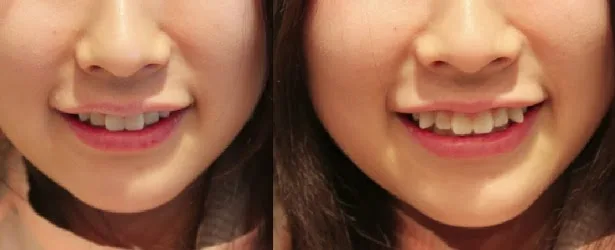
A standard orthodontic treatment in Japan can easily reach 500,000 yen, plus monthly adjustment fees from around 1,500 yen. For a full case with brackets and wires, budget somewhere between 800,000 and 1,200,000 yen. These figures cover treatment only; diagnostic imaging, materials and any surgical extras are often billed separately.
Worth keeping in mind: average salaries in Japan are higher than in many countries where braces look cheaper on paper, so absolute yen figures can mislead. Even so, orthodontics in Japan is an investment that deserves a proper plan, a clear quote and a second opinion before you commit.
Practical tips for English-speaking patients
- Sort out your insurance status first. Residents enrolled in shakai hoken or kokumin kenko hoken get the 70 percent discount automatically. Short-term visitors pay the full amount, so a travel insurance policy that includes dental coverage is worth having.
- Use the first-visit consult. Many clinics offer an affordable initial exam (around 1,000 to 2,000 yen) that ends with a written treatment plan and cost estimate. Comparing two or three of these is especially useful for major work.
- Expect Japanese as the default. In rural areas and smaller practices, English is not guaranteed. A translation app or a Japanese-speaking friend helps. In Tokyo, Osaka, Yokohama, Nagoya and Kyoto, English-speaking staff are easier to find in districts like Shibuya, Shinjuku, Minato or Namba.
- Stock a small dental kit. Sensitive teeth or minor issues can often be managed with products from a Japanese drugstore chain (Matsumoto Kiyoshi, Welcia, Sundrug) until you can get an appointment.
- Keep every receipt. A detailed ryōshūsho is useful for tax records or for claiming from a private supplemental insurance plan. Snap a photo of it the same day.
Dental vocabulary in Japanese
Save this list on your phone before your next visit, and you will not be lost at the reception desk.
- 歯 (ha) – tooth
- 前歯 (maeba) – front tooth
- 奥歯 (okuba) – back tooth
- 親知らず (oyashirazu) – wisdom tooth
- 歯ブラシ (haburashi) – toothbrush
- うがい (ugai) – gargle / mouthwash
- 虫歯 (mushiba) – cavity
- 歯ぐき (haguki) – gum
- 歯根炎 (shikon'en) – root inflammation / gum infection
- 歯石 (shiseki) – tartar
- 歯の詰め物 (ha no tsumemono) – dental filling
- 根管治療 (konkan chiryō) – root canal treatment
- 抜歯 (basshi) – tooth extraction
- 歯を抜く (ha wo nuku) – to pull a tooth
- ブリッジ (burijji) – dental bridge
- 矯正 (kyōsei) – orthodontics
- インプラント (inpuranto) – dental implant
- 初診 (shoshin) – first consultation
- 予約 (yoyaku) – appointment
- 診察 (shinsatsu) – examination
- レントゲン (rentogen) – X-ray
- 歯科 (shika) – dentistry
- 歯医者 (haisha) – dentist
- 自由診療 (jiyū shinryō) – private treatment (outside insurance)
- 保険適用 (hoken tekiyō) – covered by insurance
- 保険証 (hokenshō) – insurance card
- 領収書 (ryōshūsho) – receipt
With this list and the rough price ranges above, you should be ready for your next dental visit in Japan. Have you already had a check-up or treatment in Japan, or are you planning a longer stay and still gathering tips from other expats?




Community
Comments
0 comments
There are no published comments in this language yet.
Send comment