
Have you ever tried the delicious soba? This traditional Japanese noodle is made from buckwheat and can be served hot or cold. In this article, we'll take a closer look at this iconic Japanese noodle, which has a long history and has influenced many dishes across Japan.
Contents 5
What is soba?
The name soba (蕎麦) literally means "buckwheat", but the term is also used for noodles made with other flours in the dough. It's easy to find soba anywhere in Japan, and it tends to be quite affordable.
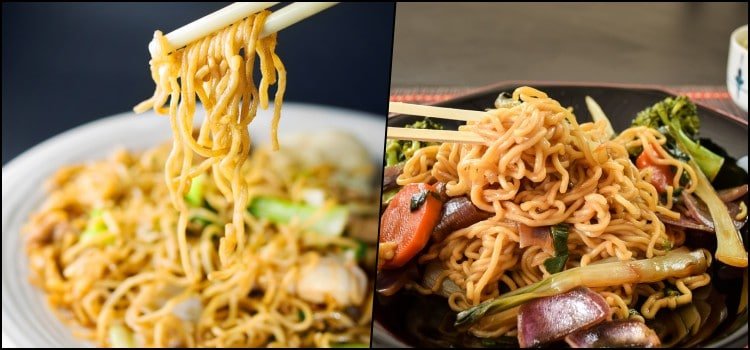
Because noodles made entirely from buckwheat can be brittle, some restaurants add a little wheat flour to the dough. A few Japanese noodles use the word "soba" without being made from buckwheat, such as yakisoba, chūkasoba and Okinawa soba.
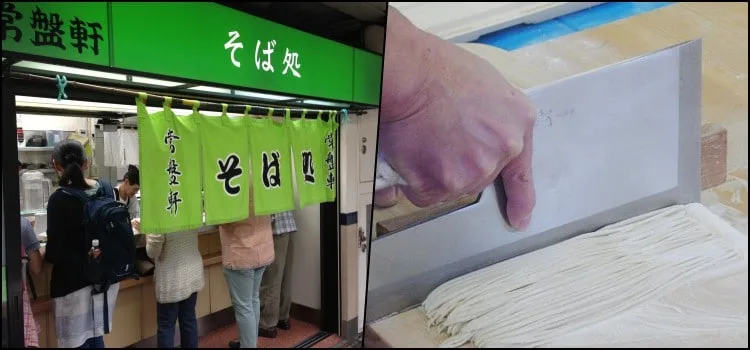
To make the noodle, the grains are ground into a dough, which is then kneaded, transferred to a wooden board, rolled out with a rolling pin and finally cut into strands with a special knife called sobakiri-bōchō.
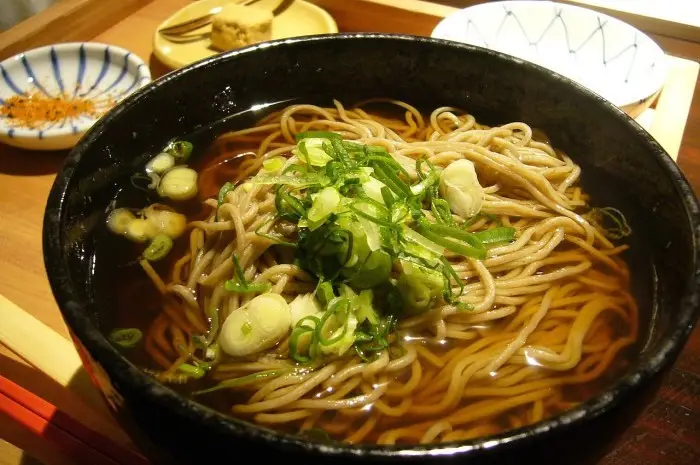
The dough is kneaded with water, giving it a dark colour, and is then cut into thin strands. Soba dishes are typically served with a broth called tsuyu, often garnished with spring onions and tempura crumbs.
Some of soba's defining features are its slightly firm bite, the way the noodles and broth come together on the tongue, and its distinctive aroma.
Origin and history of soba
Soba came to Japan together with Buddhism. Originally it was simply a buckwheat or millet dough that monks ate in various forms. It was only during the Edo period (1603–1868) that soba cut into noodle strands became widely popular.
The exact date is unknown, but some records from 1614 mention the word sobakiri ("cut") in a monk's diary. Other records point to the year 1574.
Where and how to eat soba
Today you can find soba in dedicated restaurants where you can watch the chef knead the dough, or in fast-food spots that specialise in soba and udon. In fact, soba is easy to find in almost any kind of restaurant in Japan.
In many train stations you'll find soba counters, often with stand-up seating. Just take a ticket from the vending machine and place your order; a serving of soba usually costs between 500 and 1,500 yen.
One thing to remember: slurp your noodles. It enhances the flavour and helps cool them down so you don't burn your mouth. The broth is drunk straight from the bowl — no spoon needed.
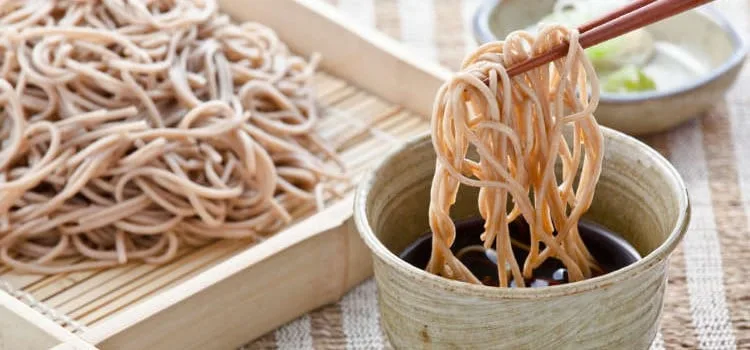
Soba can also be served cold (as zaru soba) with a separate dipping sauce. The classic way is to mix some chopped spring onion and wasabi into the dipping sauce, then dip a small bundle of noodles and eat.
Different types of soba
Soba is just as popular as ramen and udon, and there are countless ways to serve it. Sometimes it comes alone; sometimes it comes in a soup.
A good starting point is zaru soba: cold noodles served without broth, to be dipped in a sauce. The hot version without extras is called kake soba and arrives in a broth similar to the cold dipping sauce.
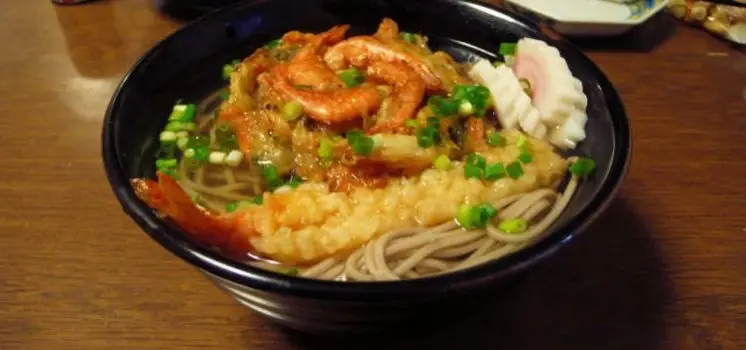
Many varieties take the name of their main ingredient. With tempura, you get tempura soba; with mountain vegetables, sansai soba. Yet others take the names of animals or elements with deep significance in Japanese culture. A few of them are listed below.
Main types of soba
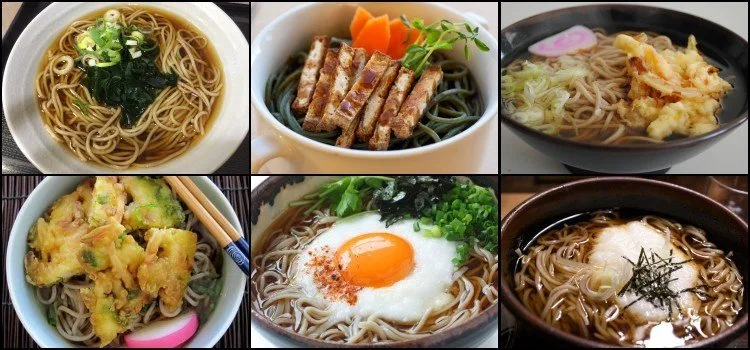
- Kitsune soba [狐そば] – topped with aburaage, thin sheets of fried tofu.
- Tanuki soba [たぬきそば] – served with crispy bits of tempura batter.
- Nanban soba [南蛮そば] – the word "nanban" refers to the broth made with leek.
- Kare nanban – noodles with curry.
- Kamo nanban – with sliced duck.
- Ten zaru [てんざる] – cold, served with tempura on a separate plate.
- Bukkake soba [ぶっかけそば] – cold, with broth poured over the noodles.
- Mori soba [盛り蕎麦] – cold soba served on a woven bamboo tray.
- Sansai soba [山菜蕎麦] – with mountain vegetables; low in calories and very healthy.
- Tsukimi soba [月見蕎麦] – topped with a raw egg, whose yolk looks like a full moon.
- Tororo soba [とろろ蕎麦] – topped with a layer of sticky grated yam.
- Niku soba [肉蕎麦] – topped with pork or beef, similar to a ramen style.
- Kare soba [カレ蕎麦] – with curry sauce, often paired with a tonkatsu.
- Kamo soba [鴨蕎麦] – with sliced duck.
- Nameko soba [なめこ蕎麦] – with a broth made from nameko and other mushrooms.
Naturally, the noodles can be paired with many other ingredients not listed here, and most dishes are available in both hot and cold versions. There is a huge variety of regional and seasonal soba dishes.
In some restaurants, the bowl is refilled as many times as you like until you're full. Soba is part of everyday life for the Japanese — I ate it every single day when I lived there. And you? Have you tried it? Feel free to share your experience in the comments.

Community
Comments
0 comments
There are no published comments in this language yet.
Send comment