
Want to learn terms to make your conversations naughtier and spicier? Forget the formal Japanese you picked up in class. Spicy conversation in Japanese goes way beyond what language textbooks teach. There's a whole arsenal of expressions, onomatopoeia, and slang designed to provoke, instigate, and make desire unmistakable — and some of them don't even have a perfect equivalent in other languages. These words pop up between couples, close friends, and even in late-night app chats. Want to heat things up without beating around the bush? Come with me.
I'd also recommend opening our other two articles in a new tab — they'll help you take the conversation even further. They focus on erotic vocabulary and on spicy compliments:
Contents 10
Muchimuchi (ムチムチ)
The word muchimuchi is one of those Japanese onomatopoeia that hits you the moment you hear it. It describes an almost irresistible physical sensation: "tight," firm bodies with that full, juicy look. In the context of spicy conversations, calling someone muchimuchi is openly admitting you want to squeeze, bite, or hold them — a compliment aimed at whatever looks plump, soft, and visibly tempting. Thighs, butt, arms, anything that has that "full" touch can be called muchimuchi.
Using this word while flirting is like confessing, without beating around the bush, that the person's body wakes up an urge to grab. You can drop it in a playful tone, as a compliment, or even with shameless admiration — usually paired with an emoji or a mischievous laugh, especially over text. It doesn't sound vulgar, but it isn't innocent either: it's direct, fun, and almost impossible to translate with the same punch in another language.
In Japan, the term shows up all over social media comments, especially on photos of legs, hips, or even muscular arms. The best part: it works for both men and women, as long as the context is hot and the intimacy is there.
Paipai (パイパイ)
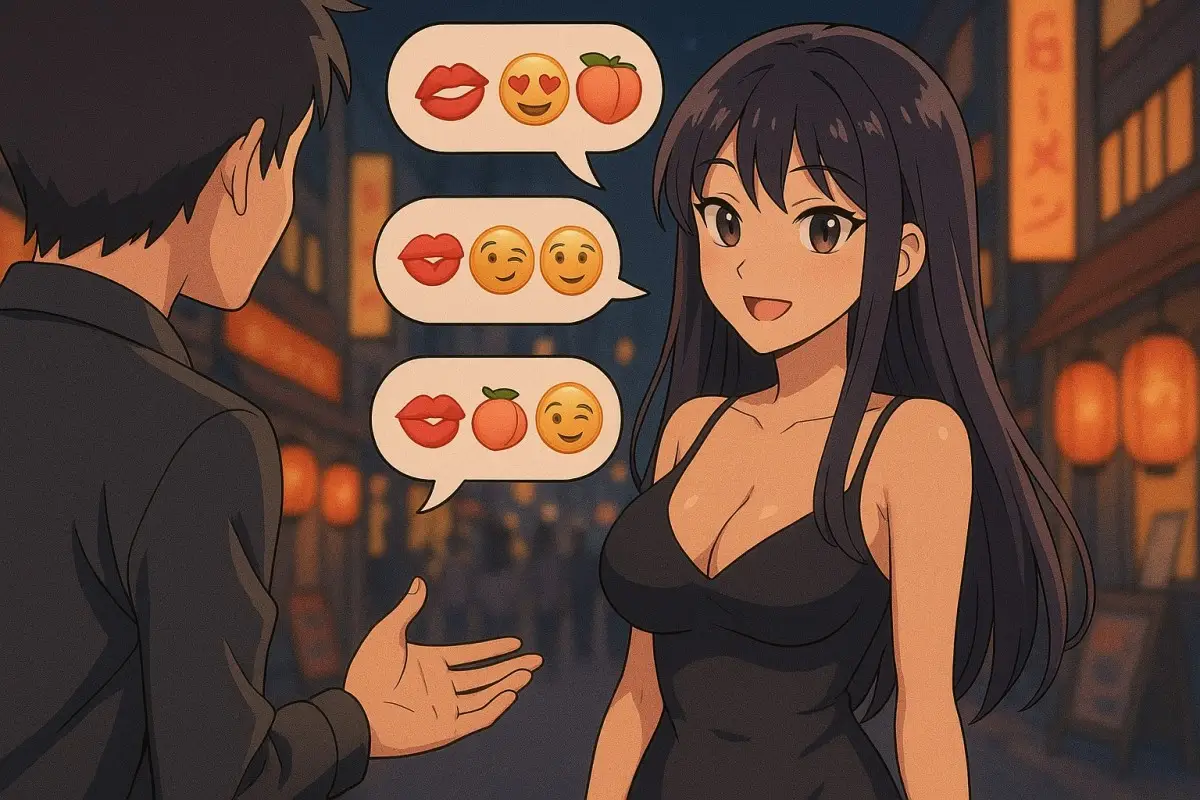
If there's a piece of slang that lays bare the intention, it's paipai. It's an informal, fun way to talk about breasts, used between friends, couples, or in relaxed conversations with a naughty edge. Unlike more vulgar terms, paipai sounds almost like a cute nickname — one that gets a laugh even when the intention is far from innocent. And don't be fooled: when someone says "paipai ga yabai" ("these breasts are dangerous!"), there's no way to miss the message.
On the Japanese internet, paipai pops up in memes, photo comments, jokes, and even in some anime, always carrying that light, naughty vibe at the same time. You can picture it in situations where the conversation is already hot, or even as a cheeky way to break the ice.
Nametai (舐めたい) & Sawaritai (触りたい)
No subtlety here: nametai means "I want to lick" and sawaritai means "I want to touch / grab." These are expressions that leave zero doubt about what's going through your mind. If the vibe between you and the other person has already shifted from light flirting to declared desire, these words work as an explicit invitation to go further — or as an irresistible provocation in a private chat.
The strength of these expressions is exactly their honesty and the absence of beating around the bush. Saying "kuchibiru wo nametai" ("I want to lick your lips") or "sono futomomo sawaritai" ("I want to grab those thighs") puts sexual tension front and center. There's no way to ignore it, let alone pretend you didn't understand.
Poyonpoyon (ぽよんぽよん) & Purunpurun (ぷるんぷるん)
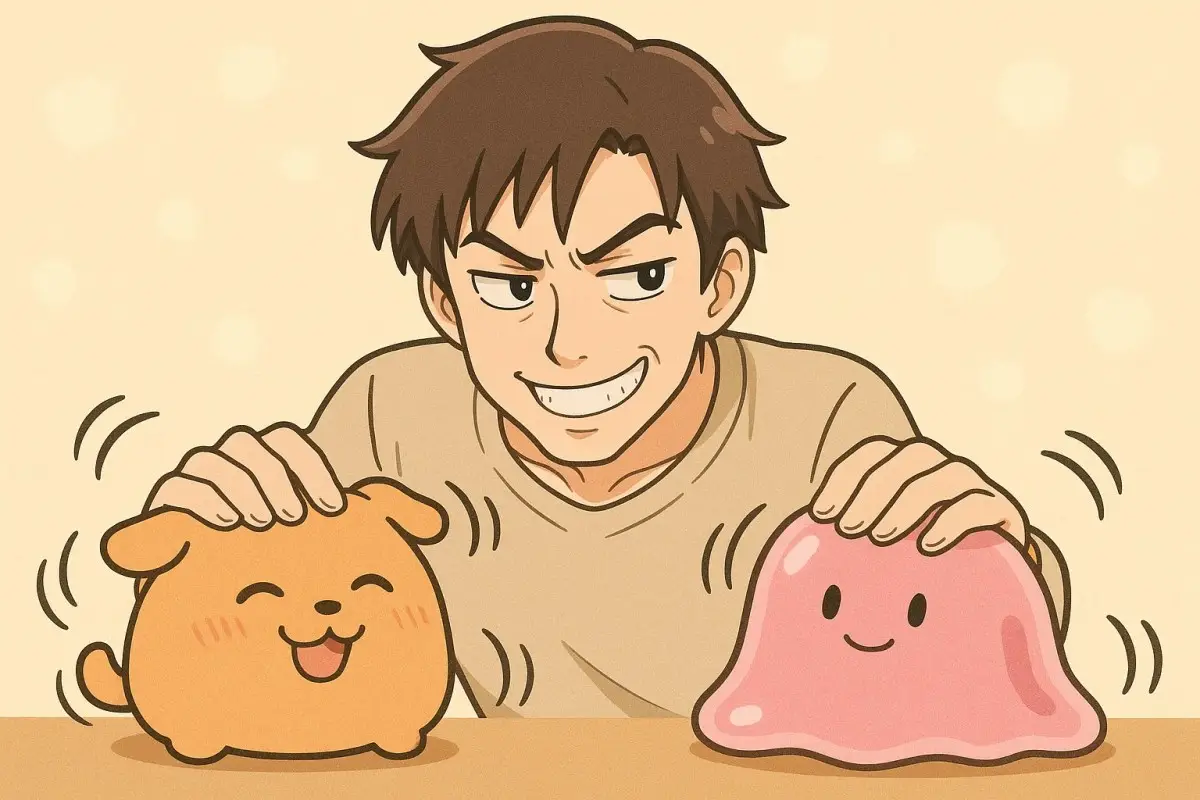
These onomatopoeia are a show of their own in Japanese — almost irresistible for anyone who likes to add a playful, visual touch to a spicy conversation. Poyonpoyon conveys the idea of something soft and bouncy that jiggles with movement. It's impossible not to think of breasts, butt, or even chubby cheeks. Meanwhile, purunpurun suggests something even juicier — firm, trembling, begging to be touched: skin, lips, body parts that make you want to bite or squeeze.
In hot conversations, dropping these words is almost like drawing the scene for the other person. "Today you're pure poyonpoyon" or "those lips are purunpurun" lands as that cheeky, fun compliment that takes the weight off the tension and turns everything into light provocation packed with mental images.
Bitchi (ビッチ)
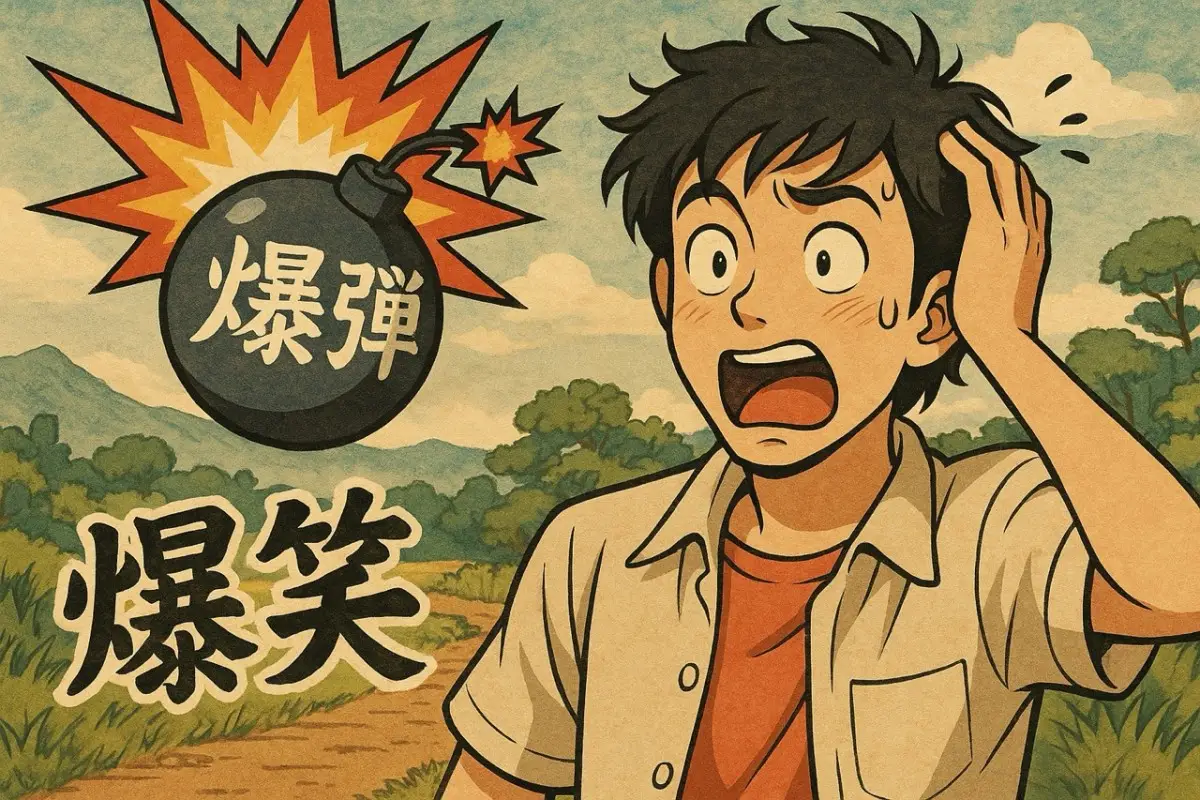
If there's a word that can ignite (or detonate) any conversation, it's bitchi. Borrowed from the English "bitch," it has become Japanese slang for someone bold, shameless, and unapologetic about their desires and attitude. The term can be used as provocation or as a spicy compliment, depending on the vibe and the level of intimacy.
Calling someone bitchi that day is almost like calling them "naughty" or "forward," but with a dash of empowerment — after all, the people who get labeled bitchi in Japan usually don't care what others think. It's a word for when you're already on the same wavelength; outside that context it can sound aggressive or even offensive.
Yarashii (やらしい)
Yarashii is one of those adjectives that mixes provocation, compliment, and an invitation for something more. Usually translated as "naughty," "perverted," or even "lewd," it describes people, gestures, glances, laughter, and even whole situations. If someone tells you "sono egao, yarashii ne" ("that smile is really naughty, huh"), you can be sure the vibe has already crossed the line of friendship.
It's a term loaded with intent. The moment it shows up in conversation, it's like a cheeky whisper that demands a reaction — laughter or a response of equal measure. In relationships, it can even become a game, with both of you trying to out-provoke each other with looks or "yarashii" messages.
Shikoshiko / Shikoi (シコい)
This is pure underground Japanese slang. Shikoshiko is the onomatopoeia for the sound or motion of masturbation, and shikoi was born from it: it means something or someone is so provocative that it "makes you want to jerk off." In chats, forums, memes, or private groups, calling a photo, video, or even a pose "shikoi" is practically an explicit compliment — a way of saying the scene is beyond sexy, straight-up naughty material.
Don't expect to hear this word in soap operas, newspapers, or normal conversations; it's reserved for moments when shame has already left the chat. Using shikoi is admitting that desire has bulldozed every barrier of decorum or modesty. If you let it slip, be ready for the other person to laugh, match the energy, or at least lean into the provocation.
Munmun (ムンムン)
You know that environment where the air feels heavy with desire, where a single glance or a careless move can set everything on fire? Munmun is the perfect Japanese word for that charged, almost suffocating atmosphere of sexual tension. You can use it for the room itself, or for the feeling someone gives off just by being nearby.
In a spicy conversation, dropping a "kono heya wa munmun shiteru ne" ("this room is munmun today, huh…") is like saying "there's no way to survive this atmosphere!" It also works as a provocation, making the other person aware that you can feel — and are enjoying — the energy in the air.
Pittari (ぴったり)
Pittari normally means "perfect fit," "just right," but in double-entendre conversations it picks up a highly spicy connotation. Saying something is pittari in a hot context suggests that bodies, hands, lips, or even thoughts fit together perfectly — almost like saying "you were made for this with me."
It's an expression full of possibility because it leaves plenty of room for imagination: a touch that fits, a kiss that matches, an embrace that completes. In the heat of a conversation, dropping an "ore to omae, pittari da ne" ("you and I are a perfect fit, right?") can flip the mood instantly, turning into the password for everything to flow.
Mankitsu (満喫)
Last but not least: mankitsu means "to enjoy to the fullest," "to savor until the end." In a spicy context, the phrase "kyou wa kimi wo mankitsu shitai" ("I want to enjoy you until the last second today") is direct, unfiltered, and practically an indecent invitation.
It's not just desire — it's about exhaustion in the best sense, draining every drop, living the moment until there's no energy left. Using mankitsu in a hot conversation makes it clear that the goal isn't just to play, but to push to the limit, with no rush and no pause. It's a word that mixes thirst, passion, and that hunger to experience everything the other person has to offer.





Community
Comments
0 comments
There are no published comments in this language yet.
Send comment