
If you want to look up Bible references in Japanese, the book names can feel unfamiliar at first. Seisho [聖書] means Bible, and people often use the phrase seisho no shomei when they want the names of the individual books. This guide lists the 66 standard book names in Japanese, explains the main naming patterns, and shows why some translations do not use exactly the same wording.
This matters for more than religious study. Once you notice recurring endings such as -ki [記], -sho [書], fukuinsho [福音書] and tegami [手紙], Bible references become much easier to recognize in articles, subtitles, dictionaries and study material. If you are also learning how Japanese writing works, it helps to review our guide to hiragana and katakana and the basic use of kanji such as 人.
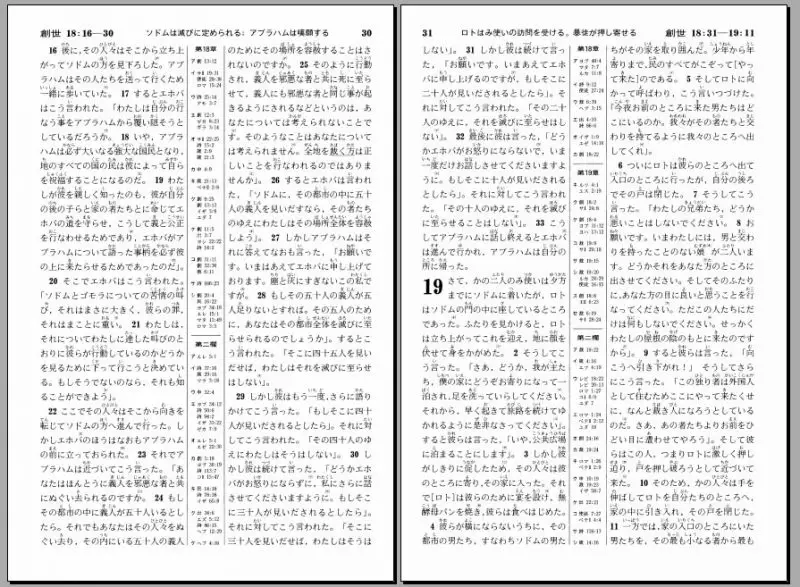
One detail worth knowing early is that Japanese Bible names vary a little by translation. Modern lists from the Japan Bible Society prefer forms such as マタイによる福音書 and 使徒言行録, while other widely used editions may print マタイの福音書 or 使徒の働き. The book is still the same. What changes is the translation tradition and editorial style.
Contents 5
How Bible book names work in Japanese
Japanese titles often tell you what kind of book you are reading. Historical books commonly end in 記 or 誌, prophetic books often end in 書, the four Gospels include 福音書, many New Testament letters use 手紙, and Revelation appears as ヨハネの黙示録. Once you spot those patterns, even unfamiliar titles start to make sense.
For quick orientation, remember these core words: 旧約聖書 means Old Testament, 新約聖書 means New Testament, 章 is chapter, and 節 is verse. If you come across Bible topics inside broader articles about religions in Japan or Christian vocabulary, these terms appear constantly.
Old Testament books in Japanese
| Japanese | English |
|---|---|
| 創世記 | Genesis |
| 出エジプト記 | Exodus |
| レビ記 | Leviticus |
| 民数記 | Numbers |
| 申命記 | Deuteronomy |
| ヨシュア記 | Joshua |
| 士師記 | Judges |
| ルツ記 | Ruth |
| サムエル記上 | 1 Samuel |
| サムエル記下 | 2 Samuel |
| 列王記上 | 1 Kings |
| 列王記下 | 2 Kings |
| 歴代誌上 | 1 Chronicles |
| 歴代誌下 | 2 Chronicles |
| エズラ記 | Ezra |
| ネヘミヤ記 | Nehemiah |
| エステル記 | Esther |
| ヨブ記 | Job |
| 詩編 | Psalms |
| 箴言 | Proverbs |
| コヘレトの言葉 | Ecclesiastes |
| 雅歌 | Song of Songs |
| イザヤ書 | Isaiah |
| エレミヤ書 | Jeremiah |
| 哀歌 | Lamentations |
| エゼキエル書 | Ezekiel |
| ダニエル書 | Daniel |
| ホセア書 | Hosea |
| ヨエル書 | Joel |
| アモス書 | Amos |
| オバデヤ書 | Obadiah |
| ヨナ書 | Jonah |
| ミカ書 | Micah |
| ナホム書 | Nahum |
| ハバクク書 | Habakkuk |
| ゼファニヤ書 | Zephaniah |
| ハガイ書 | Haggai |
| ゼカリヤ書 | Zechariah |
| マラキ書 | Malachi |
New Testament books in Japanese
| Japanese | English |
|---|---|
| マタイによる福音書 | Matthew |
| マルコによる福音書 | Mark |
| ルカによる福音書 | Luke |
| ヨハネによる福音書 | John |
| 使徒言行録 | Acts |
| ローマの信徒への手紙 | Romans |
| コリントの信徒への手紙一 | 1 Corinthians |
| コリントの信徒への手紙二 | 2 Corinthians |
| ガラテヤの信徒への手紙 | Galatians |
| エフェソの信徒への手紙 | Ephesians |
| フィリピの信徒への手紙 | Philippians |
| コロサイの信徒への手紙 | Colossians |
| テサロニケの信徒への手紙一 | 1 Thessalonians |
| テサロニケの信徒への手紙二 | 2 Thessalonians |
| テモテへの手紙一 | 1 Timothy |
| テモテへの手紙二 | 2 Timothy |
| テトスへの手紙 | Titus |
| フィレモンへの手紙 | Philemon |
| ヘブライ人への手紙 | Hebrews |
| ヤコブの手紙 | James |
| ペトロの手紙一 | 1 Peter |
| ペトロの手紙二 | 2 Peter |
| ヨハネの手紙一 | 1 John |
| ヨハネの手紙二 | 2 John |
| ヨハネの手紙三 | 3 John |
| ユダの手紙 | Jude |
| ヨハネの黙示録 | Revelation |
Why some Japanese Bible names look different
The biggest source of confusion is not the language itself, but the translation tradition. A modern ecumenical list may use 詩編, while older or evangelical material may print 詩篇. You may also see コヘレトの言葉 instead of 伝道者の書, マタイによる福音書 instead of マタイの福音書, and 使徒言行録 instead of 使徒の働き. When you compare study tools, always check which Japanese edition the source is following.
That difference becomes especially clear in the New Testament letters. The Japan Bible Society list writes them as letters to believers or communities, such as ローマの信徒への手紙, while some Protestant editions prefer forms like ローマ人への手紙. Neither is a mistake. They reflect different translation choices for the same biblical books.
Useful Bible study words in Japanese
- 聖書 — Bible
- 旧約聖書 — Old Testament
- 新約聖書 — New Testament
- 章 — chapter
- 節 — verse
- 福音書 — Gospel
- 手紙 — epistle or letter
- 黙示録 — Revelation or Apocalypse
If your goal is Japanese study rather than theology, start by memorizing a few high-frequency names such as 創世記, 詩編, マタイによる福音書 and ヨハネの黙示録. After that, it becomes much easier to recognize references in songs, essays, subtitles and cultural discussions that mention the Bible in Japanese.



Community
Comments
0 comments
There are no published comments in this language yet.
Send comment