The Japanese Food Pyramid (食事バランスガイド) is a solid foundation and guide for those who want a good diet in Japan. This pyramid has been around since 2005, and it still circulates in Japan and on the internet when we talk about food pyramids.
This chart belongs with the Japanese diet. It is a daily guide, a sketch of what a balanced day of dishes looks like, with numbers that shift a little by age and activity.
Inverted Japanese Food Pyramid
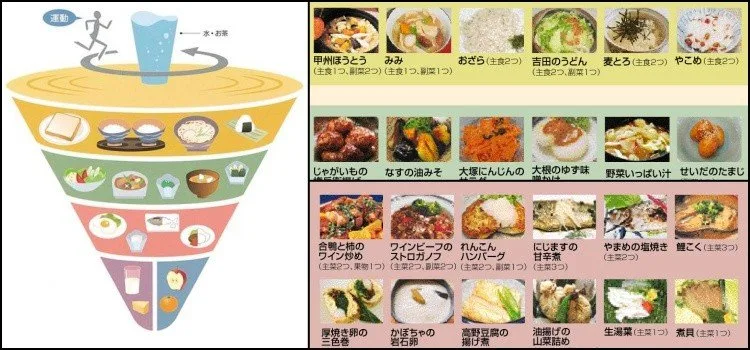
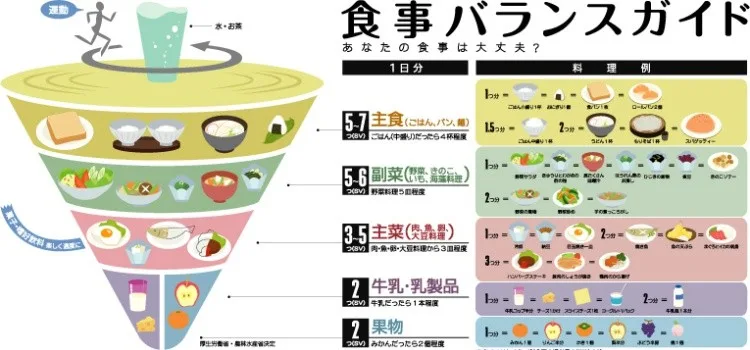
For some reason, the Japanese food pyramid has been turned upside down. The official drawing is a spinning top (コマ). At the top, we find a man running symbolizing exercise. The core through the middle symbolizes water and tea.
The yellow section represents grains, rice, bread, onigiri, noodles, and pasta. According to the size of that band, you should consume 5 to 7 servings per day. A medium bowl of rice is about 1.5 servings, so four medium bowls cover most of that range. One convenience-store onigiri or one slice of bread is 1 serving.
The green section represents vegetables such as potatoes, mushrooms, and seaweed. You should consume 5 to 6 servings per day. The brown section represents meat, fish, eggs, and soy dishes. You should consume 3 to 5 servings per day.
The last section is divided into 2. On the left, we have dairy products: 2 servings per day on the standard chart, or 2 to 3 if you are more active. On the right, we have fruits that should also be consumed 2 times a day. The small blue rope on the left represents sweets, drinks, coffee, and other snacks that should be consumed in moderation, generally under 200 kcal.
The chart marks how many servings a dish is worth. One grain serving is about 40 g of carbohydrate. For example, one plate of fried chicken is equivalent to 3 servings, while one serving of fried tofu is equivalent to one.
Undoubtedly, this food pyramid is different from those of other countries. In general, you will notice how this chart strongly correlates with a traditional Japanese meal at dinner and breakfast.
Remember to enjoy your meals. Establish a healthy pace by keeping regular hours for your meals that should be balanced with staple foods. Combine vegetables, fruits, dairy products, and fish in your diet. Remember to avoid excess fat and salt in your diet and do not forget about physical activities. I hope you enjoyed this little article. xD
Kevin Henrique has written about the Japanese language, culture, anime, games, and travel since founding Suki Desu in 2014. He first visited Japan in 2016.
Community
Comments
0 comments
There are no published comments in this language yet.

 The last section is divided into 2. On the left, we have dairy products: 2 servings per day on the standard chart, or 2 to 3 if you are more active. On the right, we have fruits that should also be consumed 2 times a day. The small blue rope on the left represents sweets, drinks, coffee, and other snacks that should be consumed in moderation, generally under 200 kcal.
The chart marks how many servings a dish is worth. One grain serving is about 40 g of carbohydrate. For example, one plate of fried chicken is equivalent to 3 servings, while one serving of fried tofu is equivalent to one.
Undoubtedly, this food pyramid is different from those of other countries. In general, you will notice how this chart strongly correlates with a traditional Japanese meal at dinner and breakfast.
Remember to enjoy your meals. Establish a healthy pace by keeping regular hours for your meals that should be balanced with staple foods. Combine vegetables, fruits, dairy products, and fish in your diet. Remember to avoid excess fat and salt in your diet and do not forget about physical activities. I hope you enjoyed this little article. xD
The last section is divided into 2. On the left, we have dairy products: 2 servings per day on the standard chart, or 2 to 3 if you are more active. On the right, we have fruits that should also be consumed 2 times a day. The small blue rope on the left represents sweets, drinks, coffee, and other snacks that should be consumed in moderation, generally under 200 kcal.
The chart marks how many servings a dish is worth. One grain serving is about 40 g of carbohydrate. For example, one plate of fried chicken is equivalent to 3 servings, while one serving of fried tofu is equivalent to one.
Undoubtedly, this food pyramid is different from those of other countries. In general, you will notice how this chart strongly correlates with a traditional Japanese meal at dinner and breakfast.
Remember to enjoy your meals. Establish a healthy pace by keeping regular hours for your meals that should be balanced with staple foods. Combine vegetables, fruits, dairy products, and fish in your diet. Remember to avoid excess fat and salt in your diet and do not forget about physical activities. I hope you enjoyed this little article. xD



Community
Comments
0 comments
There are no published comments in this language yet.
Send comment