
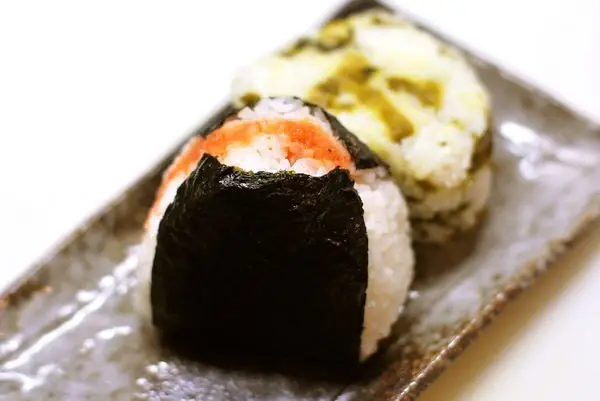
You probably know onigiri already or have seen them somewhere. Onigiri (お握り) are Japanese rice balls, usually wrapped in nori. They are often triangular, but round, oval, and other shapes are also common. The name roughly means a hand-shaped rice ball.
Onigiri can have many kinds of fillings, but classic choices include fried salmon, umeboshi, katsuobushi, and other salty or sour ingredients. Sweet onigiri are not unusual either.
They are usually made with white rice, seasoned rice, fried rice, osekihan, or takikomi gohan. Sushi rice is not normally used, because then it would be sushi.
Contents 4
The rice balls of samurai
Onigiri have very old roots. Rice was shaped into portable portions long before convenience stores made them a daily snack. In earlier periods, shaping rice made it easier to carry and serve.
There is also a folk explanation that links the word "onigiri" to "oni" and "kiri". One story mentions Oni Taro, a huge man who made a rice ball for a demon to satisfy its hunger.
Types of Onigiri and Fillings
Today, onigiri are everywhere, from convenience stores to restaurants and supermarkets. In Japan, they are as common as sandwiches are in the West.
Onigiri can be made with many different flavors, including fish, meat, vegetables, cheese, and even chocolate. Their variety is really only limited by imagination.
Below are some of the most popular onigiri fillings in Japan:
- Salmon or salmon with mayonnaise
- Tsuna Mayo (tuna and mayonnaise)
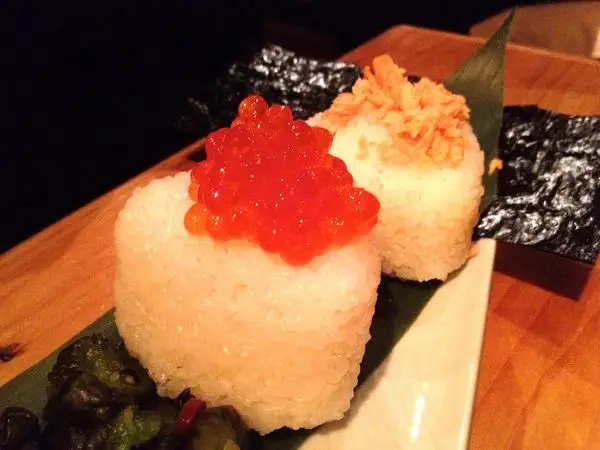
- Ikura (salted salmon roe)
- Chicken, fried chicken, or chicken with mayonnaise
- Tarako (salted cod roe)
- Mentaiko (cod or pollock roe marinated in chili sauce)
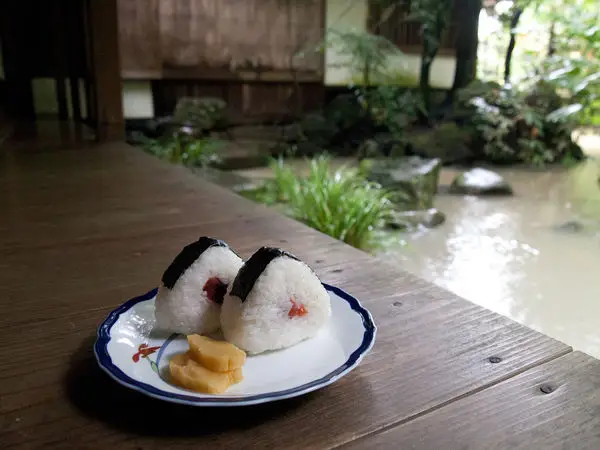
- Umeboshi (pickled Japanese plum)
- Konbu (dried seaweed)
- Just rice (lightly salted)
- Nikumaki (pork or other meat)
- Omelet
- Katsuo (dried bonito)
- Tempura
- Furikake
- Takikomi Gohan (steamed rice with vegetables, fish, or meat)
- Unagi (eel)
- Tsukudani (seafood, meat, or seaweed cooked in soy sauce and mirin)
- Shiokara (salted and fermented meats and seafood)
Grilled Onigiri
Onigiri can be made in many shapes, but the triangle is still the most popular. They can also be square, round, oval, or even shaped like animals.
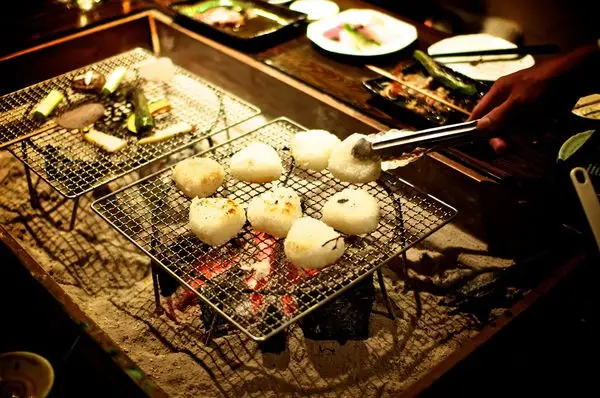
Another well-known version is yaki onigiri, grilled over fire with butter and soy sauce until browned and crispy.
Videos about Onigiri
To finish, watch the videos below to see a little more about these tasty rice balls and how they appear in Japan.
The video below shows traditional onigiri.
Thank you for reading our article. If possible, leave a comment, share it, and follow us on social media.


Community
Comments
0 comments
There are no published comments in this language yet.
Send comment