

Have you ever wondered how to say come or let's in Japanese? In this article, we will learn different ways to make invitations with Mashou and alternatives to the famous "Let's Go! and Come On!".
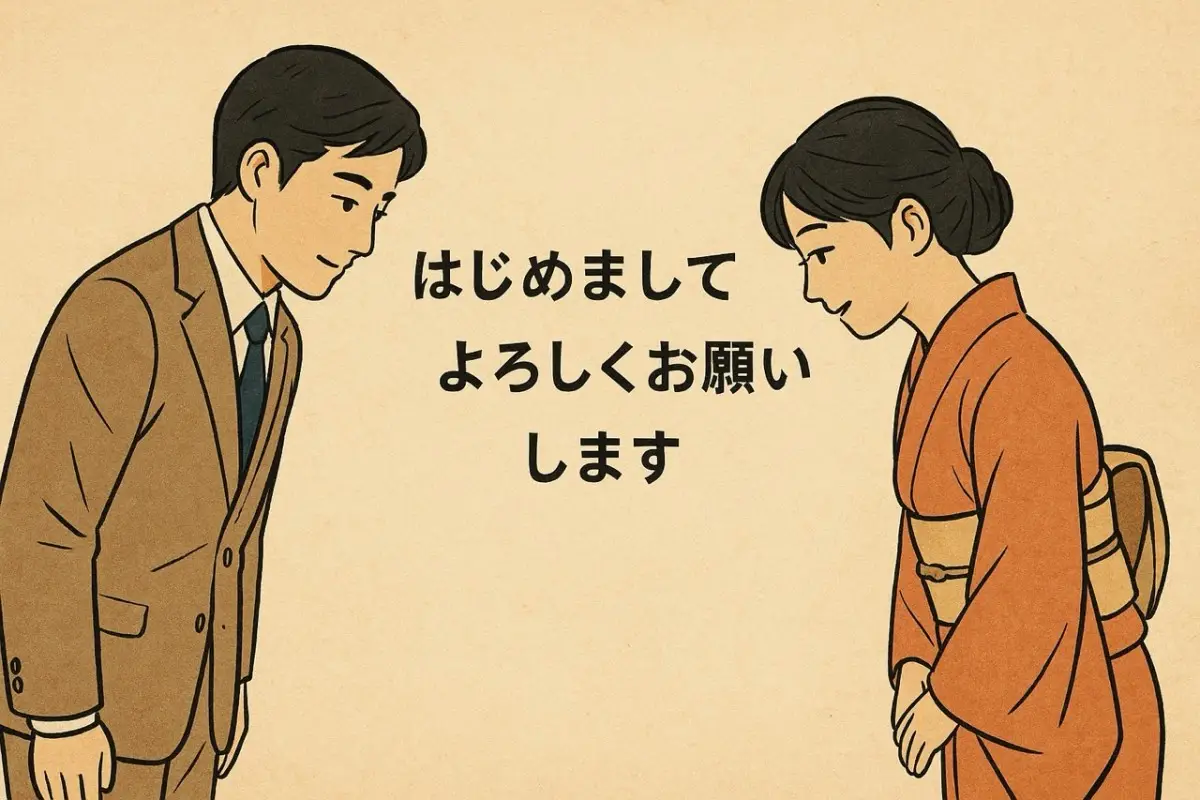
In Japanese, we use a verbal form to indicate that we want to perform an action with another person. The let's in Japanese is expressed with the endings mashou, masenka, you, and some others that we will analyze in depth in this article.
Contents 5
How to say Come and Let's in Japanese?
One of the highlights of this article is the volitional form Mashou, but before we talk about it, let's present some words that can be literally translated as come or let's.
- Ikou [行こう] - Let's;
- Ikouka [行こうか] - Shall we go?
- Kite [来て] - Come here;
- Nekeru [抜ける] - Get out;
It is worth noting that generally verbs that can encourage an action and make an invitation, even if the verb is not in the Mashou form that we will see later in the article.
Also read: Verbal forms in Japanese
"Come On!" and "Let's Go!" derived from English
As is known, the Japanese also use expressions of English origin in their daily lives, often as slang. See below how the Japanese use the expressions Let's Go! and Come On!
- Rettsugoo [レッツゴー] - Let's Go;
- Rettsuragoo [レッツラゴー] - Let's Go;
- Kamon [カモン] - Come on;
- Kamoon [カモーン] - Come on;

Using the Mashou form to say let's
Some beginner textbooks translate the verbal form Mashou [ましょう] simply as "let's". This is indeed one of the easiest and simplest ways to understand and translate verbs in this form. However, the idea that Mashou conveys is deeper.
In Japanese, this is called the volitional form and can indicate the desire to do something, an invitation, intention, choice, solution, and others. So, depending on the verb or form that appears in the sentence, its idea or translation into Portuguese may be different.
There is a small play on words. The volitional form is called Ikoukei [意向形], while let's in Japanese is Ikou [行こう]. So literally the volitional form would be the form of let's? [形 = form];
To invite anyone to perform an action, we simply replace the Masu [ます] with Mashou [ましょう]. And if the verb is not in the ます form? See below how to conjugate each type of verb to convey the idea of let's:
- Verbs ending in う - Change the last vowel to おう;
- Verbs ending in いる or える - Change the る to よう;
- Irregular verbs like [する] and [来る] are in the tables below;
| 行きましょう | Ikimashou | Let's go |
| 食べましょう | Tabemashou | Let's eat |
| 会いましょう | Aimashou | Let's meet |
| 話そう | Hanasou | Let's talk |
| 待とう | Matou | Let's wait |
| 見よう | Miyou | Let's watch/see |
| しょう | Shou | Let's do |
| 来よう | Koyou | Come |
Note that Shou is basically to do something. So the idea of the ending or form Shou [しょう] is linked to the verb do Suru [する]. After all, the volitional form is an invitation to do or perform an action.
There are other expressions like Deshou [でしょう] and Darou [だろう] that apparently are in the volitional form, but their meaning is not related to let's, but rather to uncertainty or perhaps.
Also read: The culture of uncertainty and perhaps in the Japanese language

Masenka - Making invitations using questions
When using Mashou [ましょう], you may be inviting or confirming an action. If you want to make it clear that it is an invitation that requires a response from the listener, you can turn this expression into a question "Shall we go?" using Mashouka [ましょうか]. This can convey the idea that you are offering to do something and need the listener's confirmation.
Another way to invite someone to do something is by using Masenka. When we conjugate verbs with Masenka [ませんか], we are making an invitation, asking if the person wants to do a certain thing.
Other ways to express let's in Japanese
When you are undecided about a certain action, you can use the kana [かな] to show that you don't know what we are going to do, hoping someone will give their opinion. Ikoukana [行こうかな] could convey the idea of "Are we going?";
Ikuzo [行くぞ] and Ikouze [行こうぜ] are other informal ways to say let's in Japanese. These particles used at the end of the verb Iku [行く] are usually used by men and convey a sense of certainty and affirmation.
In certain situations, saying Saa [さあ] can indicate the idea of let's, come with me, continue, hurry up, let's see, here we go, and others. Saa does not always have a grammatical meaning. Sometimes it is just a variant or complement.
Mairimashou [参りましょう] - A type of let's derived from the verb Mairu [参る], a humble version of the verb "to go", but which, deep down, can convey other ideas.
いらっしゃい - Irasshai is generally used as Welcome, but politely can indicate a, come in, let's come in.
Also read: Irasshai, Youkoso and Okaeri – How to say welcome in Japanese
I hope this article has helped you say let's in the Japanese language. If you liked the article, share it with friends or leave your comments.




Community
Comments
0 comments
There are no published comments in this language yet.
Send comment