
The word kanpai is a Japanese expression used when toasting glasses with friends – the Japanese equivalent of “cheers.” Few people know it, but the word has a long history and a much deeper meaning, which we will explore in this article.
For some reason, in Portuguese-language texts you will often see the spelling kampai (with an M). That is just a transliteration of the Japanese word into Portuguese, but it looks awkward, and the original form kanpai is the one preferred by Japanese speakers and adopted worldwide.
Kanpai is written with the kanji 乾杯. The first character (乾) means “dry” or “to drain”, and the second (杯) means “glass.” Taken literally, the word means “to empty the glass,” which is a wonderfully direct way to describe the act of toasting. The term can also be used as a verb for the act of toasting itself. In Chinese the same characters are used, pronounced gānbēi.
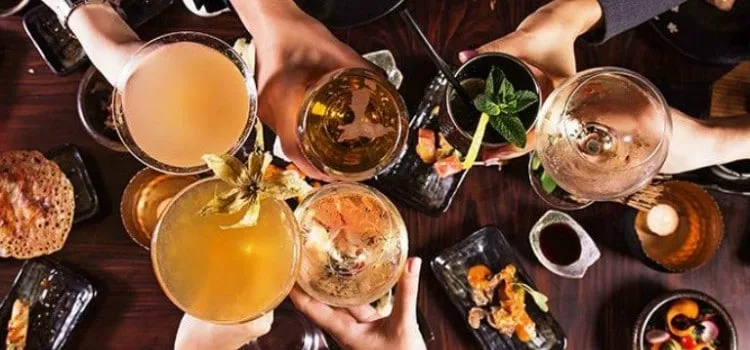
When and where do you say kanpai?
In the past, kanpai literally meant emptying the glass – that is, finishing the drink in one go. Today, fortunately, that is no longer required.
In modern Japan, saying kanpai is a small but mandatory piece of etiquette before drinking. If you take a sip before saying kanpai, you are considered rude. The expression is not limited to sake either; it works for any alcoholic beverage.
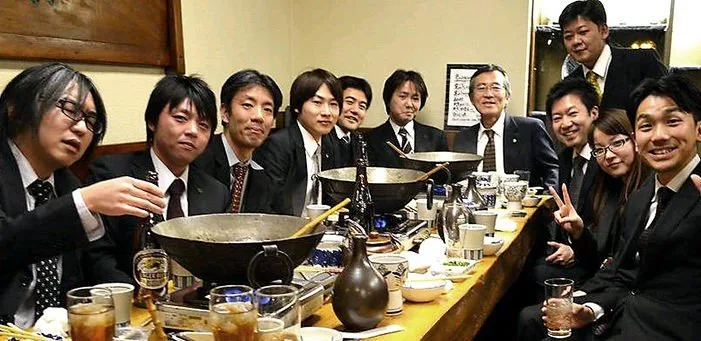
There are no secrets to it: kanpai is the Japanese counterpart of “cheers” or “prost.” You will hear it constantly at year-end gatherings known as bōnenkai, when coworkers, friends and families meet to drink together.
You will also hear it in any get-together of friends that involves drinking, especially when the evening promises to be a long one. One important point of etiquette: when clinking glasses, hold yours slightly lower than the glass of someone of higher status, such as your boss.
Respect for elders and senior colleagues is deeply ingrained in Japan. If you are drinking with your boss or someone older, and they do not initiate with kanpai, you can fall back on the more formal expression otsukare-sama. It does not mean “cheers,” but rather acknowledges and thanks the other person for the work they have put in.
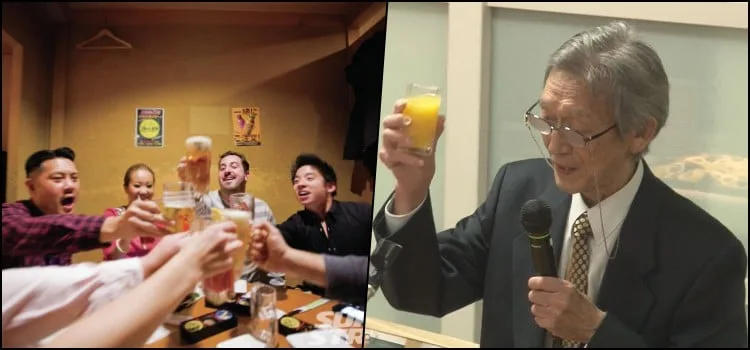
Watch out for kenpai
At funerals, the word kenpai (献杯) is used to honor the deceased with respect. If you find yourself at a funeral where drinks are served, you can stand up and say kenpai without clinking glasses with anyone else.
So be careful not to say kenpai by accident instead of kanpai at a cheerful gathering with friends. Another word that some people mix up because of its similar pronunciation is banzai.
What do you think of this expression? Have you ever had the chance to use it? Feel free to share your experience in the comments – we always enjoy hearing from readers. You might also enjoy these related articles:


Community
Comments
0 comments
There are no published comments in this language yet.
Send comment