
You have probably seen a square watermelon, even if only in a photo. Japan grows that fruit, and it also grows melons, grapes and mangoes that make the news when the first box of the year goes to auction.
Fruit is a common gift there, so the expensive pieces are selected for shape, skin and sugar. The cube is expensive for a simpler reason: it was grown to fit a shelf. Let's start with the square watermelon, since the shape is what the photo shows and the mold is what the price is paying for.
Contents 10
The square watermelon
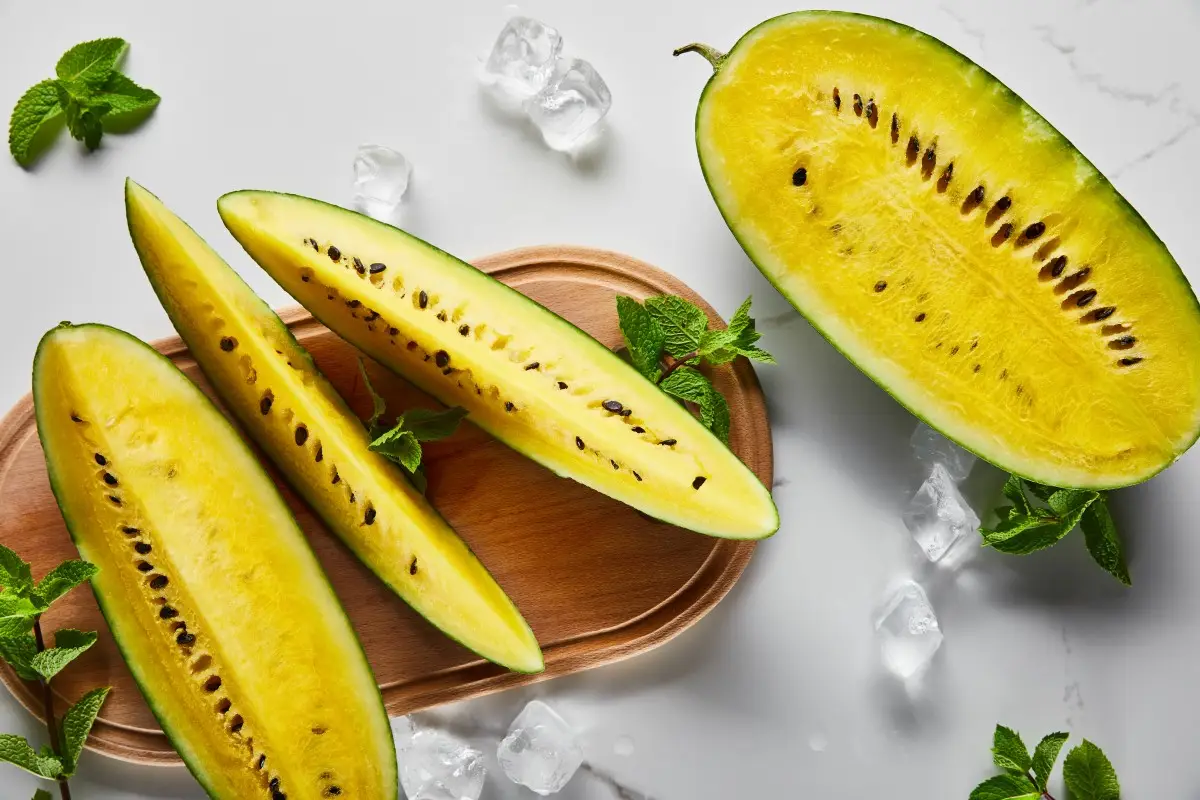
Watermelon, suika (西瓜), is a summer fruit in Japan. The beach game that goes with it is suikawari (スイカ割り): someone is blindfolded and tries to split a watermelon with a stick while everyone else shouts directions. The fruit in that game is round. The cube is grown so it will sit on a shelf.
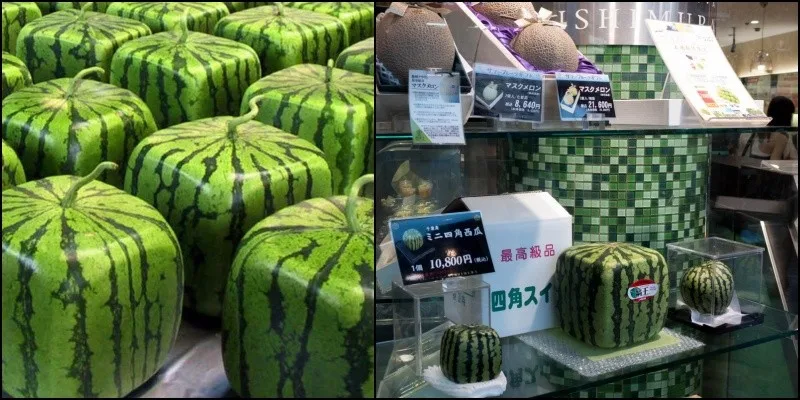
Farmers get the flat sides by placing an ordinary watermelon in a mold while it is still growing. In Zentsuji, Kagawa Prefecture, on Shikoku, the 2026 crop went into transparent square containers with a metal frame. Each cube came out at about 18 cm on a side. Shipping started on June 30, 2026. About 400 fruits, from seven farms, were expected to leave the town through mid-July at about 10,000 yen each, around US$62 that day.
A round watermelon rolls, and a large one wastes space in a small refrigerator. Two accounts explain who turned that problem into a product. Graphic designer Tomoyuki Ono showed molded fruit at a gallery in Ginza in 1978 and patented a molding process in the United States. In Zentsuji, a growers' group is credited with developing the commercial cube about 50 years ago so it would fit a refrigerator, and that town is still where the shipment comes from. At the 2026 packing, grower Toshiyuki Yamashita, 78, said he hoped people would feel that summer had arrived when they saw the watermelons.
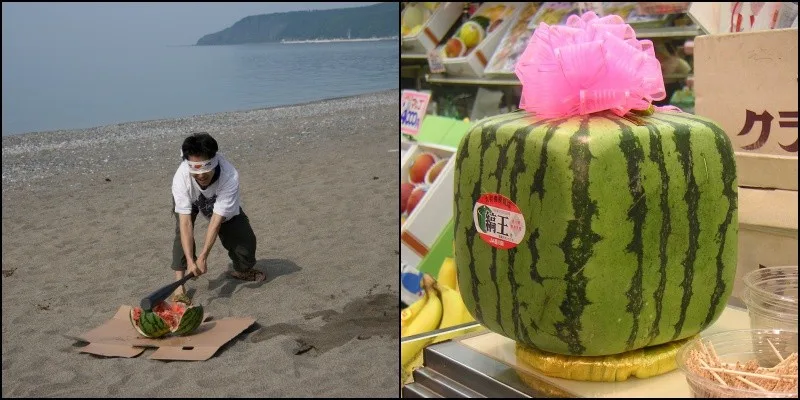
The fruit has to leave the mold while the sides are still firm. The 2026 cubes from Zentsuji were low in sweetness, and the town shipped them as summer decoration. A watermelon picked for suikawari is chosen ripe, because someone is about to break it open on the beach.
Hearts and pyramids followed, each from its own mold. The heart is the shape tied to Valentine's Day and to Mother's Day, two dates when giving fruit is already ordinary.
Fruits given as gifts
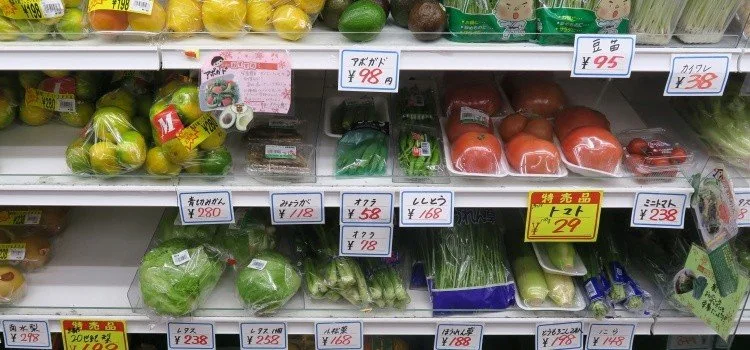
The prices that travel outside Japan are usually the first auction of the season. A company buys one pair, or one bunch, and that morning becomes the headline. A gift melon later the same month, and the produce in a neighborhood market, are separate purchases. For what fruit costs on an ordinary day, the prices of fruit and vegetables in Japan are the comparison that keeps the auctions in scale.
Yubari melon
The Yubari melon is the Yubari King, grown in Yubari City, Hokkaido. The rind carries a raised net, the flesh is orange, and the registered standard asks for 1.0 to 2.5 kg and sugar above 10 degrees. Japan protects the name as a geographical indication, registration number 4, dated December 22, 2015. The seed of this one-generation hybrid stays in the city. The net on the rind depends on tight control of temperature, humidity and moisture in the soil, work the local association has practiced since 1960.
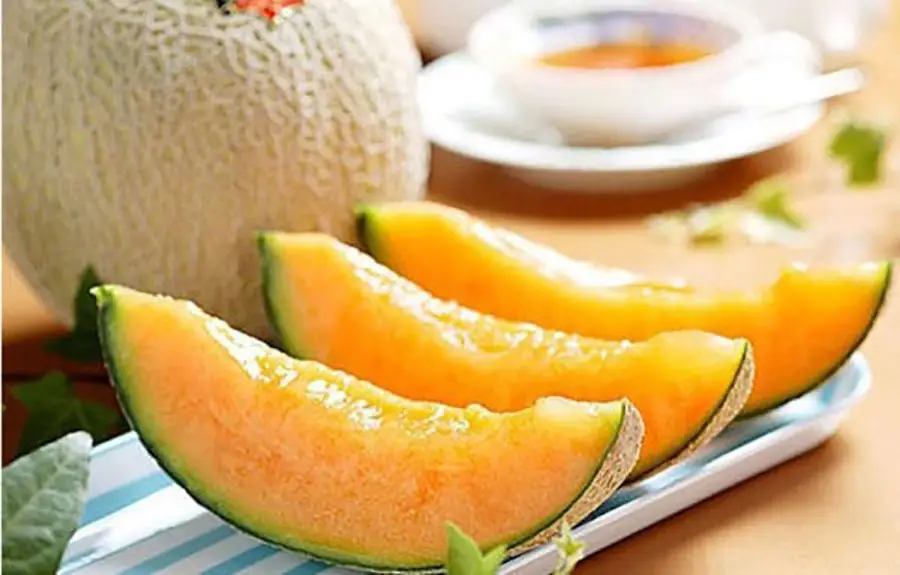
On May 22, 2026, a pair of Yubari melons sold for a record 5.8 million yen at the first auction of the season in Sapporo. The previous record was 5 million yen, in 2019. The buyer was Futami Seika, a wholesaler in Kushiro, and the pair was headed for a Keio Store display in Tokyo. The cooperative's plan for the season was 3,086 tons. The melons shipped through June and July are the ones people send as gifts.
Ruby Roman grapes
Ruby Roman is a red table grape grown and sold in Ishikawa Prefecture. Each berry is about the size of a ping-pong ball. The name was chosen by public vote, and the first fruit went on sale in 2008. To carry the name, a berry has to weigh more than 20 grams and reach more than 18 percent sugar. The premium class asks for berries over 30 grams and a bunch of at least 700 grams.
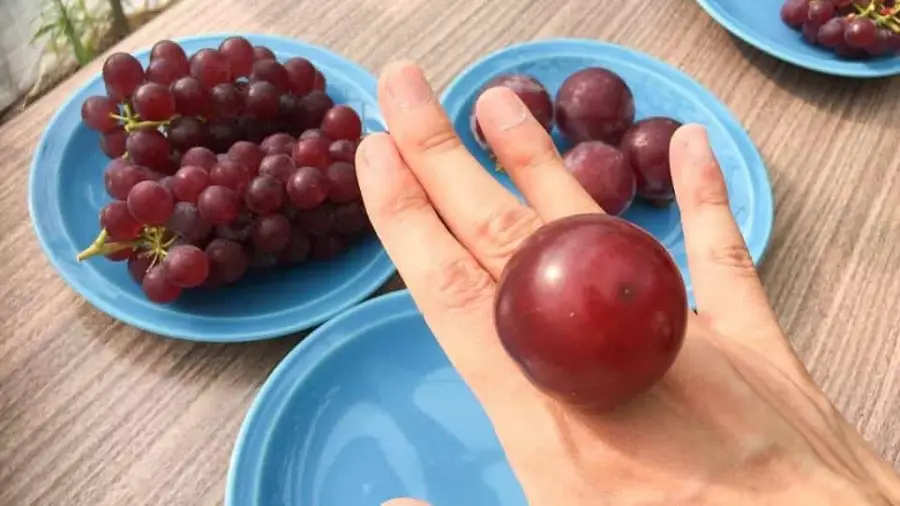
On July 7, 2016, one bunch of 26 berries, about 700 grams, sold for 1.1 million yen at the first auction in Kanazawa. On July 17, 2026, the first auction reached 1 million yen again, this time for a Tokushu G bunch of 33 berries weighing about 1 kg, grown in Nanao and bought by the Tokyo fruit shop Ichifuji. A shop bunch that meets the basic sugar and weight rule is a separate purchase from either of those mornings.
Densuke watermelon
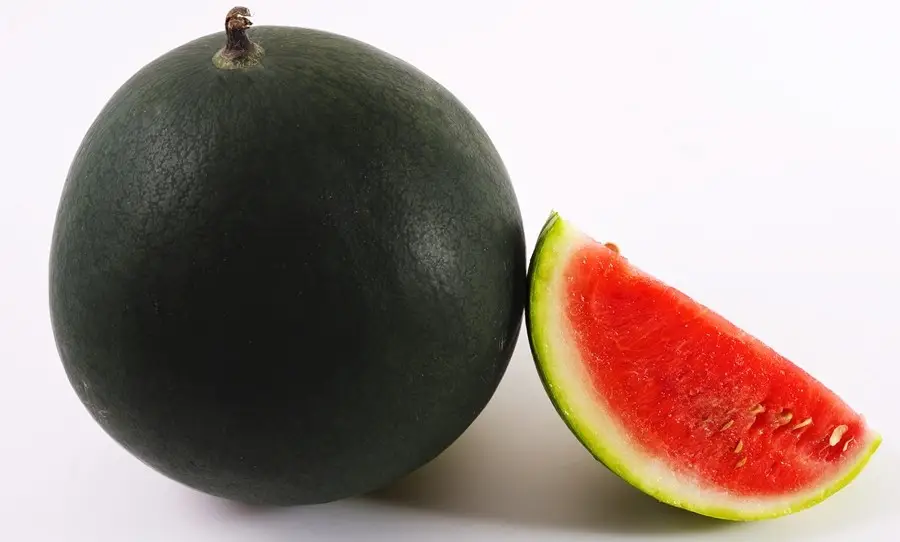
Toma, also in Hokkaido, grows Densuke, a watermelon with a dark glossy rind and no pale stripes. Each fruit is polished before it goes into the box. Growers there describe a crisp bite and high sweetness, so this one is grown to be eaten, while the cube is grown to be shown. Harvest for 2026 began on June 18. The first auctions were set for the next day in Sapporo and Asahikawa, and the town expected about 40,000 watermelons through August.
Taiyo no Tamago mango
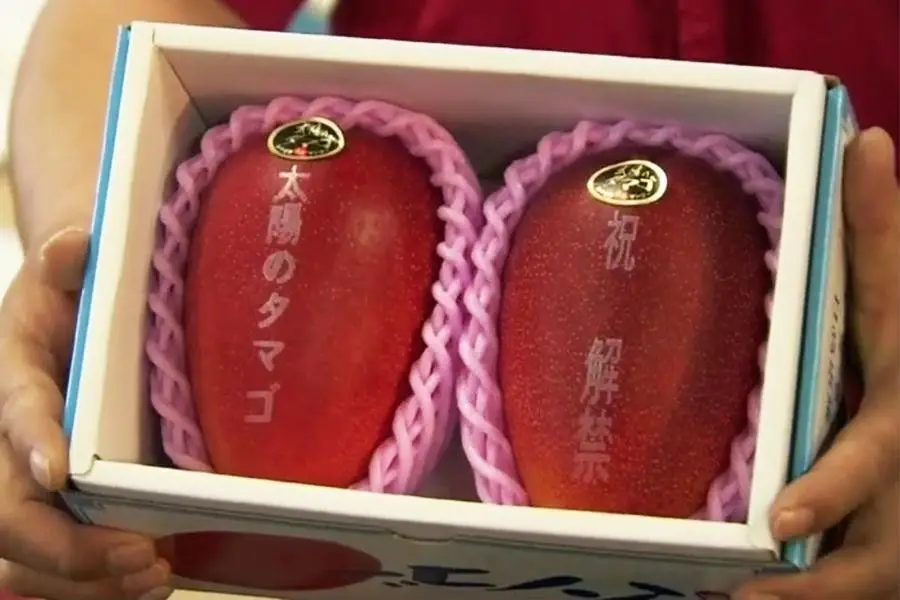
Taiyo no Tamago, the Egg of the Sun, is the top brand of ripe mango from Miyazaki. On April 16, 2026, the first auction ran at 23 markets. At the central market in Miyazaki City, two 4L fruit from Saito, each about 500 to 649 grams, sold for 550,000 yen, the highest bid in the country that day.
Square watermelon
The cube from the first section comes back here as a gift you look at. In 2026 the farms packed it only after checking that the sides had stayed square.
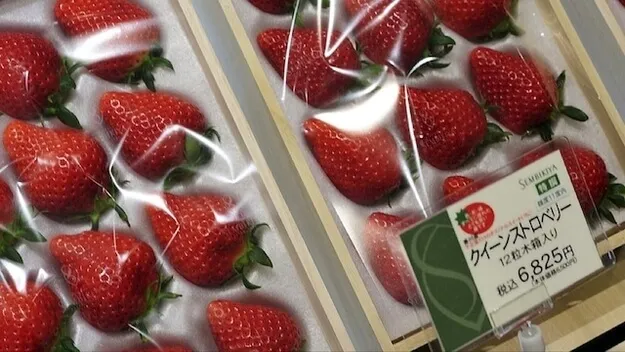
Sembikiya Queen strawberry
Sembikiya Sohonten in Tokyo sells Queen Strawberry through the winter, when Japanese strawberries are in season. The berries are Nyoho, grown in Miki, Kagawa, and the shop selects them for color, shine, shape and a balance of sweetness and acidity. They leave in a gift box.
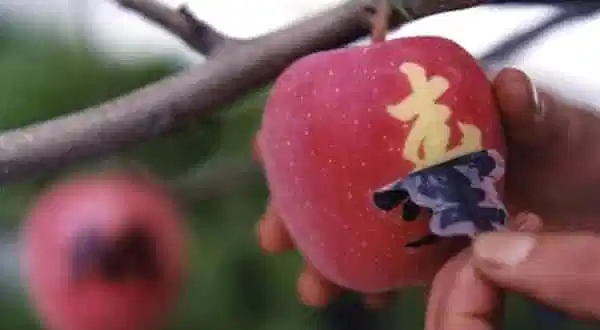
Sekai Ichi apples
Sekai Ichi (世界一) means "world's number one." The cultivar is Aori No. 4, first planted in Morioka in 1930 and released in 1974. The parentage on record is a cross of Red Delicious and Golden Delicious. A typical fruit weighs about 900 grams, with a circumference of 30 to 46 cm, so one apple can look like a small melon. Most of the commercial crop grows in Aomori, and in Japan the apple is bought for a particular occasion, one piece at a time.
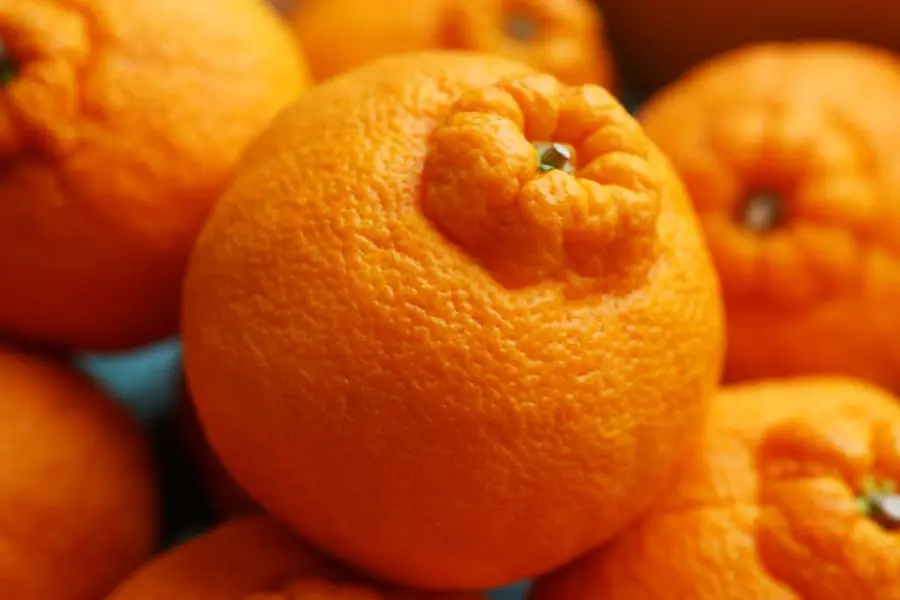
Dekopon
The brand Dekopon (デコポン) is used on shiranui (不知火), a hybrid of Kiyomi and ponkan developed in Japan in 1972. The bump on top is the deko in the name. After harvest the fruit usually rests 20 to 40 days so the acid falls and the sugar rises. Fruit sold under the Dekopon name has to clear 13 Brix, with citric acid under 1.0 percent. Yuzu, mikan and the other sour citrus sit in the guide to Japanese citrus, and the kanji for these names are in the list of fruits in Japanese.
In the anime Love Hina, Mutsumi Otohime holds a square watermelon, with the flat sides making it easy to carry. The mold in Zentsuji was built for that same convenience, a fruit that stays where you put it.

When a Japanese fruit price reaches you with a date in April, May, June or July, and a quantity of one box or one pair, you are looking at the opening auction. The Yubari pair at 5.8 million yen, the Ruby Roman bunch at 1 million yen and the two Miyazaki mangoes at 550,000 yen are that kind of sale. The cube at about 10,000 yen is what left Zentsuji as decoration. If you want the sweet fruit, look for a later box, a shop counter, or the round watermelon at the beach.


Community
Comments
0 comments
There are no published comments in this language yet.
Send comment