
If you think fruits and vegetables in Japan are always unaffordable, you are probably picturing the glossy counters: polished department-store melons, gift-box strawberries, grapes that look catalog-perfect. On a small market in a prefecture like Shiga, everyday shopping looks different. There, at the end of summer and the start of autumn, seasonal produce sat clearly below many big-supermarket and konbini (convenience store) price tags in cities such as Tokyo or Osaka — fresh, local, and without the gift wrapping.
Below are the prices we noted at that market, grouped by category. Yen-to-USD conversions use the October 2024 rate (1 yen ≈ $0.0067 USD). Rates and seasonal prices move; the yen amounts are the real anchor.

Contents 12
Why fruit in Japan seems expensive — and when it is cheaper
Japan has limited flat farmland, strict quality standards, and a strong culture of giving flawless fruit as a gift. That is why melons, strawberries, and grapes in department-store food halls land in price ranges many visitors never expected. That market is real — it is not the only one.
At regional fresh markets, farm stands, and often in supermarkets outside the biggest metro hubs, you buy everyday produce: seasonal, sometimes imperfect in shape, at prices that soften the “everything is expensive” reputation. Bananas and sprouts are frequent cheap entry points; leafy greens, onions, and mushrooms pay off especially in season. If you live in Japan or stay longer, the gap is obvious; if you are traveling, compare local markets and a regular Japanese supermarket instead of only photographing gift counters.
Fruit prices
Fruit prices swing hard, especially out of season. At this market, these stood out:
Apples, oranges, and other fruit
- Large apples (4 pieces): 350 yen ≈ $2.35
- Oranges (bag): about 200 yen ≈ $1.34
- Peaches (bag of 3): 400 yen ≈ $2.68
- Nashi pear (each): 150 yen ≈ $1.01
- Kaki / persimmon (each): 100 yen ≈ $0.67
Berries and smaller fruit
- Grapes (small bunch): 300 yen ≈ $2.01
- Strawberries (small tray): 250 yen ≈ $1.68
Vegetable prices
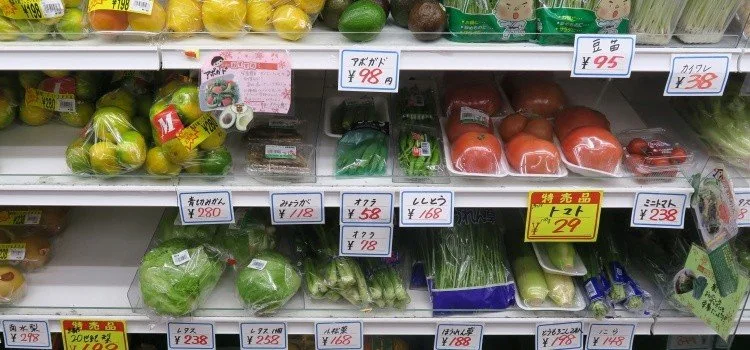
Seasonal vegetables are often the healthiest and most affordable pick at small markets. Prices we noted:
Leafy greens and salads
- Lettuce: 238 yen ≈ $1.60
- Spinach (bunch): 150 yen ≈ $1.01
- Cabbage (whole head): 180 yen ≈ $1.21
Roots and tubers
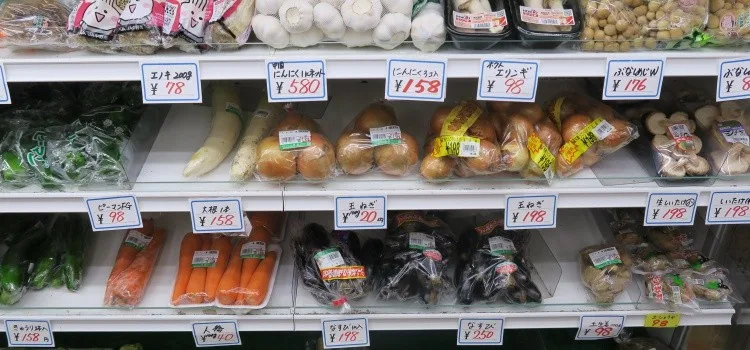
- Carrots (3 pieces): 40 yen ≈ $0.27
- Onion (100 g): 20 yen ≈ $0.13
- Bag of onions: 198 yen ≈ $1.33
- Sweet potato (each): 120 yen ≈ $0.80
Common vegetables and mushrooms
- Small tomatoes (tray of 7): 238 yen ≈ $1.60
- Eggplant: 198 yen / 250 yen ≈ $1.33 / $1.68
- Bell pepper: 98 yen ≈ $0.66
- Okra: 58 yen / 78 yen ≈ $0.39 / $0.52
- Radish sprouts (カイワレ / kaiware): 38 yen ≈ $0.25
- Shiitake mushroom: 198 yen ≈ $1.33
- Eringi mushroom: 98 yen ≈ $0.66
Other products and notes
Beyond fruit and vegetables, the stall also carried kitchen staples and fresh sides:
Garlic, ginger, and myoga
- Garlic (bag): 580 yen ≈ $3.89
- Garlic (3 pieces): 158 yen ≈ $1.06
- Myoga (みょうが, Japanese ginger bud): 118 yen ≈ $0.79
Myoga is not the yellow root ginger (生姜 / shōga). It is the crisp flower bud often eaten raw in salads, on tofu, or as a noodle topping — aromatic, milder, and very common in everyday Japanese cooking.
Meat and fish
Meat trays ranged from 250 to 600 yen each (about $1.68 to $4.02). That can feel manageable next to some large urban chains — and it still depends heavily on cut, quality, and region.
Money-saving tips at local markets
A few habits go a long way if you want fresh food without overpaying:
- Buy seasonal: What is in season is fresher and cheaper. In autumn, kaki and nashi pears are especially worth it.
- Prefer local markets and farm stands: Often lower than big chains and department-store fruit; neighborhood supermarkets and discount formats also deserve a comparison.
- Use end-of-day discounts: Many shops mark down perishables near closing — a classic everyday saving habit in Japan.
Shopping at local markets is not only a way to spend less. It is a quiet way to see Japanese food culture from the producer and neighborhood side. If you get the chance, try the seasonal range — and check the “always expensive fruit” myth against real price tags.






Community
Comments
0 comments
There are no published comments in this language yet.
Send comment