
In the textbook it is sugoi. In a group chat it becomes suge, and on the train you hear yabai without quite knowing whether it means “crazy good” or “oh no.” Japanese slang lives in that gap: between textbook polite forms and what friends, anime, and forums actually say.
Among countless abbreviations, dialect flavors, and borrowed words, wakamono kotoba [若者言葉] — literally “youth words” — stands out. Below are the expressions that show up most often in daily life and online, with reading, meaning, and the context that makes them work.
Contents 11
Wakamono Kotoba – Slang for Young Japanese Speakers
Young people are usually the ones who push informal speech the hardest. Japanese has a ready-made label for that layer of vocabulary: wakamono kotoba [若者言葉], “words of youth.”
Most of the slang in this guide sits in that category. Small sound shifts, clipped forms, and shifted meanings can turn standard words into youth jargon. Some phrases stick for generations; others age out after a few internet seasons.
You hear it most among teens and people around twenty, though a few items have spread across ages. Complaints about “young people’s speech” are not new either: classical observation texts such as the Makura no Sōshi (The Pillow Book) already treated youthful language as a social disturbance — long before TikTok or 2channel.
Core Japanese Slang Words at a Glance
Start with short, high-frequency forms. Later sections go deeper on mendokusai, yabai, English-based coinages, and online laughter with www.
- Shitakke [したっけ] – Hokkaidō flavor meaning “bye, see you later”; known from the anime/manga Boku dake ga inai machi.
- Baito [バイト] – Short for arubaito: part-time job or side work. From German Arbeit.
- Chotto ii? [ちょっといい?] – A soft “Got a second?” / “Can we talk for a moment?”
- Dame [だめ] – Colloquial “not good,” “not allowed,” “nope.” See also yamete, yamero, and dame.
- Eto [えと] – Filler like “umm…”; softens questions and marks thinking. Stretched to “etto…” when the speaker is stalling.
- Faito! [ファイト!] – From English fight; a cheer close to “Do your best!” or ganbatte.
- Hara heta [腹へた] – Casual “I’m hungry”; rough toward elders or strangers.
- Hora [ほら] – “Look!” / “See?”; drawn out, often “I told you so…”
- Iyada [イヤだ] – “I don’t want to” / strong aversion; the initial i is often swallowed.
- Ki ni shinaide [気にしないで] – “Don’t worry about it” / “Don’t take it to heart.”
- Nandake [何だっけ] – “What was that again…?” often said to yourself when you blank on a word.
- Osu / Ossu [オス / おっす] – Informal greeting among friends (see also below).
- Shimatta [しまった] – “Damn” when something went wrong or you messed up.
- Suge [すげ] – Even more casual than sugoi (“awesome,” “wild”).
- Uso [嘘 / うそ] – Literally “lie”; often “No way!” / “You’re kidding!”
- Wagamama [わがまま] – Spoiled, selfish, stuck on one’s own way.
- Zannen [残念] – “What a shame” / regrettable; can sound ironic, but is not mainly an insult.

Mendokusai – When Something Is a Pain
Mendokusai [面倒くさい] joins mendō (trouble, hassle) with kusai (“stinks” in a figurative sense). The idea: something is bothersome, tiring, fiddly, or not worth the effort.
We unpack the word in full here: meaning of mendokusai. Nearby everyday negatives include:
- Mazui [まずい] – Of food, “tastes bad”; of a situation, “awkward,” “this is bad.”
- Kimoi [キモイ] – Short for kimochi warui: gross, creepy, “ew.”
- Uzai [ウザい] – From urusai territory: annoying, a pain, hard to deal with.
- Zurui [ずるい] – Unfair, sneaky, “cheat-y.”
- Hidoi [ひどい] – Mean, harsh, cruel (“That was rough of you”).
For harsher and insulting forms, see Warui Kotoba – swear words and insults in Japanese.
Yabai – Good and Bad at the Same Time?
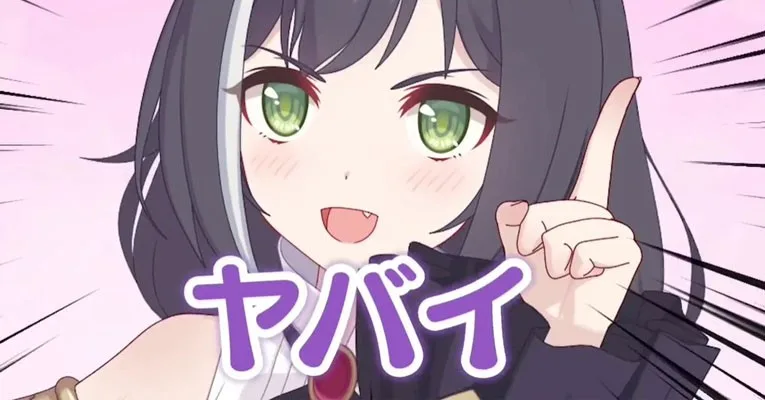
One of Japan’s most famous youth words is yabai [やばい]. At base it marks danger, risk, or a messy situation — close to “bad,” “risky,” or “this is not good.”
Over time the range widened: yabai also carries surprise and strong emotion. Among younger speakers it often flips positive for “crazy good,” delicious, cool, or unbelievable — all depending on tone and context. That double edge is exactly why the word is so useful and so easy to misread.
Examples and nuance: what does yabai mean?
Japanese Slang Borrowed from English
Freeter (フリーター) – Pronounced furītā: someone who mainly lives on temporary and part-time work. Baito often names the job itself (students with side work); freeter leans toward a life pattern outside a classic full-time career track.
Arasa (アラサー) – From English around thirties: people (often women in media talk) around age 30.
Rafu (ラフ) – From rough; today often “casual” dress: rafu na kakkou [ラフな格好], rafu na fukusō [ラフな服装].
Suru (スルー) – From through: to let something pass, or to ignore it (close to mushi suru [無視する]).
Dantotsu (ダントツ) – Short for danzen toppu [断然トップ]: by far number one.
NG – Pronounced enujī, from no good: not okay, off-limits, “don’t do that.”
OL – ōeru, office lady: female office worker; wasei-eigo next to the classic salaryman image.
Mazakon (マザコン) – Strong emotional dependence on one’s mother (from “mother complex”).
Nau (なう) – From now; especially online for “right now” in status-style posts.

Abbreviations, Clipped Forms, and More Everyday Slang
Ahiru-guchi / Ochobo-guchi – Puckered lips in photos (duck-bill mouth); related to Western “duck face.” A fish-lip variant is often called tarako-kuchibiru.
Torusō (トルソー) – From English torso: mannequin or upper-body display form in fashion retail.
Dotakyan (ドタキャン) – Last-minute cancellation; from dota (last minute) + kyanseru (cancel).
Majide (マジで) – “Seriously?” / “For real?”
Kuri botchi (クリぼっち) – Spending Christmas alone: kuri from kurisumasu, botchi from hitori bocchi.
Ossu (おっす) – Short greeting; still common in martial arts circles and among younger guys, with older formal roots.
Nori nori (ノリノリ) – From noru [乗る]: in high spirits, hyped, going with the flow.
Guroi (グロい) – Grotesque, bloody, repulsive (from “grotesque”).
- More shortenings: acronyms and abbreviations in Japanese.
Internet Slang Japanese Speakers Use Online
Plenty of the words above migrate straight into chats and comments. A few forms, though, feel almost native to the web.
乙 – Online shorthand for otsukaresama [お疲れ様] (“thanks for the hard work”), because the kanji 乙 can be read otsu.
- 鯖 – Character for mackerel (saba); online, a common pun for server.
- Mjk – Short for majika: “Seriously?”
- Baka – “Idiot” / “fool” (tone decides how sharp it lands).
- DQN – Net-culture label for reckless or “oblivious” behavior.
- 888 – Applause / congratulations in comments.
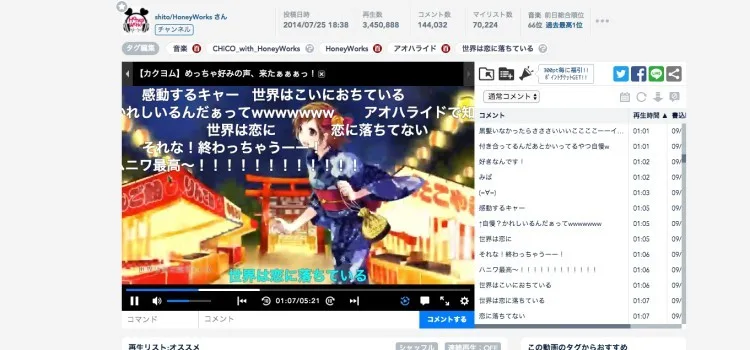
Online laughter: wwwww
Instead of a long “hahaha,” many Japanese writers type the letter w — often stacked as wwww. It points to warau [笑う] (“to laugh”); another option is the kanji in parentheses: (笑). On sites like NicoNico Douga you see it constantly. English “lol” is the closest everyday match — not Brazilian “kkkk,” which is a different internet habit.
One more layer: the grass kanji kusa [草] as laughter, because a row of ws looks like blades of grass. Example: 寝たい〜草 roughly “Wanna sleep lol.”
Best friends: zuttomo
Zuttomo [ずっ友] clips zutto (always) and tomo (friend) for a close, lasting friendship — a casual Japanese cousin of “best friends forever.”
orz – Seiza as an emoticon
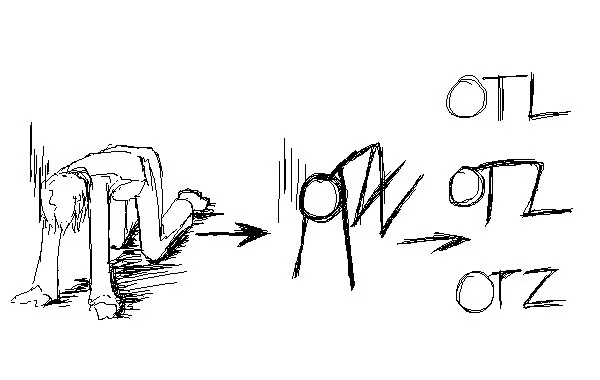
From the world of emoticons, orz is not the letters themselves but a sideways kneeling figure (head–body–knees) — often defeat, exhaustion, or apology, close to the image of seiza.
Owakon – Old content
Owakon blends owatta [終わった] (“finished”) and kontento [コンテンツ] (“content”): material that is “done” — outdated, already chewed over, no longer the current hype.



Community
Comments
0 comments
There are no published comments in this language yet.
Send comment