
Many end up hearing that Japan has no armed forces or army because it is prohibited. Is this really true? If so, to what extent? In this article, we will see what happened to the Japanese army.
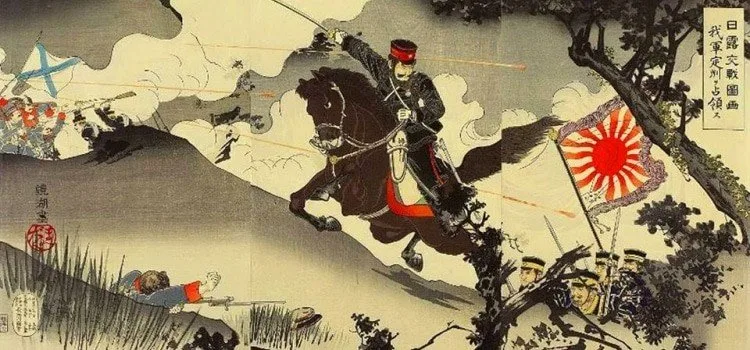
Japan throughout its history has lived through civil wars and participated in various wars with other countries. The country is known for its samurai, ninjas, and also for the events of World War II, which gives rise to today's article.
Contents 6
How did Japan end up without an army?
After World War II, the USA defeated Japan. And imposed changes to its Constitution. One of them was the prohibition of having Armed Forces. They were prohibited due to the Second World War and its atrocities.
American military bases were built on the territory to protect Japan after this peace and union agreement. This, in a way, was an advantage. Because defense is something expensive, and Japan saved on that and had a great financial revolution.
The purpose of this law imposed by the United Nations was to try to contain militarism in the country — since during the war, Japan was one of the most aggressive countries, invading territories of China, Korea, Russia, and American bases in the Pacific.
Because of this prohibition imposed by the United States, people have the idea that Japan has no army. But it is not correct to say that Japan has no army, as it is still among the 10 countries with the strongest military power.
If not Armed Forces? What does Japan have?
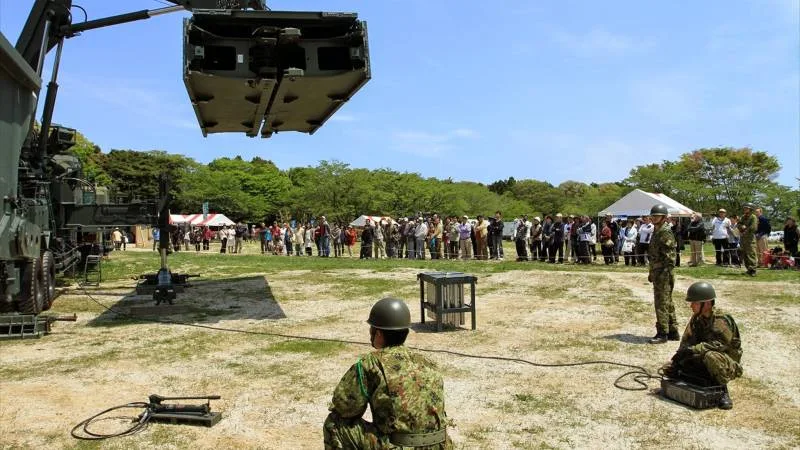
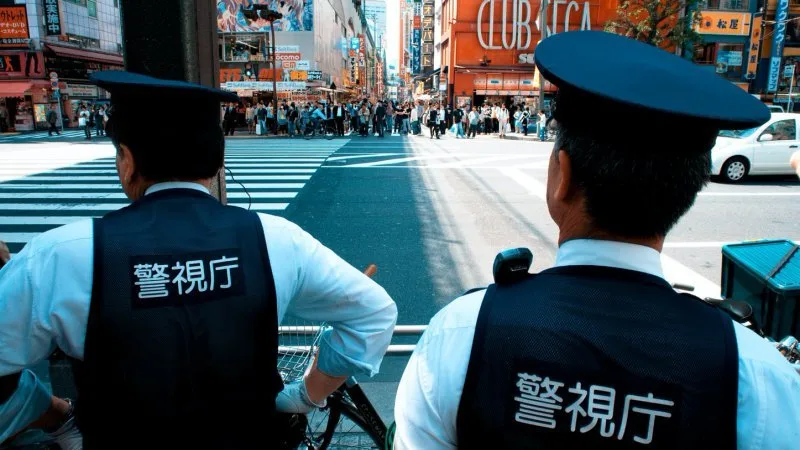
Although it officially has no armed forces (according to Article 9 of the Constitution), Japan has an equivalent force called Japan Self-Defense Forces, which officially presents itself as an extension of the police.
Despite seeming like an extension, it is a powerful military force spread across the territory of Japan, responsible for its defense, and can go beyond Japan's borders if it is for a United Nations peace mission.
In 2015, legislation regarding this matter was changed to allow the Japan Self-Defense Forces to fight alongside the armed forces of countries allied with Japan, if they share a common enemy.
To better understand this story, we will talk a little about the Japanese constitution, Article 9, followed by the demilitarization of Japan, so we can finally talk about the Japan Self-Defense Forces [JAF].
Article 9 of the Japanese Constitution
The constitution of Japan was created as the basic law of the country from 1947, being written during the occupation of the allies after World War II. Article 9 contains the law that speaks about the absence of an army in the country. See below:
Sincerely aspiring to world peace based on justice and order, the Japanese people renounce forever the use of war as a sovereign right of the nation or the threat and use of force as a means of resolving international disputes.
In order to fulfill the objective of the previous paragraph, the forces of the army, navy, and air force, as well as any other potential war force, shall never be maintained. The right to belligerency of the State shall not be recognized.
The Demilitarization of Japan
The demilitarization of Japan was a punishment for the various war crimes committed by imperial Japan during World War II. When the Axis was defeated, the allies imposed various restrictions on the surrendered countries.
In the case of Japan, it was required that the country be demilitarized and that the emperor no longer be recognized as a sacred being. Additionally, the opening of political democratization of the country was imposed.
With public support and acceptance, Japan underwent a demobilization and total disarmament, with the removal of all military leaders from public office and the constitutional ban on any type of rearmament.
Under the orders of General Douglas MacArthur of the United States Army, who served as Supreme Commander of the Allied Powers, the allied occupation authorities were committed to demilitarizing and democratizing Japan.
All clubs, schools, and societies associated with the armed forces and martial arts were eliminated from Japan. The general staff was abolished, along with the ministries of the army and navy. The industries that served the armed forces were also deactivated.
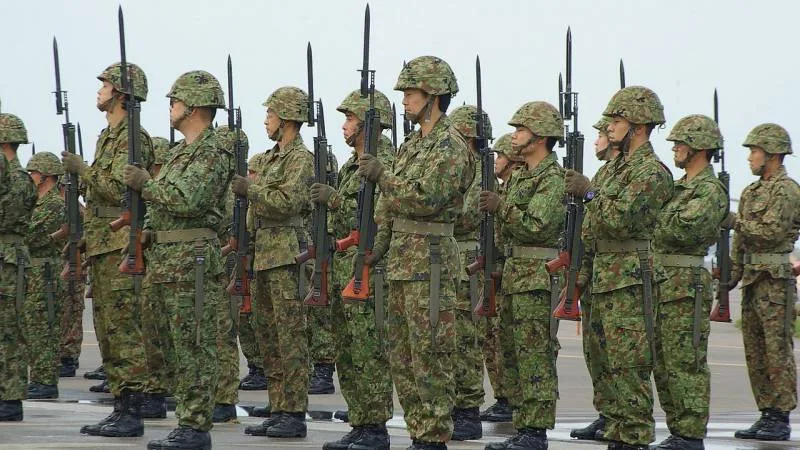
Over time, Japan gained the trust of the West, and currently JAF has a military formation of over 250,000 men, with the support of 60,000 men from American military bases present on Japanese territory.
Japan Self-Defense Forces
The Japan Self-Defense Forces are called Jieitai [自衛隊] and abbreviated as [JAF]. This is the real armed force of Japan, created at the end of the United States occupation after World War II.
The Japan Self-Defense Forces also have military branches of army, navy, and air force. With a total of five armies, five maritime districts, and three air defense forces. The Japanese military personnel are between 18 to 49 years old.
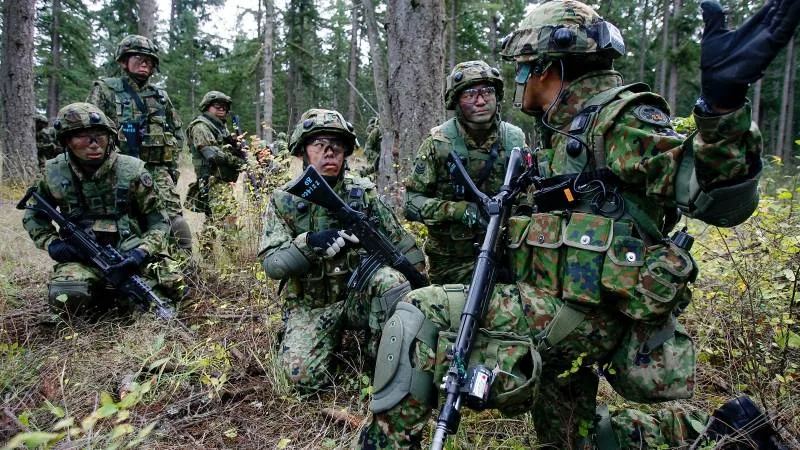
The JAF is literally a military force, with tanks, fighter jets, naval destroyers, submarines, mortars, launchers, and others. Its uniforms, ranks, and organization are similar to the Americans, from whom they drew significant influence.
Of the 250,000 Japanese in the JAF, about 150,000 belong to the ground force, while the rest is divided between the Maritime Self-Defense Force and the Air Self-Defense Force. About 1,500 are in the Cabinet of the General Staff, and 60,000 are reserves.
Following the article of the Japanese Constitution, Japan stipulates the following policies for National Defense:
- Maintain a policy exclusively oriented towards defense;
- Avoid becoming a military power that could threaten the world;
- Avoid the development of nuclear weapons and refuse to allow nuclear weapons to enter Japanese territory;
- Ensure civilian control of the armed forces;
- Maintain security agreements with the United States;
- Expand defensive capabilities within moderate limits;
The military budget of Japan must be maintained at a level of only 3% of the total budget of the country. About 50% is spent on troops, and the rest is divided among supplies, new weapons, improvements, etc.
Which Countries Have No Army at All?
Now that we know about the Japanese army, are there countries where there are no military forces at all? Yes, countries like Andorra, Dominica, Grenada, Kiribati, Liechtenstein, Marshall Islands, Federated States of Micronesia, Nauru, Palau, Saint Lucia, Saint Vincent and the Grenadines, Samoa, Solomon Islands, Tuvalu, and Vatican have no military forces.
This does not mean that these small and unknown countries are insecure; some receive military support and protection from others. There are also countries with limited military force; Japan is not on this list, as it has a powerful force. Some of these countries are Costa Rica, Haiti, Iceland, Mauritius, Monaco, Panama, and Vanuatu.
I hope this article has helped you clarify your doubts about the army in Japan. If you liked the article, share it and leave your comments. Thank you very much, and see you next time! Continue reading our other articles…




Community
Comments
0 comments
There are no published comments in this language yet.
Send comment