
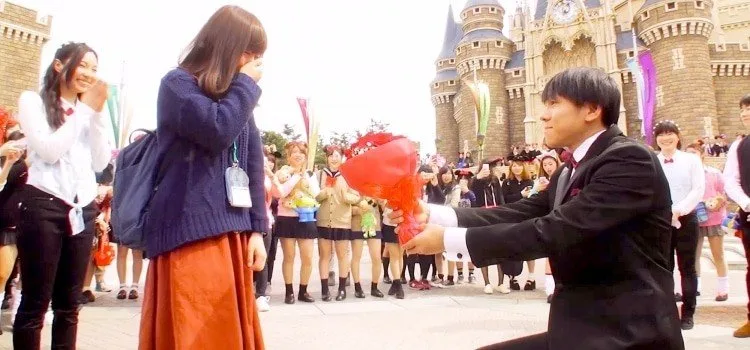
In English, the couple says “I do.” In a Japanese chapel, the pastor often reads the whole promise — health, illness, love, respect, comfort, help — and the answer is four mora: はい、誓います. Hai, chikaimasu. Yes, I vow.
That is the script English readers usually mean by “Japanese wedding vows.” It is Japanese. It is also a hotel-chapel rendering of a Western Christian vow, not the shrine rite with norito and three sips of sake. The two spoken formats below are the ones you actually hear in a チャペル.
Contents 3
Chapel vows, not shrine vows
A Shinto wedding (神前式, shinzen shiki) is a different language job. The couple stands before the kami, drinks from three cups (san-san-kudo), and the priest recites a norito. There is no “repeat after me” block that maps onto “in sickness and in health.”
The text on this page comes from Western-style ceremonies: purpose-built chapels attached to hotels and wedding halls. The pastor asks; the couple answers. That is why the Japanese tracks a Christian vow more closely than a shrine prayer — and why calling these lines “traditional Japanese vows,” as some English lists do, mixes two ceremonies.
If you are planning the whole day, not only the words, we already have a guide to wedding costs and procedures in Japan.
The traditional wedding vow in Japanese
There are two common ways to speak the same chapel vow. In the first, the officiant reads it line by line in the Western style, and the groom repeats each sentence. Then the same text is read again, and the bride repeats it.
The only difference between the groom’s vows and the bride’s is the word josei [女性], which means woman; in the bride’s vows it changes to dansei [男性], which means man.
私はこの女性と結婚し
夫婦となろうとしています。
私は健康な時も
そうでない時も
この人を愛し
この人を敬い
この人を慰め
この人を助け
私の命の限り
固く節操を守ることを
誓います。
Watakushi wa kono josei [dansei] to kekkonshi
Fufu to narou to shite imasu
Watakushi wa kenkouna tokimo
Soudenai tokimo
Kono hito o aishi
Kono hito o uyamai
Kono hito o nagusame
Kono hito o tasuke
Watakushi no inochi no kagiri
Kataku sessou o mamoru koto o
Chikaimasu.
The second type is read by the officiant and confirmed by the bride and groom saying Hai, chikaimasu. One of the differences in this vow is the word for groom, which is shinrou [新郎], and bride, which is shinpu [新婦].
Vows in Japanese:
しんろう [しんぷ]、(your name)、あなたはこの女性と結婚し、夫婦となろうとしております。
あなたは、健康(けんこう)なときも、そうでないときも、この人を愛し、この人を敬(うやま)い、この人を慰(なぐさ)め、この人を助(たす)け、その命(いのち)の限(かぎ)りかたく節操(せっそう)を守ることを誓(ちか)いますか?
Vows in romanized Japanese:
Shinrou, (groom's name), anata wa kono josei to kekkonshi fuufu to naru to shite orimasu.
Anata wa, kenko na tokimo, soudenai tokimo, kono hito o aishi, kono hito o uyamai, kono hito o nagusame, kono hito o tasukete, sono inochi no kagiri kataku sessou o mamoru koto o chikaimasu ka?
The bride’s version swaps in shinpu and dansei [男性]. The answer, in both cases, is not “I do.” It is はい、誓います.

Just don't be a fool and marry an anime character.
Studying the wedding vows in Japanese
Now that you have seen the vows in Japanese written in romaji, let’s look at the vows written with ideograms and study them sentence by sentence, similar to our articles dissecting songs.
私はこの女性と結婚し
Watakushi wa kono josei [dansei] to kekkonshi
I am marrying this woman
- 私 — I (read here as the formal watakushi)
- この — this
- 女性 — woman
- 結婚し — marrying; taking in marriage
夫婦となろうとしています。
Fufu to narou to shite imasu
We are about to become husband and wife
- 夫婦 — couple, husband and wife
- なろう — to become
- なろうとして — intending / about to become
私は健康な時も
Watakushi wa kenkouna tokimo
I, even in times of health
- 健康 — health, healthy
- 時 — time
- も — also, even
そうでない時も
Soudenai tokimo
Even in times that are not (when I am not healthy)
- そうでない — not so; not the case
この人を愛し
Kono hito o aishi
I will love this person
- この — this
- 人 — person
- 愛し — love
この人を敬い
Kono hito o uyamai
I will respect this person
- 敬い — respect, honor, esteem
この人を慰め
Kono hito o nagusame
I will comfort this person
- 慰め — comfort, console
この人を助け
Kono hito o tasuke
I will help this person
- 助け — help, assist, support
私の命の限り
Watakushi no inochi no kagiri
For as long as I live
- 命 — life
- 限り — limit; as long as; to the utmost
固く節操を守ることを
Kataku sessou o mamoru koto o
To firmly keep my fidelity
- 固く — strongly, firmly
- 節操 — constancy; integrity; fidelity; principle, honor
- 守る — keep, protect
誓います。
Chikaimasu.
- 誓います — I vow, I swear
These were the Japanese vows of a Western chapel wedding. The English “I do” is shorter; the Japanese packs the whole life into one question and one 誓います. If you are still before the chapel — asking, not answering — we have a separate page on how to propose in Japanese.







Community
Comments
0 comments
There are no published comments in this language yet.
Send comment