
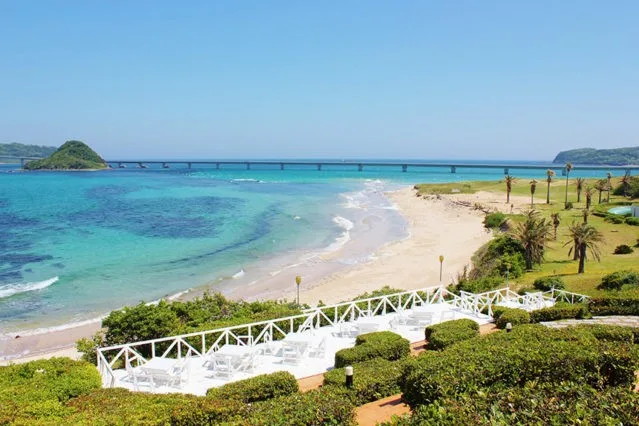
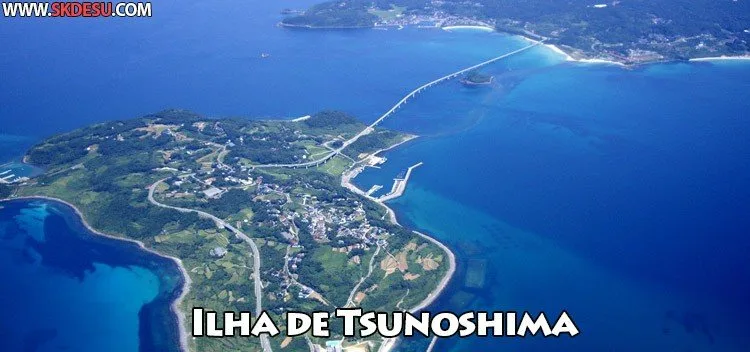
Tsunoshima (角島), a small island in Yamaguchi Prefecture, sits off the northwestern tip of Honshu in Shimonoseki—not a tropical southern prefecture, but a stretch of the Sea of Japan that somehow feels like one. The name means “Horn Island”: two capes rise like horns from the water, and grazing cattle have marked the landscape for centuries. What pulls people here now is simpler: water that shifts from turquoise to cobalt under a single cloud, a free bridge that looks stolen from a car commercial, and the sense that the mainland is only a short drive behind you.
When you roll onto the island, the first impression is open sky and sea. Grassy hills, quiet fishing hamlets, white sand, and herds that still appear near the roads keep the place grounded. Beaches draw swimmers, divers, and day-trippers; the bridge and lighthouse pull photographers. It is the kind of stop that rewards a full day, not a five-minute photo from the car window.
Contents 5
Tsunoshima Ohashi: the free bridge everyone photographs
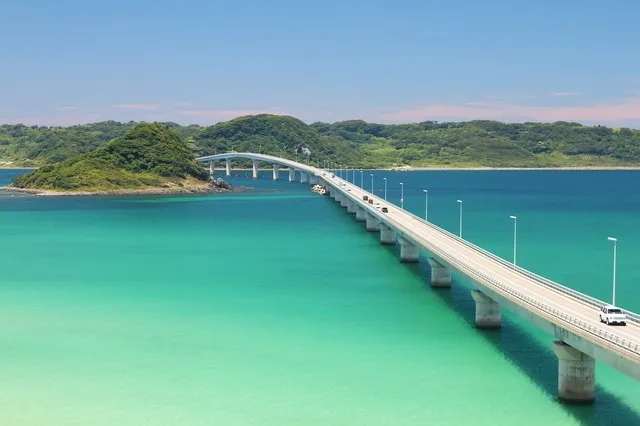
Tsunoshima Ohashi (角島大橋) is the island’s signature. At 1,780 meters it ranks among Japan’s longest free-to-cross bridges that connect a remote island to the mainland. It links Hōhoku, in Shimonoseki City, to Tsunoshima across the Amagaseto Strait. Opened on November 3, 2000 after a project of roughly 15 billion yen, it replaced an unreliable ferry that was often cancelled in rough weather.
The gentle curve is deliberate: the span arcs around the uninhabited islet of Hatoshima so the route can stay inside Kita-Nagato Kaigan Quasi-National Park without cutting through protected ground. Drive it once and the water seems to change color with every meter; stop at the lookouts on both ends and you understand why commercials and dramas keep using it as a backdrop. Amagase Park on the mainland side and the island-side viewpoints are the classic photo spots—especially when spring rapeseed flowers frame the blue span.
Tsunoshima Lighthouse: stone, sea, and a climbable tower
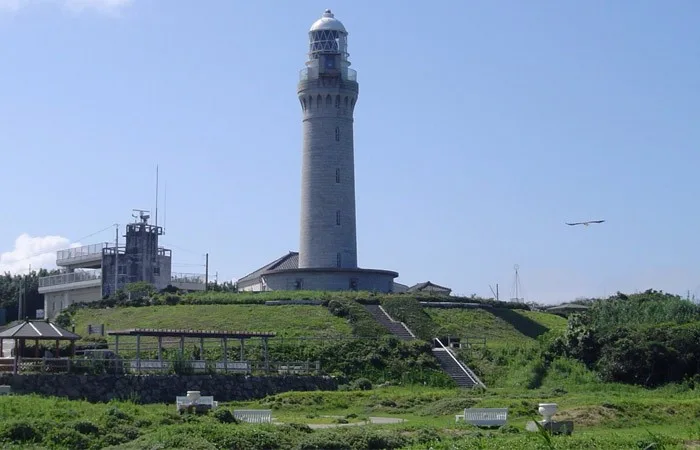
At the island’s northwestern tip stands Tsunoshima Lighthouse, first lit on March 1, 1876. It was designed under the guidance of Scottish engineer Richard Henry Brunton—often called the father of Japan’s modern lighthouses—and is among the early Western-style lights on the Sea of Japan coast. The granite tower rises about 30 meters (around 29.6 m in local records), not the inflated figure sometimes repeated online. It still guides ships, and in 2020 it became an Important Cultural Property while remaining in active service.
Visitors can climb one of the few Japanese lighthouses open to the public: a spiral of more than a hundred steps leads to a landing with a full-circle view of sea and sky. Beside the tower, a memorial hall in the old keeper’s residence covers lighthouse history and daily life on the coast. Paths and gardens around the park open toward the shore; in midwinter, daffodils bloom around the stone base, and in summer other coastal flowers take their turn. Check seasonal hours and the modest admission fee before you go—details change, so the on-site office is the final word.
What to do once you are on the island
Beyond the bridge and lighthouse, Tsunoshima rewards slow wandering. The fishing villages still show everyday island life, and renting a bicycle is one of the best ways to cover the quiet roads—end to end, the island is only about a ten-minute drive, so pedaling never becomes a marathon.
Ohama Beach and nearby white-sand shores are the swimming and beachcombing favorites: shell-fragment sand stays bright, and the water layers blue on blue on clear days. In summer, campgrounds near the beach open for short seasons; the rest of the year, picnic spots and rocky overlooks are enough for a sunset. Grazing fields near Makizaki and other capes keep the “horn” silhouette of the island honest—this was cattle country long before it was Instagram country.
Must-do moments on Tsunoshima
- Cross Tsunoshima Ohashi at least once by car or bus, then walk a viewpoint for the full curve over the sea.
- Climb the lighthouse when it is open, then walk the park paths to the cape.
- Slow down in a fishing village or a seaside eatery—local squid and other Sea of Japan seafood are the honest lunch after the photos.
- Stay on the beach long enough to notice the sand and water color change with the light.
- Cycle or drive the island loop past fields, hills, and capes that still look pastoral.
Planning a visit without rushing the scenery
Most travelers arrive by car via the free bridge; public transport exists but is thinner than in big cities, so leave buffer time if you rely on buses from the Shimonoseki or Hōhoku side. Pairing Tsunoshima with other Yamaguchi coastal stops works well if you have a full day or an overnight nearby—just do not treat the island as a single photo stop on a packed highway day.
If you are building a wider island-hopping list for Japan, Tsunoshima sits in a different mood from Tokyo’s artificial waterfront or classic day-trip isles closer to the capital. For more coastline ideas, see our guide to islands worth exploring across Japan and the walkable peninsula of Enoshima. Practical trip basics—seasons, pacing, and first-timer logistics—are covered in things to know before traveling to Japan.
Tsunoshima is small, blue, and surprisingly calm once the bridge crowd thins. Give it the hours it needs: the span, the stone lighthouse, a beach, and a bowl of something from the Japan Sea are enough to understand why this western edge of Honshu keeps pulling people off the main tourist map.



Community
Comments
0 comments
There are no published comments in this language yet.
Send comment