
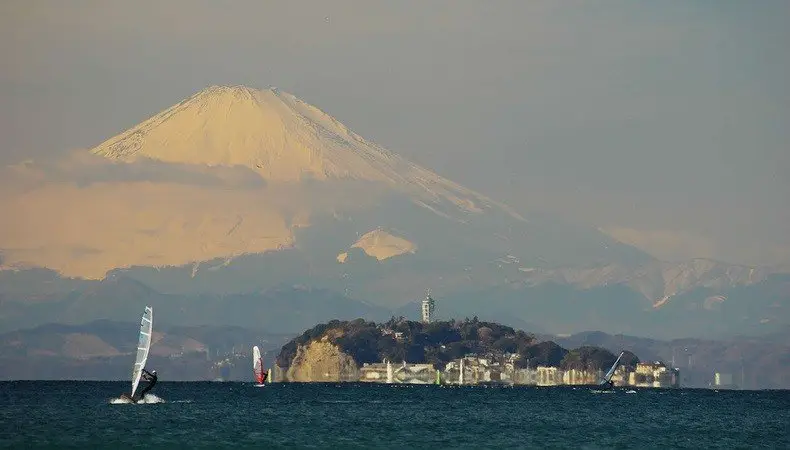
Enoshima (江の島) is a compact island in Fujisawa, Kanagawa, joined to the mainland by a bridge across Sagami Bay. It works well as a half-day stop from Kamakura or Tokyo: walk in from the stations, follow the shrine approach uphill, then choose how far you want to continue toward the Sea Candle, the Love Bell, and the Iwaya Caves. On a clear day, the coast also gives you a memorable view toward Mount Fuji.
The island is small, but it is not flat. The main route climbs steadily, and the southern side has stone paths and uneven ground. Comfortable shoes make a bigger difference here than a tightly scheduled checklist. Give yourself time to stop at the shrine buildings, look over the bay, and decide whether the caves fit your day.
Contents 6
Start with Enoshima Shrine and the uphill route
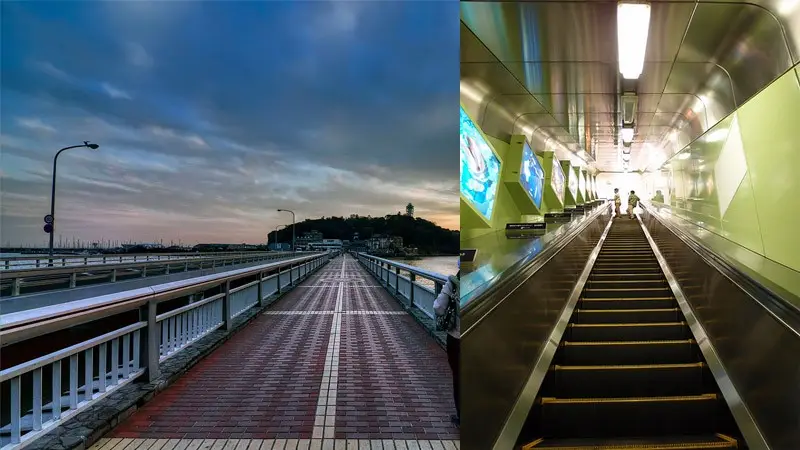
Cross Benten Bridge and pass through the approach lined with shops before the route begins to rise. Enoshima Shrine is spread across the island rather than contained in one building, so the walk becomes part of the visit. The shrine is associated with Benzaiten, a deity connected with music, wealth, learning, and good fortune.
Stairs lead between the main areas. The Enoshima Escar, an outdoor escalator system, can shorten the uphill sections, but it does not replace every walk on the island. It is useful when you want to save energy for the coast or when the climb would otherwise cut your visit short.
Samuel Cocking Garden and the Sea Candle
Near the high point of Enoshima, Samuel Cocking Garden surrounds the Enoshima Sea Candle. The Sea Candle is the island's observation tower and lighthouse; its deck is one of the best places to take in Sagami Bay and look toward Mount Fuji when visibility cooperates. The garden is also worth a slower look, especially when seasonal flowers or evening events are running.
Do not build a visit around a guaranteed Fuji view. Coastal weather changes quickly, and even a bright day can leave the mountain hidden. Treat the tower as a panoramic stop in its own right, with the water, shoreline, and rooftops doing most of the work.
Love Bell and the island's dragon legend
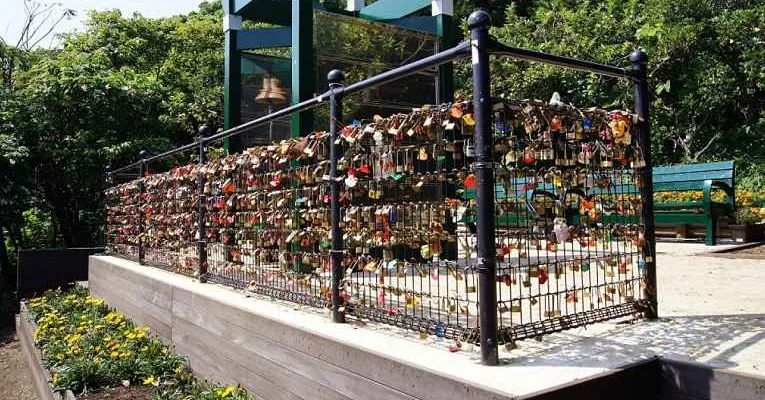
A short walk from the garden brings you to Ryuren no Kane (龍恋の鐘), often called the Love Bell. Couples ring the bell together and leave locks on the nearby fence. The custom is tied to local stories about Benzaiten and a dragon, which is why the place feels more specific than a generic photo stop.
If you visit with someone, take the detour for the sea view as much as for the bell. If you are alone, it is still a quiet break between the garden and the southern trail. Keep the locks where they are intended; the surrounding paths and railings are not a place to add them.
Walk the southern coast and visit Iwaya Caves
From the hill, continue toward the southern coast for a very different side of Enoshima. Jagged cliffs give way to broad stone shelves near the water, and the sound of the surf becomes part of the route. Take care after rain or when the sea is rough: the terrain is rocky, and the coast is not a place to hurry.
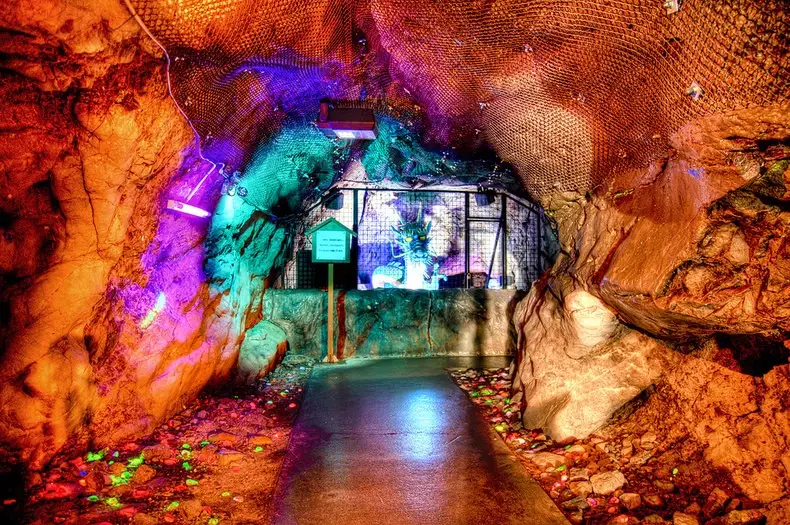
The Iwaya Caves sit along this side of the island. Two walkable cave areas are open as a visitor attraction, with religious imagery and dragon lore woven into the route. They are a good finish when you want more than viewpoints, but check the day's opening information before walking all the way there; weather and sea conditions can affect access.
Beach, aquarium, and a slower Shonan day
Enoshima is part of the Shonan coast, where beaches, surfing, and seaside cafés shape the mood outside the island itself. The beaches and Enoshima Aquarium are on the mainland side near the bridge, so plan them as separate stops rather than expecting them to be on the hill.
If you want a break after walking, Enoshima Island Spa is on the island's rocky shore. Its bathing areas and pools are a different kind of stop from the shrine route; visitors should check the facility's current entry rules before making it part of the itinerary. For a traditional bath experience elsewhere in Japan, see our guide to onsen and hot springs.
How to plan an Enoshima visit
Arrive through Katase-Enoshima Station on the Odakyu Line, Enoshima Station on the Enoden, or Shonan-Enoshima Station on the monorail. All require a walk to the bridge, so choose the route that fits the rest of your day. Enoden is especially convenient when you are combining Enoshima with Kamakura.
- For a short visit: cross the bridge, see the shrine approach, and stop at the Sea Candle area.
- For a fuller walk: continue to the Love Bell and Iwaya Caves, then allow time for the return route.
- For a summer day: pair the island with the nearby beach, but expect more people.
- For a clear winter day: the air can improve the chance of a distant Fuji view, though nothing is guaranteed.
Enoshima rewards a flexible pace. The shrine, garden, bell, and caves are close together on a map, but stairs, coastal weather, and the urge to linger at each viewpoint make the experience feel larger than the island's size.

Community
Comments
0 comments
There are no published comments in this language yet.
Send comment