

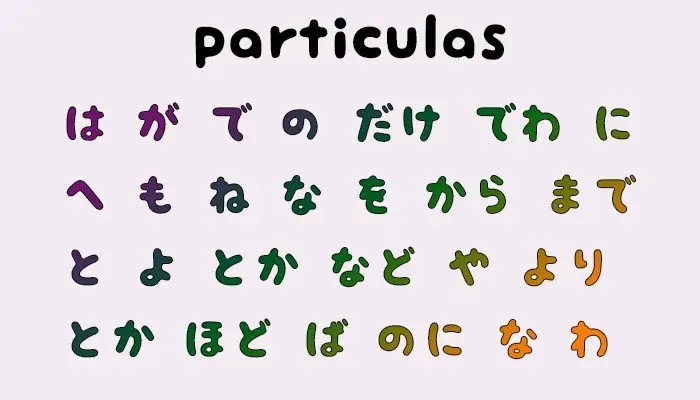
When learning Japanese, students quickly encounter the primary roles of the core grammatical particles: wa [は] serves as the topic marker, ga [が] acts as the subject marker, wo [を] indicates the direct object, ni [に] and de [で] mark location or time, and he [へ] points toward direction. In daily study, we routinely see the particles を, に, or で preceding verbs. However, what happens with the particles wa [は] and ga [が]? Can and should we place these two markers directly before Japanese verbs?
In this guide, we examine the precise circumstances where the particles wa [は] and ga [が] interact with verbs. Japanese grammar follows a fundamental SOV system (subject, object, verb). Working from this syntactic baseline, let us analyze when は and が appear before verbs or take the place of the familiar direct object marker を.
The most straightforward situation occurs with intransitive verbs, which describe actions that do not take a direct object. A statement like 走る [hashiru / to run] requires no object particle wo [を], because the actor performs the movement without directing it onto an external noun. In such sentences, ga identifies the acting subject or wa establishes the broader topic of conversation without needing any accusative complement.
If you want to review the foundational contrast between these two markers, you can explore our detailed guide on What is the difference between the particles は (wa) and が (ga)?.

Contents 4
When to use ga [が] or wa [は] instead of wo [を]?
One of the most frequent questions among Japanese learners is why certain verbs govern the particle ga [が] even when English translations use a direct object. The particle が appears in place of を whenever a verb expresses an internal state, a mental perception, a necessity, or an ability rather than a physical action exerted upon a target.
This pattern is especially prominent with verbs conjugated into the potential form (can do). Potential verbs indicate that an action is possible. In standard Japanese syntax, the target of that ability is traditionally marked with ga, because the grammatical construction highlights a capability or condition rather than a dynamic external event. Intransitive verbs that describe spontaneous occurrences also pair consistently with ga.
Two classic everyday examples demonstrate this grammatical function with precision:
日本語が分かる
Nihongo ga wakaru
I understand Japanese.
肉が食べられない
Niku ga taberarenai
I cannot eat meat.
In the first sentence, wakaru [分かる] functions as a stative verb of comprehension. The Japanese phrasing literally expresses that the Japanese language is understandable to the speaker. In the second sentence, taberu [食べる] appears in its negative potential form taberarenai [食べられない]. Here, ga marks meat because the sentence communicates an inability to consume it rather than the active process of eating. For a complete breakdown of verb conjugations, consult our reference on the potential form of Japanese verbs (Kanou Kei).
The particle wa [は] operates differently: when paired with verbs, it primarily introduces an explicit contrast or elevates an element into the overarching topic. A phrase such as Niku wa taberarenai [肉は食べられない] commonly conveys that while meat is off the table, other foods remain acceptable. The particle wa sets up an unspoken comparison between the stated noun and alternative possibilities.
Using を or が can change the meaning of the sentence
In contemporary conversational Japanese, が and を occasionally seem interchangeable, particularly when expressing personal skills. In the sentence ピアノ[を/が]弾ける [piano o / ga hikeru], the essential meaning remains recognizable: someone can play the piano. While piano ga hikeru represents the traditional standard emphasizing the piano as the domain of skill, piano o hikeru treats playing the piano closer to an active transitive verb phrase.
However, confusing these two particles becomes problematic with active transitive action verbs. In these cases, swapping が and wo completely reverses the meaning of the sentence. A striking demonstration appears in the comparison centered on fish:
魚が食べる
Sakana ga taberu
The fish eats.
魚を食べる
Sakana o taberu
(Someone) eats fish.
In the construction 魚が食べる [sakana ga taberu], the particle ga identifies the fish as the subject performing the action of eating. If we replace the particle with wo and produce 魚を食べる [sakana o taberu], the fish becomes the direct object being consumed. Choosing the incorrect particle turns the eater into the meal. To strengthen your command of essential verbs, review our list of essential N5 verbs and our guide to Japanese dictionary form and masu form.
Common Verb Groups That Take the Particle が
To identify quickly when a Japanese verb requires the particle ga instead of を, categorize verbs into three primary semantic families:
- Verbs of ability and competence: Predicates such as dekiru [できる / to be able to do, to be ready] and derived potential verbs such as hanaseru [話せる / to be able to speak] or yomeru [読める / to be able to read]. The skill or object of mastery takes が.
- Verbs of understanding and knowledge: Predicates like wakaru [分かる / to understand, to comprehend] reflect internal cognitive awareness and consistently govern が for the concept understood.
- Verbs of existence and necessity: Verbs such as aru [ある / to exist for inanimate objects], iru [いる / to exist for animate beings], and iru [要る / to need, to require] describe conditions and necessities without an accusative direct object.
Spontaneous sensory perception verbs like mieru [見える / to be visible, to appear] and kikoeru [聞こえる / to be audible, to be heard] also follow this rule. What catches the eye or reaches the ear appears naturally in Japanese marked with ga, distinct from active looking or listening with を.
Practical Rules of Thumb for Choosing the Right Particle
To decide with confidence between wa, ga, and wo when constructing Japanese sentences, apply three straightforward tests:
First: Does the verb describe an intentional, physical action performed upon a specific noun? If so, mark that direct object with wo [を].
Second: Does the verb express a capability, an understanding, a necessity, or an involuntary condition? In that case, use ga [が] to mark the element of ability or state.
Third: Do you want to establish an established topic of conversation or draw a deliberate contrast against other items? Replace the case marker with wa [は] to anchor the focal point of the statement. Following these three guidelines will bring immediate clarity to your spoken and written Japanese.


Community
Comments
0 comments
There are no published comments in this language yet.
Send comment