
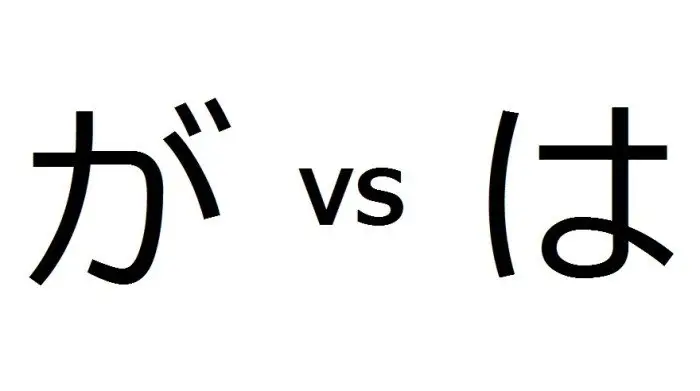
Japanese particles make the language precise, but they can also be a headache for beginners. A classic point of confusion is は (wa) and が (ga). They look similar, but they do not do the same job.
Many learners get stuck here. The good news is that a few clear examples make the difference much easier to see. In simple terms, the question is what gets set as the topic of the sentence and what gets highlighted as the subject or as new information.
Contents 9
Quick summary
Both particles are extremely important in Japanese and appear all the time. Very roughly:
- は (wa) marks the topic of the sentence.
- が (ga) usually marks the subject or highlights something specific.
That does not explain everything yet, but it gives you the right direction. The real difficulty is that the words “topic” and “subject” sound very similar at first.
People often say you will eventually feel the difference over time. That is true, but most of us would rather understand it now. So let us go step by step. A basic knowledge of Japanese will help here.
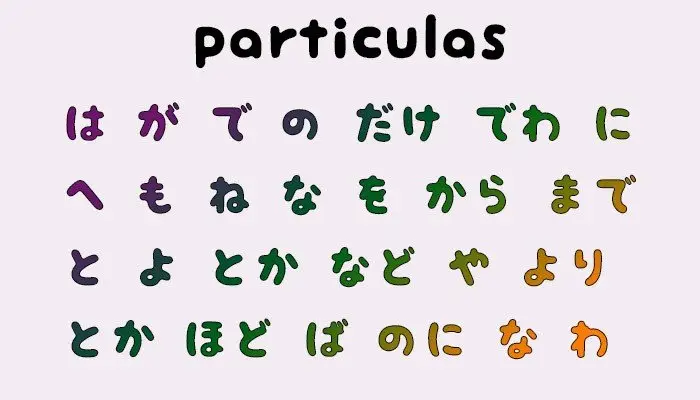
The real difference between は and が
Let us look a little more closely at what each particle does:
Particle は (wa)
- marks the topic of the sentence
- is used when something has already been mentioned or is already familiar
- can show contrast or highlight the topic
- is written with は, but pronounced “wa”
- comes after a noun to show that something will be said about it
- can also compare two things or show a limit
Particle が (ga)
- usually marks the subject of the sentence
- is often used when something is introduced for the first time
- can also connect two clauses with the meaning of “but”
- can indicate the object of a subordinate clause
- can soften a statement or refusal
The main rule to remember is this: wa sets the topic, while ga highlights the subject or something new. That is not the whole grammar, but it is a very useful starting point.
Topic and subject: what does that mean?
Topic (は)
The topic is what the conversation is about. It is something already known or something that has already been introduced in the discussion.
- When do you use は?
- when comparing two things
- when giving general information
- when talking about people or abstract ideas
Subject (が)
The subject is the person or thing directly connected to the verb. It is the one doing the action or being affected by it.
- When do you use が?
- for neutral statements that focus on specific information
- to describe physical things or point out something specific in a group
Example sentences
Example 1
(1) 猛男さんがイチゴを食べました。
(2) 猛男さんはいちごを食べました。
Both sentences mean: “Mr. Takeo ate the strawberry.” The difference is what gets emphasized:
- In the first sentence, が emphasizes who ate the strawberry.
- In the second sentence, は shifts the focus more toward the topic of the sentence.
Example 2
(1) これが臭いです。
(2) これは臭いです。
Both can be translated as “This stinks,” but:
- with が, the sentence emphasizes that this exact thing is what stinks
- with は, the statement itself is being highlighted more than the object
Example 3
(1) 私が行きます。
(2) 私は行きます。
Both mean something like “I will go,” but:
- with が, you are stressing yourself: “I am the one going”
- with は, you are simply stating that you will go
Example 4
(1) このボールペンが赤です。
(2) このボールペンは赤です。
This pen is red.
In the first sentence, が puts the focus on the pen itself. It sounds almost like: “This pen is the red one.”
In the second sentence, は puts the focus more on the color: “This pen is red.”
Very roughly, が highlights what comes right before it, while は sets the topic and shapes the rest of the sentence around it. That is a useful starting point, even if it does not cover every exception.
Example 5
- 私はケビンです。
- 私がケビンです。
Or simply: ケビンです。
Conclusion
This article gives only a basic look at the difference between は and が. There are many finer details that can change depending on the situation. Still, it helps a lot to understand that が usually highlights the subject or new information, while は sets the topic of the sentence.
The important part is this: you do not need to explain every sentence perfectly to sound natural. With a little practice, you will quickly get a feel for which particle fits better in each situation.

Community
Comments
0 comments
There are no published comments in this language yet.
Send comment