
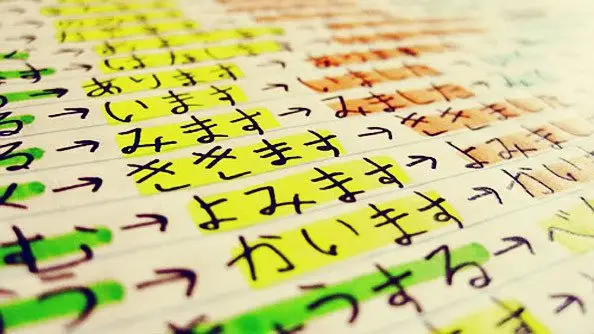
Need a quick JLPT N5 verbs list you can actually revise? This page gathers common verbs that appear again and again in beginner study materials, with short meanings in plain English. Use it as a fast review sheet, then move on to sentence practice and basic conjugation.
If dictionary form still feels new, read our guide to Japanese verbs in dictionary form and masu form. When this N5 list starts to feel easy, continue with the Japanese N4 verbs list.
JLPT N5 verbs list
The meanings below focus on the most common beginner use of each verb. Some verbs can shift nuance depending on the particle, the sentence, or whether they are used in a fixed expression.
- 会う (au) - to meet
- 開く (aku) - to open; to become open
- 開ける (akeru) - to open
- あげる (ageru) - to give
- 遊ぶ (asobu) - to play
- 浴びる (abiru) - to take a shower; to bathe
- 洗う (arau) - to wash
- 有る (aru) - to be; to exist
- ある (aru) - to have; to possess
- 歩く (aruku) - to walk
- 言う (iu) - to say; to tell
- 行く (iku) - to go
- 要る (iru) - to be needed
- 居る (iru) - to be; to exist
- 入れる (ireru) - to put in; to insert
- 歌う (utau) - to sing
- 生まれる (umareru) - to be born
- 売る (uru) - to sell
- 起きる (okiru) - to get up; to wake up
- 置く (oku) - to put; to place
- 送る (okuru) - to send
- 押す (osu) - to push; to press
- 覚える (oboeru) - to remember; to memorize
- 泳ぐ (oyogu) - to swim
- 降りる (oriru) - to get off
- 終わる (owaru) - to finish; to end
- 買う (kau) - to buy
- 返す (kaesu) - to return something
- 帰る (kaeru) - to go home; to return
- 掛かる (kakaru) - to take time or money
- 書く (kaku) - to write
- 掛ける (kakeru) - to hang; to make a call; to put on
- 貸す (kasu) - to lend
- 冠る (kaburu) - to put on the head
- 借りる (kariru) - to borrow
- 消える (kieru) - to go out; to disappear
- 聞く (kiku) - to hear; to listen; to ask
- 切る (kiru) - to cut
- 着る (kiru) - to wear
- 来る (kuru) - to come
- 消す (kesu) - to turn off; to erase
- 答える (kotaeru) - to answer
- 困る (komaru) - to be in trouble
- 咲く (saku) - to bloom
- さす (sasu) - to put up an umbrella
- 死ぬ (shinu) - to die
- 閉まる (shimaru) - to close
- 閉める (shimeru) - to close something
- 知る (shiru) - to know
- 吸う (suu) - to breathe in; to smoke
- 住む (sumu) - to live; to reside
- する (suru) - to do
- 座る (suwaru) - to sit
- 出す (dasu) - to take out; to hand over; to send out
- 立つ (tatsu) - to stand
- 頼む (tanomu) - to ask; to request
- 食べる (taberu) - to eat
- 違う (chigau) - to differ; to be wrong
- 使う (tsukau) - to use
- 疲れる (tsukareru) - to get tired
- 着く (tsuku) - to arrive
- 作る (tsukuru) - to make
- 点ける (tsukeru) - to switch on; to light
- 勤める (tsutomeru) - to work for; to serve
- 出かける (dekakeru) - to go out
- 出来る (dekiru) - to be able to do
- 出る (deru) - to leave; to come out
- 飛ぶ (tobu) - to fly
- 止まる (tomaru) - to stop
- 取る (toru) - to take
- 撮る (toru) - to take a photo
- 鳴く (naku) - to make an animal sound
- 並ぶ (narabu) - to line up
- 並べる (naraberu) - to arrange; to line up
- なる (naru) - to become
- 脱ぐ (nugu) - to take off clothes
- 寝る (neru) - to sleep
- 登る (noboru) - to climb
- 飲む (nomu) - to drink
- 乗る (noru) - to ride; to get on
- 入る (hairu) - to enter
- 履く (haku) - to put on footwear
- 始まる (hajimaru) - to begin
- 走る (hashiru) - to run
- 働く (hataraku) - to work
- 話す (hanasu) - to speak; to talk
- 張る (haru) - to stretch; to stick
- 晴れる (hareru) - to clear up; to become sunny
- 引く (hiku) - to pull
- 弾く (hiku) - to play an instrument
- 吹く (fuku) - to blow
- 降る (furu) - to fall; to come down
- 曲がる (magaru) - to turn; to bend
- 待つ (matsu) - to wait
- 磨く (migaku) - to polish; to brush
- 見せる (miseru) - to show
- 見る (miru) - to see; to watch
- 持つ (motsu) - to hold; to have
- 休む (yasumu) - to rest; to take a day off
- やる (yaru) - to do
- 呼ぶ (yobu) - to call
- 読む (yomu) - to read
- 分かる (wakaru) - to understand
- 忘れる (wasureru) - to forget
- 渡す (watasu) - to hand over
- 渡る (wataru) - to cross
How to study these N5 verbs
Do not memorize the English meaning alone. Keep each verb in dictionary form, read it aloud, and pair it with a short sentence you can actually imagine using. That is the easiest way to make the list useful instead of turning it into a page of isolated flashcards.
It also helps to notice common pairs early, especially verbs that learners often confuse, such as 開く / 開ける, 消える / 消す, 閉まる / 閉める, and 並ぶ / 並べる. Once those pairs feel natural, conjugation practice becomes much easier.
After you finish this page, review the same verbs inside short dialogues, then move to polite forms, negatives, and past tense. That combination usually gives much better results than memorizing a long list only once.


Community
Comments
0 comments
There are no published comments in this language yet.
Send comment