
Zaibatsu [財閥] is a Japanese term that literally means financial circle and refers to vertically integrated commercial and industrial conglomerates in the Empire of Japan, whose influence and size allowed for control over significant parts of the economy.
The Zaibatsu had influence from the Meiji period until the end of the Second World War. Soon they were dissolved by the Allied occupation forces and succeeded by keiretsu (groups of banks, manufacturers, suppliers, and distributors).
Contents 4
The history of the Zaibatsu
The term "zaibatsu" was coined in the 19th century from the Sino-Japanese roots zai [財] meaning wealth and batsu [閥] meaning clique or group. Although the zaibatsu themselves existed, the term was not commonly used until after World War I.
By definition, they were large family-controlled vertical monopolies, consisting of a holding company at the top, with a wholly-owned banking subsidiary providing financing, and various industrial subsidiaries dominating specific sectors of a market, exclusively, or through various subsidiary companies.
Companies like Mitsui, Mitsubishi, Sumitomo, and Yasuda are the 4 largest examples of Zaibatsu.
The largest financial circles in Japan
The zaibatsu was the heart of economic and industrial activity in the Empire of Japan and exerted great influence over Japanese national and foreign policies. They were viewed with suspicion by both the right and the left in the 1920s and 1930s.
The political party Rikken Seiyūkai was considered an extension of the Mitsui group, which also had strong connections with the Imperial Japanese Army. Similarly, the Rikken Minseitō was connected to the Mitsubishi group, as well as the Imperial Japanese Navy.
At the beginning of World War II, only the big four (Mitsubishi, Sumitomo, Yasuda, and Mitsui) had direct control over more than 30% of Japan's mining, chemical, and metal industries and almost 50% of the machinery and equipment market, a significant part of the foreign commercial fleet, and 70% of the commercial stock market.
Although the world was undergoing a global economic depression, the zaibatsu were thriving through currency speculation, maintaining low labor costs, and military purchases.
Issues peaked at the Blood Incident League in March 1932, with the assassination of the managing director of Mitsui, after which the zaibatsu attempted to improve their public image through increased charitable work.
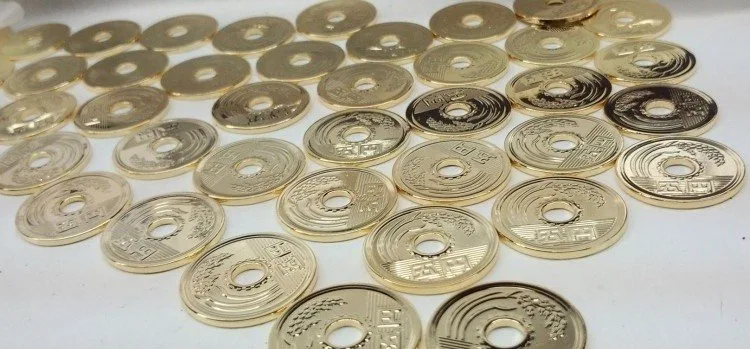
List of Zaibatsu
In the era of zaibatsu, we had the "Big Four" which are the 4 largest and most significant groups. Two of them, Sumitomo and Mitsui, have roots in the Edo period, while Mitsubishi and Yasuda trace their origins to the Meiji Restoration.
From Meiji to Shōwa, the government employed its financial powers and knowledge for various ventures, including tax collection, military purchases, and foreign trade.
Besides the big four, there is no consensus on which companies can be called zaibatsu and which cannot. The initial definition allowed for some public holdings of certain subsidiary companies, but never of the main holding or subsidiaries.
After the Russo-Japanese War, several so-called "second layer" zaibatsu also emerged, mainly as a result of commercial conglomerates and/or the awarding of lucrative military contracts.
The monopolistic business practices of the zaibatsu resulted in a closed circle of companies until the beginning of Japanese industrial expansion on the Asian continent (Manchukuo) in the 1930s, which allowed for the emergence of new groups, including Nissan.
These new zaibatsu differed from the traditional ones only because they were not controlled by specific families and not in terms of business practices. Below we will see a complete list of all these first and second layer groups:
The Big Four:
- Mitsubishi (三菱財閥)
- Mitsui (三井財閥)
- Sumitomo (住友財閥)
- Yasuda (安田財閥)
Second layer:
- Asano (浅野財閥)
- Fujita (藤田財閥)
- Furukawa (古河財閥)
- Mori (森コンツェルン)
- Kawasaki (川崎財閥)
- Nakajima (中島飛行機)
- Nichitsu (日窒コンツェルン)
- Nissan (日産コンツェルン)
- Nisso (日曹コンツェルン)
- Nomura (野村財閥)
- Okura (大倉財閥)
- Riken (理研コンツェルン)
- Shibusawa (渋沢財閥)
- Suzuki shoten (鈴木商店) [bankrupt]
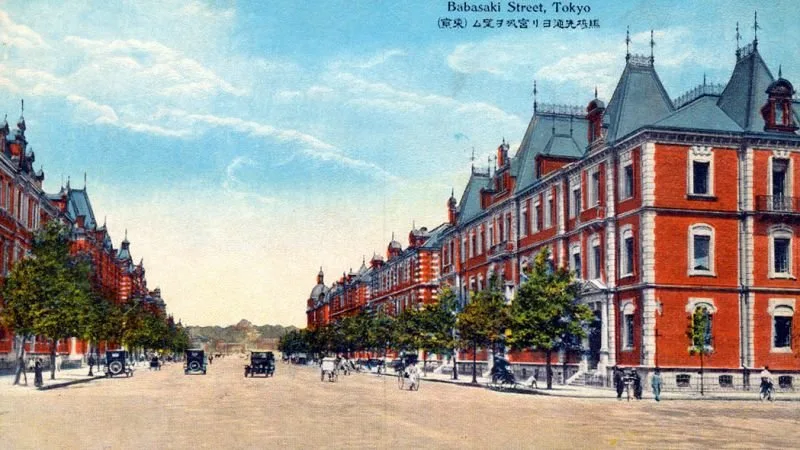
Post-war dissolution
The zaibatsu was viewed with some ambivalence by the Japanese military, which nationalized a significant part of its production capacity during World War II. The remaining assets were also heavily damaged by destruction during the war.
Under Allied occupation after Japan's surrender, an attempt was made to dissolve the zaibatsu. Many economic advisors were highly suspicious of monopolies and restrictive business practices, which seemed inefficient and undemocratic.
During the occupation of Japan, sixteen zaibatsu were targeted for complete dissolution and another twenty-six for reorganization after dissolution. Among those targeted for dissolution in 1947 were Asano, Furukawa, Nakajima, Nissan, Nomura, and Okura.
Additionally, Yasuda dissolved in 1946. The assets of the controlling families were confiscated, the companies eliminated, and the interlinked boards of directors, essential to the old system of coordination between companies, were prohibited.
The Matsushita Electric Industrial Company (which later became Panasonic), although not a zaibatsu, was also originally targeted for breakup, but was saved by a petition signed by 15,000 of its union workers and families.
However, the complete dissolution of the zaibatsu was never achieved, mainly because the U.S. government rescinded the orders in an effort to reindustrialize Japan as a bulwark against communism in Asia.
The Zaibatsu as a whole was widely considered beneficial to the Japanese economy and government. But all the opinion, bureaucracy, and policy change after the Second World War served as an obstacle that led to its demise.
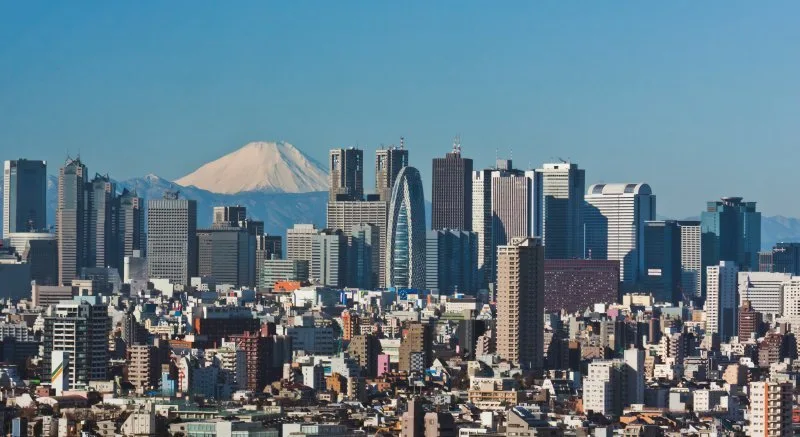
Zaibatsu Today
Today, the influence of the zaibatsu can still be seen in the form of financial groups, institutions, and larger companies, whose origins trace back to the original, often sharing the same family names (for example, Sumitomo Mitsui Banking Corporation).
Some argue that the old mechanisms of financial and administrative control used by the zaibatsu have already been destroyed. What we have today are horizontal relationships of association and coordination of the keiretsu [系列] which means "series" or "subsidiary."
Despite the absence of a comprehensive change in the existence of large industrial conglomerates in Japan, the previously vertically integrated chain of command of the zaibatsu, ending with a single family, has largely been displaced.
Thank you for reading. If you liked the article, don't forget to share and leave your comments. The sources for this article can be found in the American encyclopedia.




Community
Comments
0 comments
There are no published comments in this language yet.
Send comment