
Do you know what Sanpaku eyes are? What do they mean, and what is the history and Japanese superstition behind this look? Have you heard of the curse, and is your eye Sanpaku? We will answer these and other questions below.
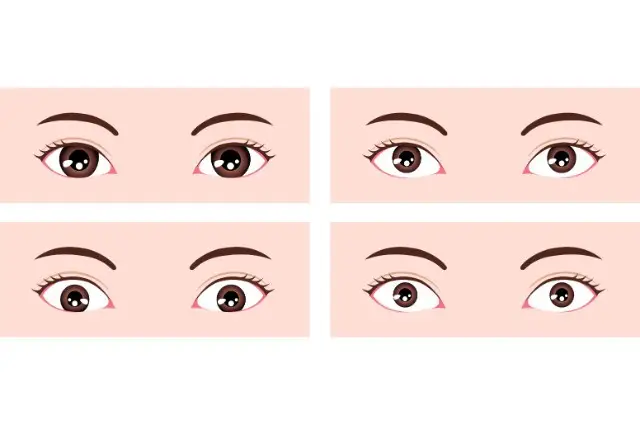
Sanpaku (三白) or Sanpaku-gan (三白眼) are Japanese terms that mean “three whites.” The expression describes people whose sclera shows above or below the iris, even when they are looking straight ahead.
A person can have both eyes with this trait, or just one of them. On the surface it looks like a harmless physical feature, but in Japanese tradition it carries a surprising amount of superstition.
For some, this kind of eye is said to interfere negatively with a person’s destiny. It is also read, in traditional Japanese medicine, as a sign of physical and mental imbalance, and it is believed to shape the behavior and personality of those who have it.
Curious to learn more about this superstition, and what it might mean if you have Sanpaku eyes yourself? Let’s get into the details.
We also recommend reading:
- Heterochromia in Anime – Characters with different eyes
- Why do manga and anime characters have big eyes?
- Ketsueki Gata – Personality based on Blood Type

Contents 11
Theory around Sanpaku
In 1965, George Ohsawa published the book titled “You Are All Sanpaku.” The idea only reached a wider audience in the 1990s, when his macrobiotic teachings merged with the Sanpaku concept.
Ohsawa became popular in the West for spreading macrobiotics and for linking the Sanpaku expression to diet. For those who showed the trait, he recommended meals rich in whole grains, vegetables, and dried fruits, meant to soften the supposed effects.
These guidelines were offered because Ohsawa believed people with Sanpaku eyes had a higher chance of falling ill and suffering fatal accidents. The look was also read as a possible sign of psychopathy.
An iris that touches one edge and leaves the opposite side whiter is not a curse or a diagnosis of psychopathy on its own. In Ohsawa’s reading, it works more like a warning.
According to writer Brian Ashcraft, when a person ages or becomes ill, the iris can rise and the lower part of the eye becomes more visible, which he frames as a clue about physical or mental health.
Origin of Sanpaku Eyes
Sanpaku eyes are a popular belief that most likely originated in ancient China and spread to many other cultures. The idea was to flag people seen as more prone to mental or physical illness.
The belief also has roots in traditional Chinese medicine, where Sanpaku eyes are read as a sign of energetic imbalance in the body. Others trace the idea to Japanese or Tibetan traditions.
One theory treats the trait as a marker of violent or malicious tendencies. Another reads it in the opposite direction, as a sign of spiritual advancement, suggesting that people with Sanpaku eyes were thought more likely to have psychic or spiritual abilities.
Sanpaku Eyes and Health Problems
Some people believe that Sanpaku eyes can trigger common health problems such as headaches, insomnia, and digestive issues. There is no scientific evidence to support this connection.
Various home remedies and techniques are used to “treat” Sanpaku eyes, including massage around the eyes, relaxation exercises, and specific foods.
It is worth remembering that none of these techniques have been scientifically proven, and it is always a good idea to talk to a doctor before starting any kind of treatment.
In general, the Sanpaku superstition is treated as a belief without scientific basis. There is no evidence that the trait is linked to health problems or bad luck.
Still, the belief can hurt the self-esteem and self-image of some people, especially when it is used to make them feel socially excluded or judged for their appearance.
Types of Sanpaku Eyes
Let’s look at the main types of Sanpaku.
Sanpaku Yin – Lower
Sanpaku Yin is when the lower part of the eye, the sclera, becomes more visible. The iris sits closer to the top, leaving the bottom of the eye noticeably white.
Traditional readings say people with this look are seen as exposed to risks coming from the outside world.
Tragic death is often cited as one of those risks. John Lennon, murdered by a fan, even mentioned Sanpaku eyes in his song Aisumasen.
Like many other artists said to have had these eyes, Lennon died a tragic death. Sanpaku Yin is translated as “outside world,” suggesting that, according to the superstition, something bad may eventually happen to the person.

Sanpaku Yang – Upper
Sanpaku Yang is when the upper part of the eye, the sclera, becomes more visible. The upper area looks whiter, while the lower part holds most of the iris.
According to the superstition, these people show explosive behavior and violent tendencies, and are more prone to harming others.
Charles Manson is often used as an example. The American criminal became infamous for his murders and for the cult known as the Manson Family, whose followers also killed under his direction.
People with this look are said to often carry some form of mental illness or psychopathic traits, including aggression and a tendency toward explosive or violent outbursts.
Sanpaku Yang is translated as “inner world,” meaning this person may end up hurting others, according to the superstition. The look is sometimes presented as a way to spot a psychopath, so it is worth handling the idea with care.
Celebrities and Famous People with Sanpaku Eyes
Several celebrities and famous people said to have had Sanpaku eyes died tragically. The list usually includes Marilyn Monroe, Audrey Hepburn, Elvis Presley, Indira Gandhi, Jim Morrison, and Michael Jackson, among others.
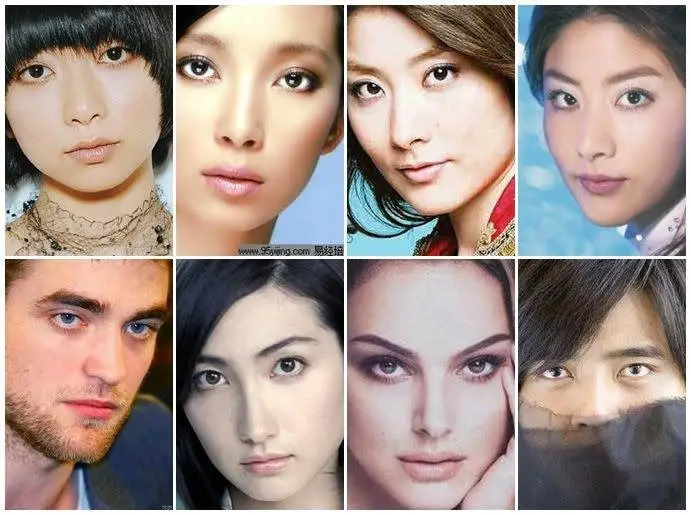
Other familiar cases include Princess Diana, Abraham Lincoln, John F. Kennedy, James Dean, and John Lennon. Below are a few photos of famous people with these eyes.
Jimmy Savile, the British TV presenter, is often cited as an example of lower Sanpaku Yang eyes connected to serious wrongdoing.

Korean Idols with Sanpaku Eyes
Below is a list of singers, actors, and other famous figures from Korea often mentioned as having this kind of look.
- V (BTS)
- Lisa (BLACKPINK)
- Sehun (EXO)
- Sunmi
- Hwasa (MAMAMOO)
- Haechan (NCT)
- Minnie ((G)I-DLE)
- Krystal (f(x))
- G-Dragon
- N (VIXX)

Anime Characters with Sanpaku Eyes
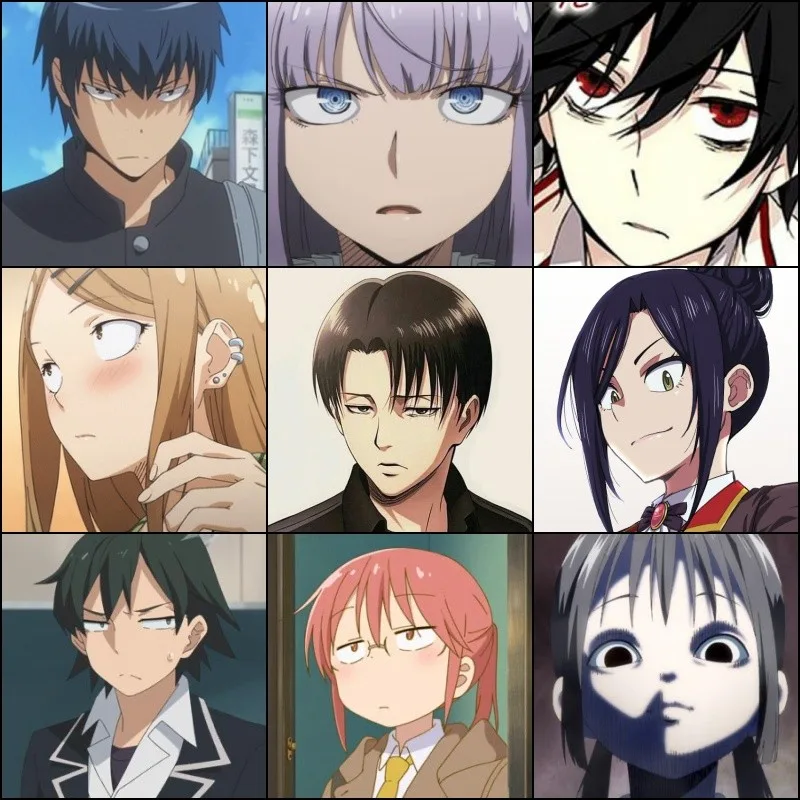
In anime it is very common to find famous characters with Sanpaku eyes, especially Sanpaku Yin, although that does not always mean the character is under a curse or has a killer spirit.
It is simply easier to draw and color an anime character’s eye when the iris is a small black dot centered in the white, or pushed to the top or bottom edge.
It is common for the same anime character to appear with a small iris in one scene and a large one in another, positioned high or low, which already shows why the superstition does not really fit the world of anime.
Sanpaku for the Japanese
For some Japanese, having this kind of eye is even considered charming, whether the person is a man or a woman. There are also personality traits attributed to those who have it.
These traits include having attitude, being well-focused, being able to hold your ground in difficult situations, having a connection with spirituality, showing a calmer and more tranquil side, and caring about personal appearance.
In Japan there are even doctors who perform surgery to create Sanpaku eyes. Anime has popularized this kind of look so much that few people see it as something negative.
Superstition differs from proof!
If you ran to the mirror the moment you found out what Sanpaku is, you are not the only one. If your eye turned out not to be Sanpaku, you probably felt relief, and if it was, that worry hit. Either way, there is no real reason to worry.
This is one of many superstitions that exist and have no scientific backing. Good and bad things happen to plenty of people every day, with any kind of eye.
We recommend reading:
- Japanese Superstitions – Bad luck and good luck in Japan
- Why do Japanese and other Asians have slanted eyes?
- What does Kawaii mean?
For example, the macrobiotic author who recommended the diet said it would help the person avoid being accident-prone, but a good diet supports a healthier life without actually preventing the unexpected.
This superstition is rarely taken seriously even in Japan, where it began. In fact, people with this trait are often described as quite kawaii, which literally means very cute.
To check whether you have Sanpaku eyes, look straight ahead and see if the iris fully meets the upper and lower edges of the eye, or not.
If you have Sanpaku eyes, do not give weight to these superstitions. Treat it as a personal feature that makes you unique, and that is more than enough.
So what do you think of this particular trait? Do you find it cute, strange, or simply another human feature?



Community
Comments
0 comments
There are no published comments in this language yet.
Send comment