
Anyone who starts learning Japanese — or lives in it through manga, anime, dramas, and actual conversation — bumps into ureshii [嬉しい] and tanoshii [楽しい] almost immediately. English folds both into “happy,” which is how you end up calling a party ureshii when you meant it was fun, or saying you are tanoshii about a gift when you meant you were glad it arrived.
If daijoubu already taught you that one Japanese word can cover several English ones, these two do the reverse trick: they split what English treats as a single feeling. Yorokobu [喜ぶ] and shiawase [幸せ] sit in the same neighborhood. They all name some kind of joy, and they all write it with different kanji. The useful split is not a stopwatch. It is what kind of good feeling you are pointing at.
Contents 4
What ureshii actually marks
The word ureshii [嬉しい] is an i-adjective for happy, glad, pleased. It usually lights up after a welcome event: you finished something today, someone brought you along, a message arrived that you wanted. The kanji [嬉] carries happy, satisfied, joyful — a bright reaction, not a weather report on your whole life.
A few example sentences with ureshii:
| 連れてきてもらえて嬉しいです。 | Tsurete kite moraete ureshii desu. | I’m happy that you brought me. |
| 僕はとてもうれしい。 | Boku wa totemo ureshii. | I’m so happy. |
| 僕だって彼女を恋人にできてうれしいんだ。 | Boku datte kanojo o koibito ni dekite ureshii nda. | I’m glad I get to have her as my girlfriend. |
| また会えてうれしいわ。 | Mata aete ureshii wa. | I’m happy to see you again. |
Looking at sentences and at translations from Jisho, ureshii often stands in for English words like great, thank you, comforting, a pleasure, proud, grateful. You do not always need a separate verb of thanks; the adjective already carries the lift.
Words built on the kanji [嬉] or on the adjective itself:
| Meaning | Japanese | Romaji |
| Crying with joy | 嬉し泣き | ureshinaki |
| To look happy, to show you are pleased | 嬉しがる | ureshigaru |
| Flattery, sweet talk, praise meant to please | 嬉しがらせ | ureshigarase |
| Play, pleasure | 嬉戯 | kigi |
| Merry, delighted | 嬉々 | kiki |
| Happy laughter | 嬉笑 | kishou |
What tanoshii actually marks
The word tanoshii [楽しい] means pleasant, fun, enjoyable, delightful. It fits lines like “this day was a lot of fun” or “I had a good time with that.” The kanji [楽] also shows up in music, comfort, and ease — pleasant things you stay inside for a while, like a song you do not want to skip.
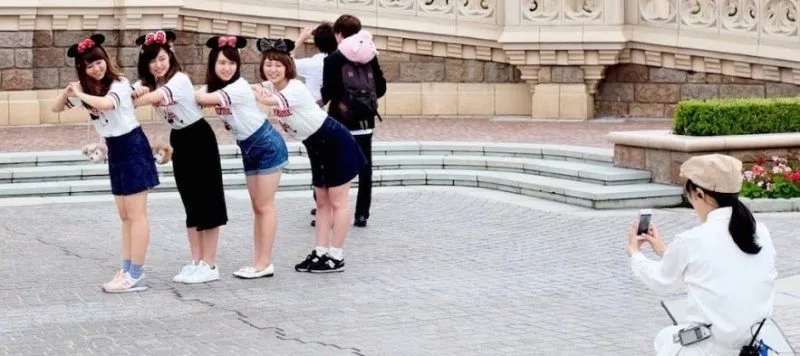
Unlike ureshii, tanoshii usually sits on the activity itself: the trip, the game, the conversation. It can last all afternoon and still not mean you are “happy with your life.” That longer, deeper state is closer to shiawase. There are moments when both adjectives can appear in the same story — you were glad you got the tickets (ureshii) and the concert itself was fun (tanoshii).
Example sentences:
| 旅行中楽しい思いをした。 | Ryokou-chuu tanoshii omoi o shita. | I had a lot of fun during the trip. |
| 旅行は楽しかったですか。 | Ryokou wa tanoshikatta desu ka. | Did you enjoy your trip? |
| あまり楽しくなかったな。 | Amari tanoshikunakatta na. | I didn’t have much fun. |
| 僕も君と同様楽しくない。 | Boku mo kimi to douyou tanoshikunai. | I’m not having fun either, same as you. |
In sentences from Jisho, tanoshii can stand in for pleasure, like, enjoy, tasty, delicious, pleasant — even for talking or other fun actions. Sometimes you do not name the activity at all. You just say it was fun, or that you were doing enjoyable things.
Do not mix it with tanoshimi [楽しみ]. Tanoshii is the fun happening now (or the fun you already had). Tanoshimi is the pleasure you are looking forward to: next week’s trip, the next episode, the gift you have not opened yet.
Words that carry [楽] or sit next to tanoshii:
| Meaning | Japanese | Romaji |
| Comfort, ease (na-adjective) | 楽 | raku |
| To enjoy, to have fun (verb) | 楽しむ | tanoshimu |
| Pleasure, something to look forward to | 楽しみ | tanoshimi |
| Sheet music | 楽譜 | gakufu |
| Optimism | 楽観 | rakkan |
| Dressing room, backstage | 楽屋 | gakuya |
| Paradise | 楽園 | rakuen |
| Easy victory | 楽勝 | rakushou |
| Musical instrument | 楽器 | gakki |
Ureshii, tanoshii, and shiawase side by side
English “I’m happy” is incomplete until you know the cause. Japanese usually picks a different word once that cause is clear.
| Word | Core sense | Typical trigger |
| 嬉しい ureshii | Glad, pleased | A welcome result, a gift, a reunion, kind words |
| 楽しい tanoshii | Fun, enjoyable | An activity, a trip, a game, time spent together |
| 幸せ shiawase | Happy, fortunate | A broader state: life, marriage, “things lined up well” |
| 喜ぶ yorokobu | To rejoice (verb) | Showing the reaction, or describing someone else’s |
A workable picture: ureshii names the lift after something good lands; tanoshii names the quality of the time you are inside; shiawase names a life that feels well-fitted. Duration helps as a hint, not as a law. You can stay ureshii for days, and a two-minute joke can be tanoshii.
After a party or a trip, tanoshikatta? is the usual question — was it fun? After a present or good news, ureshikatta? fits better — were you glad about that?
Other words that sit near happiness
Shiawase [幸せ] is happiness, good fortune, blessing — the long, deep kind. “They married and lived happily ever after” is a shiawase sentence, not a tanoshii one. The kanji [幸] means happiness, blessing, fortune. An older writing, 仕合わせ, comes from the idea that fate fitted together well; the feeling is closer to “things worked out” than to “this game is fun.”

Yorokobu [喜ぶ] is a verb: to be delighted, to be pleased, to congratulate, to show gratitude. It often describes the reaction from the outside — a mother seeing a gift and lighting up. The kanji [喜] means to rejoice, to take pleasure, to be glad. It shows up a lot in the Japanese names of the books of the Bible.
Omoshiroi [面白い] is a different neighbor: interesting, intriguing, funny, amusing. A joke can be omoshiroi without making you ureshii. For a closer look at that adjective, see what omoshiroi means in Japanese.
| Meaning | Japanese | Romaji |
| Deeply grateful, honored (formal) | 幸甚 | koujin |
| Joyful look, pleased expression | 喜色 | kishoku |
| Auspicious, joyful, naive in a lucky way | 目出度い | medetai |
| Harmonious, peaceful, on good terms | 円満 | enman |
| Pleasant, cheerful, amusing | 愉快 | yukai |
| Mood; good spirits | 機嫌 | kigen |
| In high spirits, looking cheerful | 快然 | kaizen |
| Happy (loanword) | ハッピー | happii |
| To play, to hang out | 遊ぶ | asobu |





Community
Comments
0 comments
There are no published comments in this language yet.
Send comment