

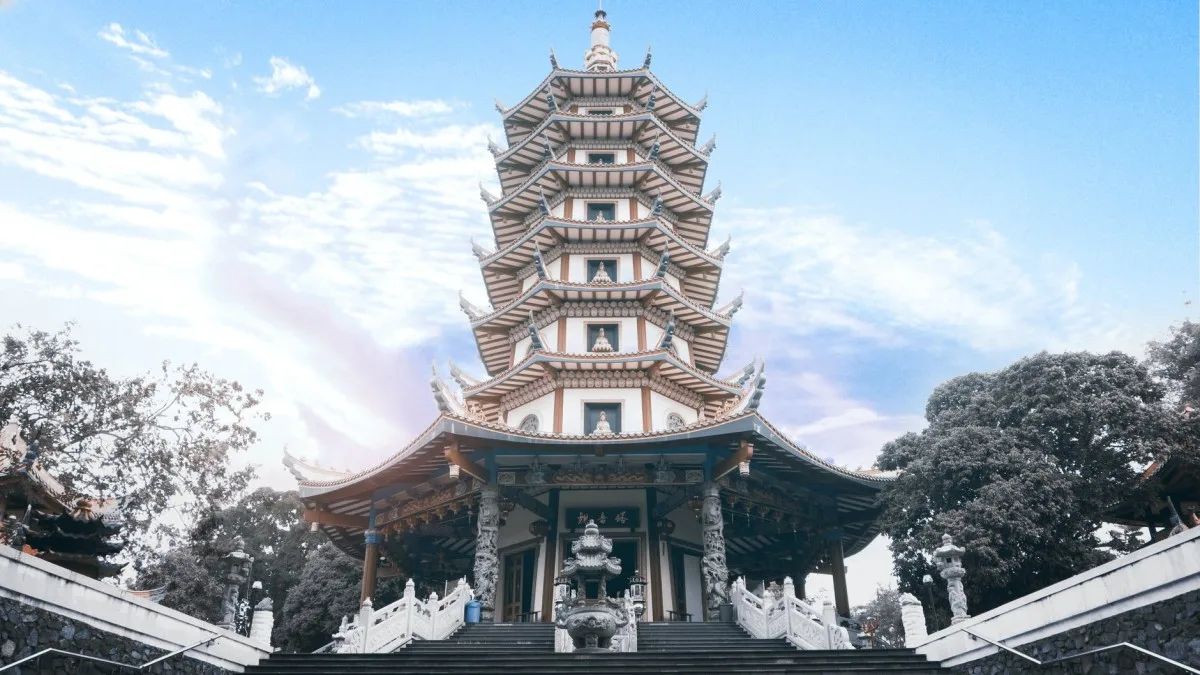
Do you know what a pagoda is? Have you heard this term before? A pagoda is a type of tower with multiple eaves in the style of Japanese castles. These towers are commonly found in China, Japan, Nepal, Korea, and other parts of Asia.
Pagodas appear in different models and sizes, from structures large enough for people to enter to small five-story miniatures. What is the reason for this?
Did You Know? In some places, pagoda is called pagode, the same name as the Brazilian music rhythm originating from Rio de Janeiro.
Contents 6
The Origin of the Pagoda
The origin of the Pagoda can be traced back to the Indian or Nepalese stupa, a dome-shaped structure that houses the remains of rulers and other leaders. However, after the death of Buddha in the 5th century BC, they became symbols of the dissemination of Buddhism in Asia.
The term "pagoda" comes from the native Sri Lankan (Sinhalese) word "dagoba," which means relic chamber. As Buddhism spread from India to East Asia, existing architectural styles were blended with the stupa, thus creating the pagoda.
Initially, the ashes and bone fragments of Buddha were kept separately within stupas, but as Buddhism continued to spread, other items such as sacred scriptures, precious objects, and the ashes of other saints began to be used.
In China, influenced by the existing architectural style of the time, the pagoda emerged with a higher structure, in stark contrast to its predecessor. Furthermore, greater height is often considered more powerful and significant.
As a relic chamber containing sacred writings, the ashes of illustrious monks, and ritual tools, pagodas have historically been located within or near temples.
What is the Purpose of the Pagoda?
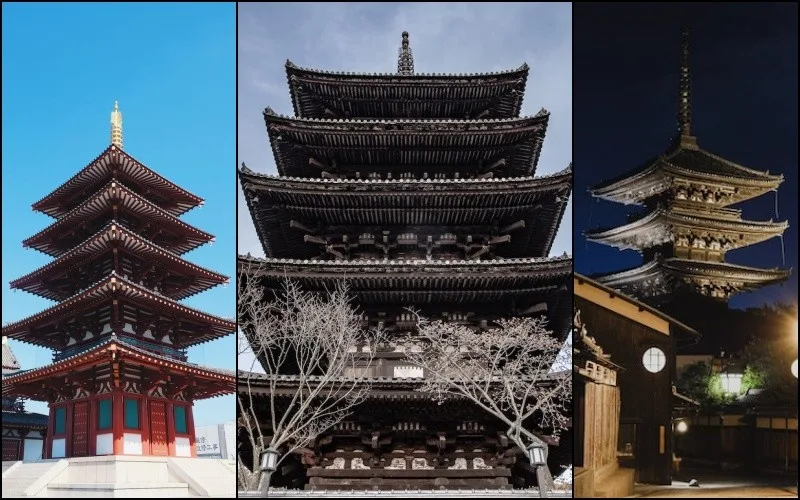
Have you ever been to a Japanese garden and come across small tall buildings with many roofs? Why so many roofs at a small height? More importantly, what is the function of this tower?
Most pagodas are built for religious functions, most commonly Buddhist, and are generally located within or near temples. Some pagodas are used as Taoist places of worship. The term can refer to other religious structures in some countries.
Although many pagodas have been built for religious purposes, they have also been used for landscaping, military oversight (for example, as watchtowers), or to assist in the navigation of ships.
In Vietnam and Cambodia, due to French translation, the English term pagoda is a more general term that refers to a place of worship, although pagoda is not an exact word to describe a Buddhist temple.
Pagoda in Japan
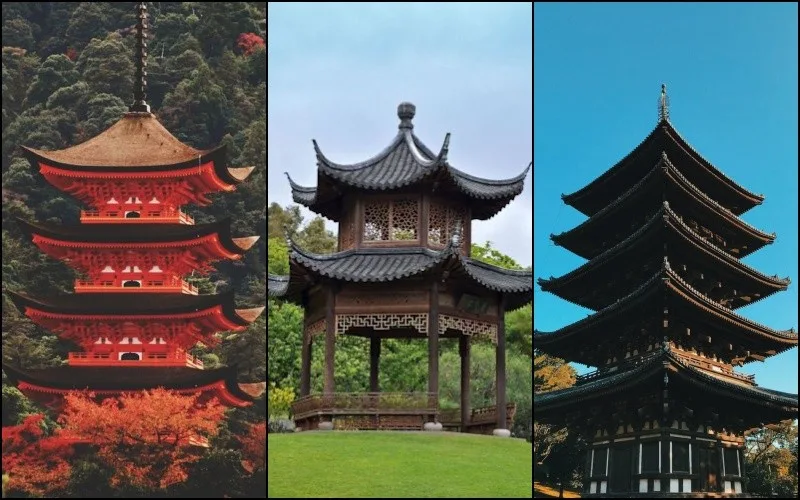
While the Japanese pagoda is inspired by the Chinese ones, some differences have arisen over time. In Japan, pagodas are almost always made of wood. Therefore, they are earthquake-resistant but highly prone to fire.
There are stone pagodas in Japan, but they are small replicas of the famous international buildings, and are generally seen in Japanese gardens. The Japanese pagoda also tends to have larger eaves than the Chinese ones.
Some pagodas may have an underground chamber where treasures are kept, and on top, a crown that serves as decoration and lightning rod. Some pagodas even resemble Japanese lanterns.
Pagodas You Should Visit
Some unique and notable examples of pagodas around East Asia include:
The Best Pagodas in Japan
- Toji Pagoda
- Kofuku-ji Temple Pagoda, Nara
- Ruriko Temple Pagoda, Yamaguchi
- Tokugawa Pagoda at Tosho-gu Temple, Nikko
- Shintenno-ji Pagoda, Osaka
- Chureito Pagoda
Pagodas in Other Regions of the World
- Thien Mu Pagoda, Vietnam
- Tran Quoc Pagoda, Vietnam
- Three Pagodas of Chongsheng Temple, China
- Tianning Pagoda, China
- Big Wild Goose Pagoda, China
- Pagoda Forest at Shaolin Temple, China
- Six Harmonies Pagoda, China
- Zhenjue Temple, China
- Fogong Temple Pagoda, China
Visiting Buddhist temples will give you the experience of knowing this beautiful architecture as well as the architectures of the torii gates and other elements of Japanese culture.






Community
Comments
0 comments
There are no published comments in this language yet.
Send comment