
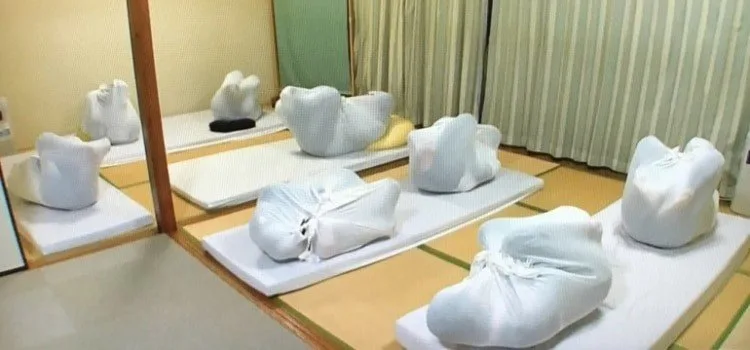
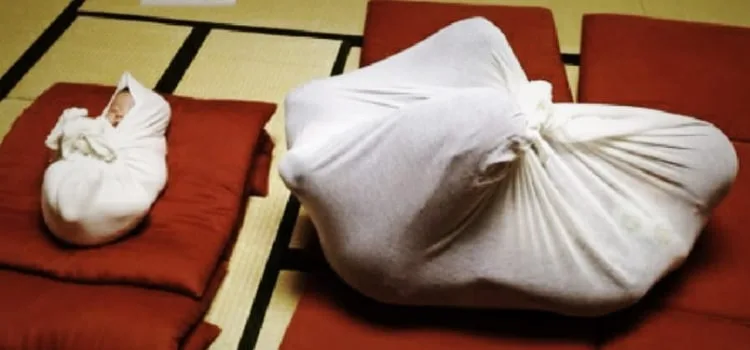
Have you ever seen a baby all wrapped up in cloth? And an adult? That second picture is the jolt of Otonamaki (大人巻き), a Japanese wrapping therapy whose name simply means “adult wrapping.” Someone curls up, a practitioner winds a breathable sheet around them, and the room fills with white cocoons that look closer to a horror still than to a massage.
It grew out of Ohinamaki, the wrapping of newborns meant to echo the womb. Midwife Nobuko Watanabe — already known in Japan for the Toko-chan maternity belt — first wrapped adults around 2015 so parents could feel that the baby was not trapped. Then the adults asked for a turn of their own.
Contents 3
Why people try Otonamaki
Japan has no shortage of office hours that fold the body into a chair. Shoulders lock, the lower back complains, and people go looking for posture help in massages, stretching, and Japanese and Asian therapy techniques that sit somewhere between clinic and curiosity. Otonamaki walked into that market looking, to many outsiders, strange — even a little indecent.
There is still no clinical trial that proves the wrap “corrects” posture or erases anxiety. What exists is a pile of testimonials: looser shoulders, a quieter neck, a nap in the cloth, sometimes a claim that it helped after childbirth. Treat those as stories, not a diagnosis. Postpartum stiffness is a real reason mothers showed up at studios. “It cures depression” is a leap the evidence does not make.
The pictures did the rest. Some viewers found it bizarre. Others said it belonged in a horror film — one Japanese commenter even compared a photo to the movie Audition. That reaction is part of why the wrap traveled: it looks worse than people inside it usually describe.
What a session actually involves
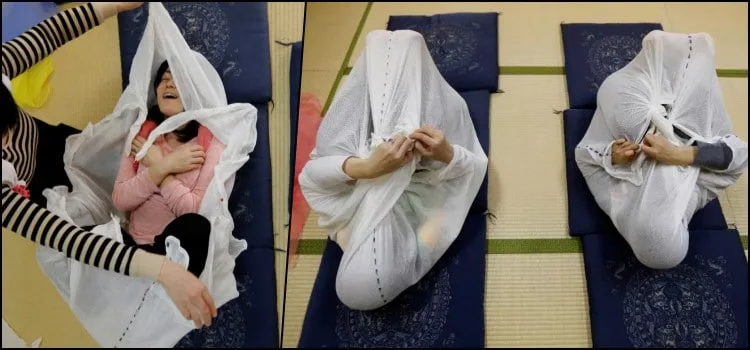
Physiotherapist Orie Matsuo, of Kyoko Proportion, was one of the practitioners who took Watanabe’s idea onto television and into English-language reports. In her telling, the wrap lets adults feel what the baby feels: the cloth looks tight, but a stretchy sheet should hold the body rather than crush it. Clients at her studio talked about shoulders and a lower back that finally let go — while other people looking at the same photos still just said it looked creepy.
The typical wrap lasts about 15 to 20 minutes. You sit or lie on a mat, hug the knees, and the practitioner winds a large breathable cloth from the head down, tying again after you wriggle so slack disappears. Some rooms drape a colored cloth over the face — red, blue, green — as a simple change of light. At least one Tokyo osteopathy clinic, Suitengu Seikotsuin near Suitengu-mae, was offering the wrap in 2017 as a group trial of about fifty minutes, sometimes finishing with a second wrap in a hammock. Prices then sat in the range of a few thousand yen per person. Studios quote their own rates now, and some teachers sell the cloth so you can practice at home.
Home wrapping with a blanket is the version that travels on social media. Teachers of the method still argue that a clumsy wrap can yank a muscle. That caution is not only marketing. Senior physiotherapist Visvanathan Ravi, speaking in 2016, disagreed with the treatment outright: holding a curled spine in cloth for a long stretch, he warned, could strain muscles and is not advisable as physiotherapy. Shimpei Fukumoto, director of the Fukumoto Japanese Holistic Clinic, had not even heard of Otonamaki at the time and did not count it as traditional physiotherapy. If a shoulder already hurts, a sheet is not a substitute for a licensed exam.
Other Japanese therapies in the same neighborhood
Gong therapy — also called sound therapy — uses a metal gong’s vibration as a kind of body-and-mind massage. Practitioners pitch it against insomnia, anxiety, and stress. Like Otonamaki, it is an experience more than a lab result.
Acupuncture comes from China, but it is ordinary enough in Japanese clinics: fine needles at mapped points, used for pain and a general sense of settling the body.
The towel method associated with Toshiki Fukutsuji places a rolled towel under the back. People use it for posture and, more hopefully, for weight. The details live in the piece on Japanese techniques and secrets for weight loss.
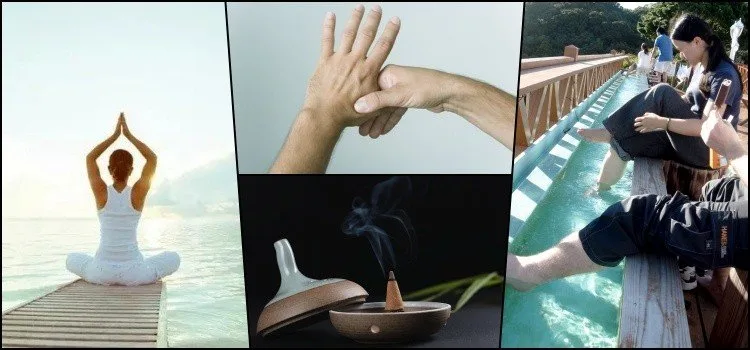
Chiropractic looks for trouble in the spine, nerves, and joints through manual work, without medication or surgery. It is the closest “respectable cousin” in the same waiting room — and a reminder that Otonamaki is the odd one, not the default.
Would you let someone seal you in a fetal curl inside a soft white sheet? It looks worse in the photograph than it usually feels in the cloth. If you go, go curious, not as if a blanket can replace an onsen soak or a clinician.



Community
Comments
0 comments
There are no published comments in this language yet.
Send comment