
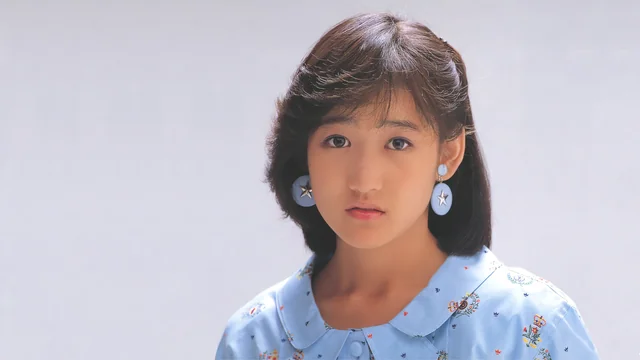
Yukiko Okada remains one of the most remembered idols of 1980s Japan. Her career lasted barely two years, yet songs like First Date, Summer Beach and Kuchibiru Network still keep her name alive among collectors, city pop listeners and longtime fans of the Showa era.
Part of that memory comes from the contrast around her image. Yukiko was promoted as gentle, bright and approachable, which made the shock around her death in April 1986 even stronger. To understand why she is still discussed today, it helps to look at both her fast rise and the way Japan reacted when that rise suddenly ended.
Contents 4
Who was Yukiko Okada?
Yukiko Okada was the stage name of Kayo Sato, born on August 22, 1967, in Ichinomiya, Aichi Prefecture. Before debuting, she spent years applying to talent contests and idol auditions. Her breakthrough came in 1983, when she won the television competition Star Tanjō! after performing Akina Nakamori's Slow Motion.
She debuted in April 1984 with First Date, a single written by Mariya Takeuchi. The song quickly established the image that fans would associate with Yukiko: a soft voice, a warm smile and a style that felt more delicate than the louder idol personas common at the time. That same year she won major newcomer awards, confirming that she was no passing trend.
How did Yukiko Okada become so popular?
Yukiko's appeal came from more than chart numbers. In the middle of Japan's idol boom, she stood out for a presence that felt calm and sincere. Her singles kept climbing, her records sold well and she also expanded into television work, including the lead role in the 1985 drama The Forbidden Mariko.
Her momentum peaked in early 1986. Kuchibiru Network, written by Seiko Matsuda and composed by Ryuichi Sakamoto, became her first number one single on the Oricon chart. Looking back, that song often marks the point where people realized Yukiko was moving from a promising newcomer to one of the defining idol voices of her generation.
What happened to Yukiko Okada in 1986?
On April 8, 1986, Yukiko Okada died by suicide at the age of 18. News coverage in Japan was immediate and overwhelming. The event shocked fans well beyond the usual idol audience, partly because her public image had been so closely tied to youth, sweetness and emotional brightness.
Her death is also remembered because of what followed. Japanese media soon used the term Yukko Syndrome for a wave of imitative suicides linked to the intense reporting around the case. Researchers and later essays have returned to the episode as a stark example of how celebrity, vulnerability and sensational coverage can collide.
Why is Yukiko Okada still remembered?
Yukiko's legacy did not disappear with the 1980s. Reissues, tribute compilations and anniversary projects continue to introduce her music to new listeners. Pony Canyon has kept her catalog active, and the 40th anniversary releases show that interest in her work is still strong decades later.
For many fans, Yukiko Okada represents both the charm and the pressure of Japan's idol system at its peak. She is remembered not only for the tragedy that ended her life, but for a brief career that produced enduring songs, a distinctive image and a place in Japanese pop history that never fully faded.






Community
Comments
0 comments
There are no published comments in this language yet.
Send comment