
If you've been spending some time scrolling the TikTok, Reels or YouTube Shorts feed recently, you've surely been taken by surprise by a thin, extremely cute anime voice saying something that sounds like "Moka-chan ga oshiete kureta", followed by a completely bizarre, chaotic or scary image.
But where did this audio come from? What does it mean in Japanese? And why are people so obsessed with it? Let's unravel the Cinnamoroll meme!
Contents 5
The Full Phrase and the Correct Translation
To start, let's look at the correct Japanese. The original audio contains the following sentence:
モカちゃんが教えてくれた、色んな見た目になれるアプリなんだって。どれどれ… 可愛い!
Romaji: Moka-chan ga oshiete kureta, ironna mitame ni nareru apuri nandatte. Dore dore... kawaii!
Literal translation:
- Moka-chan: Mocha (friend of Cinnamoroll).
- ga oshiete kureta: taught me / told me.
- ironna mitame ni nareru: where you can have various appearances.
- apuri nandatte: they said it's an app.
- Dore dore: Let me see / Let's see.
- Kawaii: How cute!
The Origin of the moka-chan Audio
The audio wasn't created to be a cursed meme. It was taken from an official, harmless promotional video by Sanrio, starring the mascot Cinnamoroll (that little white puppy with giant ears that looks like a cloud).
In the original video, he is playing with a mobile app that puts filters on the face — something similar to Snapchat, Snow or TikTok's filters. His friend, Mocha, recommended the app, and he is testing to see how he looks with different cute visuals.
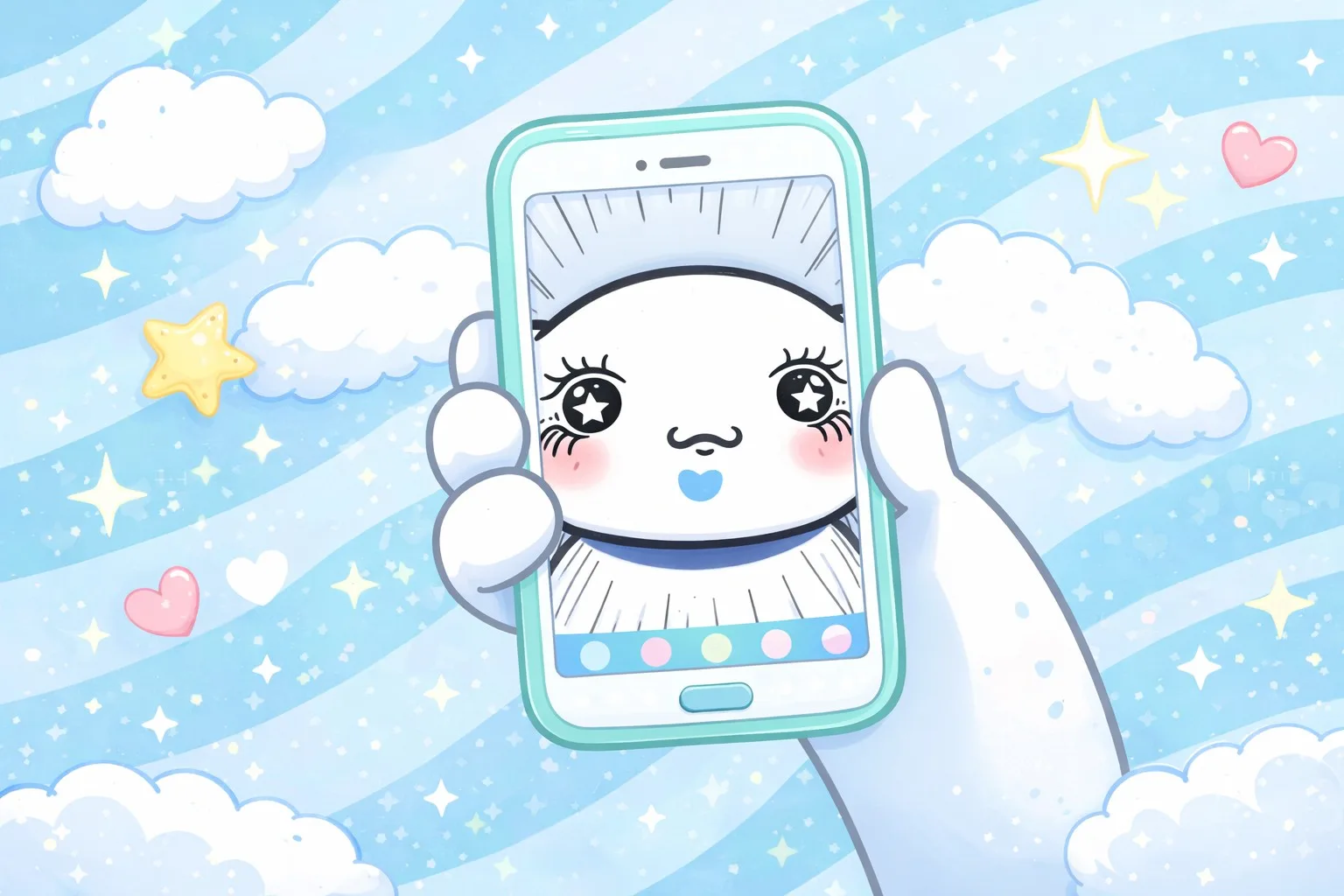
Origin of the meme
The meme truly exploded between late 2023 and early 2024, spreading like wildfire across TikTok, YouTube Shorts and Reels.
The popularization started strongly within shitpost communities, geek culture and anime fans. Huge forums and groups, like the r/Jujutsufolk on Reddit (focused on memes about Jujutsu Kaisen), adopted the Cinnamoroll audio en masse to make jokes about the manga.
From these anime bubbles, the format leaked into other areas of the internet. Creators began overlaying the audio onto chaotic moments in live streams, real-life oddities or situations where things go very wrong.
Boka-chan and Tole Tole
If you look at the search bars on Google and TikTok, you'll notice something funny: most people don't search the correct phrase. The most searched terms are "boka chan" and "tole tole".
The character's high, processed voice creates a slight acoustic distortion. To Western ears not accustomed to Japanese phonetics, the initial "M" of Moka sounds a lot like a "B". However, the correct is Moka (a reference to the little dog Mocha, from Sanrio). The same phenomenon happens with dore dore which can end up sounding like tole tole, part of the character's childlike nature.
What does 'Dododododo' (ドドドドド) mean?
When testing the filters she first tries a beard effect and releases the mimetic onomatopoeia Houhou [ホーホ] which is sort of self-explanatory. The next filter displays a meme face along with action and speed lines common in shounen manga.
He gets into character, makes an expression of someone running intensely toward you saying dododododo.
The [ドド] is a classic onomatopoeia (Giongo) used to describe the sound of something frantic, thunderous or an intense charge, a crash.


Community
Comments
0 comments
There are no published comments in this language yet.
Send comment