

Is it necessary to know English in Japan? What is the usefulness of speaking English? Do Japanese people speak English? Although some do not like it, English shows up in Japan, whether you live there or you only travel.
Most Japanese people will not chat with you in English, and many who try it keep a strong Japanese accent. The 2025 EF English Proficiency Index put Japan 96th of 123 countries and regions where English is not the main language, with a score of 446, in the lowest band. Reading came out at 454 and listening at 437, ahead of writing at 394 and speaking at 393. Some visitors hear that accent and decide English is useless there. A lot of Japanese people like the language and will try it with you anyway.

Observe the following dialogue:
Friend: “Oh friend! I want to go to Japan! Wouldn't it be better to learn Japanese?”
Brazilian in Japan: For sure it is! It's much better to learn Japanese!
Friend: Do you already know Japanese?
Brazilian in Japan: I don't, just the basics.
Let's face it, although it is possible to learn the basics of the Japanese language in 3 months, you won't learn enough to have a conversation and build a friendship while in Japan. And if you decide to use Google Translate in a conversation, you will go through many bizarre situations.
Google Translate can help you translate some words, yes. A full sentence in a live conversation comes out wrong. That's where English comes in. Even if you don't know anything in English, it will end up being part of your stay in Japan sooner or later.
If the real question is the trip itself, you can travel in Japan without speaking Japanese.
Why should I know English in Japan?
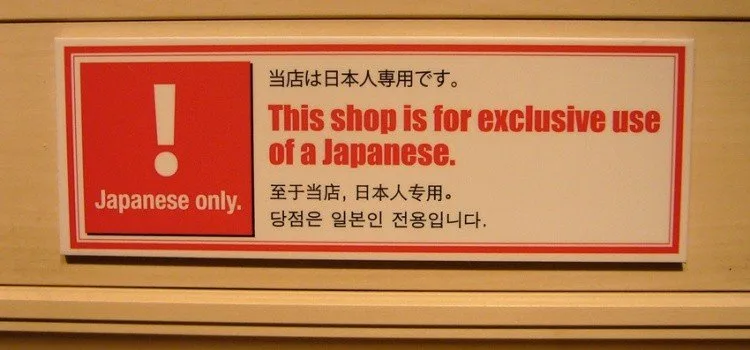
It will be super useful on the plane and at the airport. Major stations and tourist neighborhoods often put English next to the Japanese on maps and signs. A neighborhood restaurant menu is another story: many are Japanese only, with pictures if you are lucky. And here’s an opinion that might spark controversy... I feel that the staff treat us better and engage more when we speak in English. Now why?
“I don't know, I just know it was like that.” Chicó, northeastern philosopher.
And then there’s the issue of Gaijin Hunters, who are Japanese people hunting for foreign friends to use us to practice English and take pictures together!
“Selfish friends? Get out of here!” You might think, but Gaijin Hunters are more open to talking to foreigners and also like to help. I remember once I was lost in Kyoto, I found a group of young Japanese people sitting on the sidewalk and asked for directions using typical Brazilian English. (Improvisation and rambling)

The guys were really nice, not only did they tell me where to go, but they also took me to the bus stop (which was 30 meters from where they were), waited for the bus with me, and even waved goodbye while I was leaving.
Maybe they were Gaijin Hunters, maybe not. Maybe I am prejudiced and judge people hastily. Only God knows.
List of benefits of knowing English in Japan
Even if you have an advanced level of Japanese, English can be useful since many times you may not be able to read the countless ideograms or understand certain texts or notices. There are numerous benefits, and I will list them below:
- Use Google Translate more easily;
- Talk to Japanese people who only want to speak English;
- Read signs, information, and pamphlets in English;
- At the cinema, choose 字幕版 (jimakuban) for original audio with Japanese subtitles. 吹替版 (fukikaeban) is the Japanese dub;
- Helps you find jobs in Japan.
These are just some of the benefits of knowing English in Japan. Do you know others? We hope you leave them in the comments and share with friends. My friend Roberto Pedraça wrote the Portuguese travel book Se dando bem no Japão.



Community
Comments
0 comments
There are no published comments in this language yet.
Send comment