

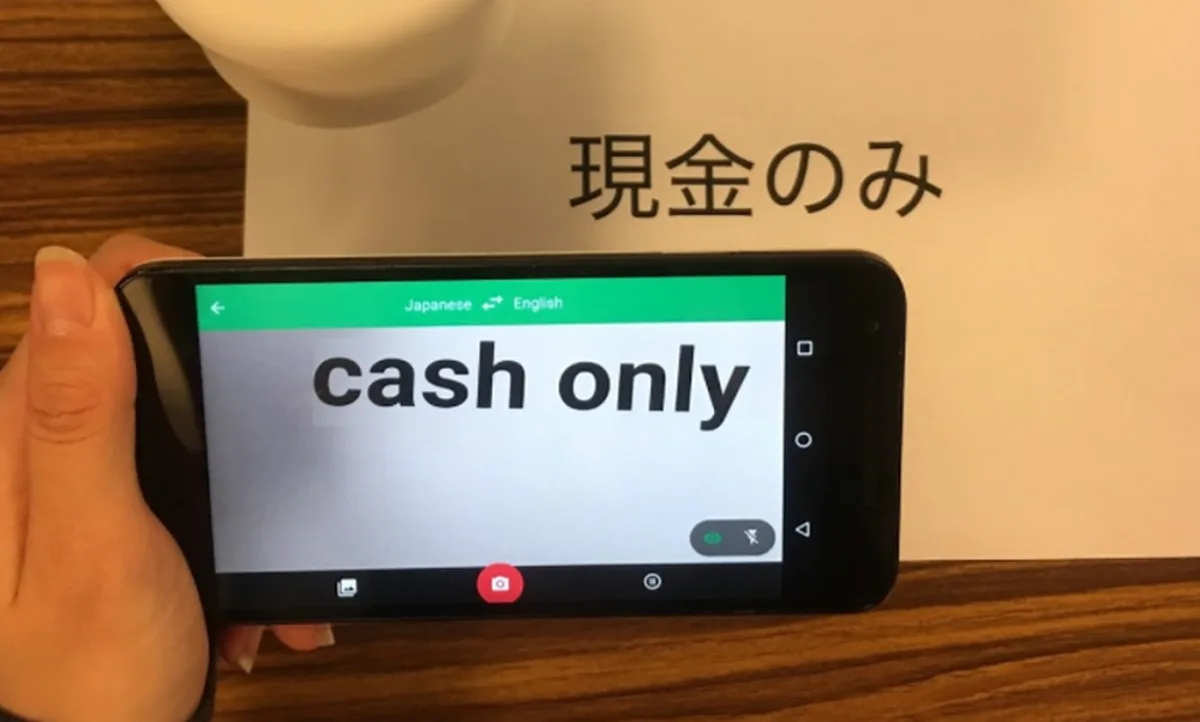
When we don't know how to say a word in Japanese, we may need to turn to an online translator, and the most popular one is the famous Google Translator. In this article, we will share some tips and precautions you should take when using Google Translate to translate sentences in Japanese.
For this article, I first created a video showing how I use Google Translate and the precautions I take when checking and translating sentences to avoid any incorrect translations. I will leave the video below and then we will continue with the article:
What do you need to keep in mind?
The first thing you should keep in mind is that the Japanese language is completely different from the Portuguese language. Japanese grammar uses an SOV system where the verb always comes at the end of sentences. Not to mention the countless synonyms, ideas, and different ways of thinking that the Japanese language employs.
Some examples can be found in the confusing meaning of kokoro, or in the numerous readings of Japanese ideograms, which result in thousands of nonsensical translations when using Google's automatic system. Therefore, before using Google Translate, it is recommended to have at least a basic understanding of the Japanese language, its grammar, and particles.
The difficulty of translating from Portuguese to Japanese does not lie in the difficulty of the language, but rather in its simplicity. The Japanese language is overly simple, which complicates expressing complex ideas that Portuguese is accustomed to using.

Tips and precautions when using Google Translate in Japanese
Now that you are aware of the initial precautions, let's share some interesting tips below:
Re-translate to Portuguese - Whenever you translate to Japanese, do the reverse with the suggested translation from Google to see if the sentence was translated using the correct words. If you have some knowledge of English, use English as well!
Use Google - Whenever you translate a sentence, input it or parts of it into Google itself to see if similar results appear to get an idea that the sentence is correct.
Pay attention to suggestions and alternatives - Sometimes Google may suggest better options when you are trying to translate a sentence from Japanese to Portuguese or vice versa.
Use Jisho - Always use jisho.org to find the meaning of words you have doubts about in a Google translation.
Avoid Pronouns - In a Japanese conversation, it is not common to use the pronouns you, I, etc., in every sentence. It is even more common to use names, nicknames, or other ways to refer to another person. It may be better to remove the pronoun anata [あなた] from the sentences that Google suggests; it all depends on the situation.
Be careful with Romaji - Avoid using the automatic romanizations suggested by Google that may be incorrect. Focus only on the kanas, and if you have any unknown kanji, the best way to know its correct reading is by searching it on jisho.org;
I hope you enjoyed these small tips for using Google Translate without fear of making mistakes. If you liked it, share it with friends and leave your comments with other suggestions and questions related to translating Japanese using Google Translate.






Community
Comments
0 comments
There are no published comments in this language yet.
Send comment