
Haruki Murakami (村上春樹) is the Japanese novelist most widely read abroad. His books have been translated into more than 50 languages, and his name comes up every year in Nobel speculation. This piece sets out his life, the key titles, the newest book and the prizes.
Contents 7
Starting point: Kyoto to Kobe
He was born on 12 January 1949 in Kyoto. His father taught Japanese, and the house was full of books. He spent his teens in Nishinomiya, Ashiya and Kobe, reading a great deal of Western fiction. He studied drama at Waseda University, married before graduating and opened a jazz bar, Peter Cat, in Kokubunji, Tokyo.
Debut
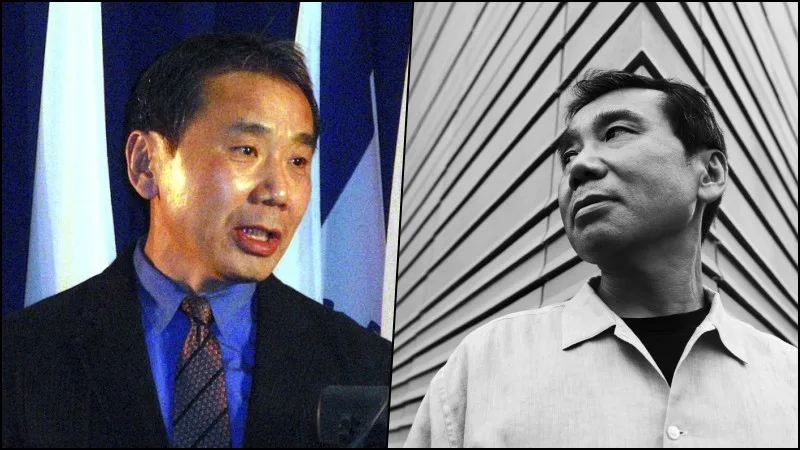
He began writing at almost thirty. In 1979 he debuted with Hear the Wind Sing and won the Gunzo Prize for new writers. The spare, loose tone stood apart from what the Japanese literary scene was doing at the time. He ran the bar for nearly seven years, writing during quiet nights.
His style reads simple, almost like a translation. Sentences are short, dialogue is clipped, and characters appear through habits rather than description. That mix of Japanese storytelling and American rhythm is often called his signature.
Norwegian Wood
In 1987 Norwegian Wood turned him into a writer with a mass readership. The novel about love and loss in youth sold heavily in Japan and brought readers abroad. He then spent some years in Europe and the United States.

1Q84 and Kafka
The Wind-Up Bird Chronicle appeared in the 1990s, and Kafka on the Shore followed in 2002. 1Q84, published in three volumes between 2009 and 2010, ties a parallel world, a cult and two characters together. Aomame teaches martial arts and works as a hidden assassin; Tengo teaches maths and wants to write.
The newest book
After Colorless Tsukuru Tazaki (2013) and Killing Commendatore (2017), he published The City and Its Uncertain Walls in 2023. The novel came from Shinchosha, and Philip Gabriel’s English translation followed in 2024. It follows a man searching for his first love and returns to a town from an earlier story.

He has also translated into Japanese, among others Raymond Carver, F. Scott Fitzgerald and J. D. Salinger. In several interviews he says that work sharpened his own voice.
The Nobel question returns every year, and he has not won it. The debate says more about the industry than about the books.
His working day follows a fixed pattern: early rising, a few hours at the desk, then running or swimming. He describes the routine at length in his book about running.
Prizes and running
In 2006 he received the Franz Kafka Prize, the Frank O’Connor Award and the World Fantasy Award; in 2009 the Jerusalem Prize; in 2016 the Hans Christian Andersen Literature Award. He has run for decades and wrote about a 100-kilometre ultramarathon in an essay collection.
Readers who begin with the novels notice quickly that names and motifs return. The short stories, by contrast, stand alone, which suits anyone who wants one scene without background.
English editions differ by translator, and the tone shifts with them. Comparing two versions of the same story is worth the effort.
Where to start
For a first book, Norwegian Wood or Kafka on the Shore are safe choices. Readers who prefer short fiction can pick The Elephant Vanishes. Anyone after the surreal should try The Wind-Up Bird Chronicle.
For background, see the pieces on Japanese books and writers, on authors of books and mangas and on the Kyoto guide.






Community
Comments
0 comments
There are no published comments in this language yet.
Send comment