
Fugu is a Japanese delicacy made from pufferfish and one of the best known and most debated dishes in the country's cuisine. The fish contains tetrodotoxin, a neurotoxin that can be fatal if the fish is prepared incorrectly. That danger is exactly why fugu is surrounded by strict rules and a culture of its own.
This article explains why fugu is dangerous, how the toxin affects the body, which rules apply in Japan and how the dish is eaten today. Practical notes on season and market follow at the end.
Contents 8
What is fugu?
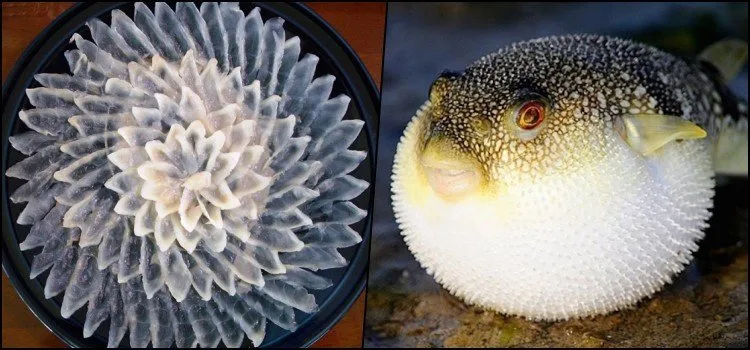
Fugu refers to pufferfish in Japan, mainly species of the genus Takifugu, as well as the dishes prepared from them. Several varieties exist, including the tiger puffer, which is considered especially valuable. In Japanese cuisine fugu is served raw as sashimi, as part of a salad, fried, or slowly simmered as a hot pot called fugu-chiri.
The delicacy is not limited to the meat. The fish's milt also appears on menus, and in some places fugu-fin sake is served. Prices are high, and the best restaurants display the live fish in large tanks.
Why fugu is dangerous
The poison is called tetrodotoxin and is a potent neurotoxin. It is found mainly in the internal organs, especially the liver, ovaries and eyes, and also in the skin. The meat itself carries far less as long as the toxic parts are removed cleanly and the carcass is not contaminated.
Tetrodotoxin blocks the sodium channels of nerve cells. As a result, muscles can no longer receive signals. Paralysis often starts at the lips and tongue, spreads to the arms and can eventually reach the muscles used for breathing. Because victims usually remain conscious, the poisoning is considered especially distressing. Without medical treatment, respiratory paralysis leads to death.
Licensing and training
In Japan the preparation of fugu is tightly controlled. Since 1958 chefs need a licence to prepare the fish and sell it to the public. Training usually takes two or three years, and some sources speak of three or more years of rigorous apprenticeship.
The exam includes a written test, a fish-identification test and a practical part in which the toxic organs must be removed. A licensed chef may serve fugu in a restaurant. Additional rules apply to retail: whole fish may not be sold to the general public, and prepared fugu in shops must display official licence documents.
The banned liver
The liver is considered especially flavourful and was traditionally served as fugu-kimo. At the same time it is the most poisonous part of the fish. Serving this organ in Japanese restaurants was banned in 1984. The rule does not stop at the plate: the liver cannot go into ordinary waste. It is collected in a closed container and incinerated by specialised companies.
This handling shows how closely pleasure and safety are linked with fugu. Even licensed chefs work with a substance that is lethal in the wrong concentration.
The emperor and the history of bans
Fugu was banned several times in Japanese history. During the Meiji era, from 1867 to 1912, many regions prohibited eating it, while areas with weaker state control developed their own methods of safe preparation. According to one fugu chef in Tokyo, the Emperor of Japan has never eaten fugu. That statement rests on an old, undated rule and should not be read as written law.
Today fugu is legal in Japan but regulated. The rules protect guests and preserve a tradition that would otherwise have disappeared long ago.
How fugu is eaten
Fugu is best known as sashimi, with thin slices arranged carefully on the plate. Equally common is nabemono, a hot pot in which the meat is cooked with vegetables and broth. Other versions appear as salad, fried, or slowly simmered as fugu-chiri.
Many people describe the meat as mild, lean and firm. It has no strong flavour of its own, so the appeal lies more in texture and preparation than in a bold aroma. Eating fugu therefore also means tasting a piece of Japanese food culture.
Season, market and prices
Fugu is eaten mainly in autumn and winter, when the fish put on fat for the cold season. Prices rise in autumn and peak in winter. The largest wholesale market for fugu is in Shimonoseki, a city in western Japan that is considered the centre of the trade.
Much of the fish is now caught in spring during the spawning season and then farmed in floating cages in the Pacific. Farming has stabilised supply, but it does not replace the careful handwork of gutting the fish, which makes the difference between a safe and a dangerous dish.
Conclusion
Fugu is a dish in which pleasure, craft and risk are closely connected. The fascination comes not only from the taste but also from the responsibility that comes with every portion.
Anyone who wants to try fugu should choose a licensed restaurant. More on Japanese cuisine: meat and fish in Japanese, types of sushi, nori, essential ingredients and unagi.






Community
Comments
0 comments
There are no published comments in this language yet.
Send comment