
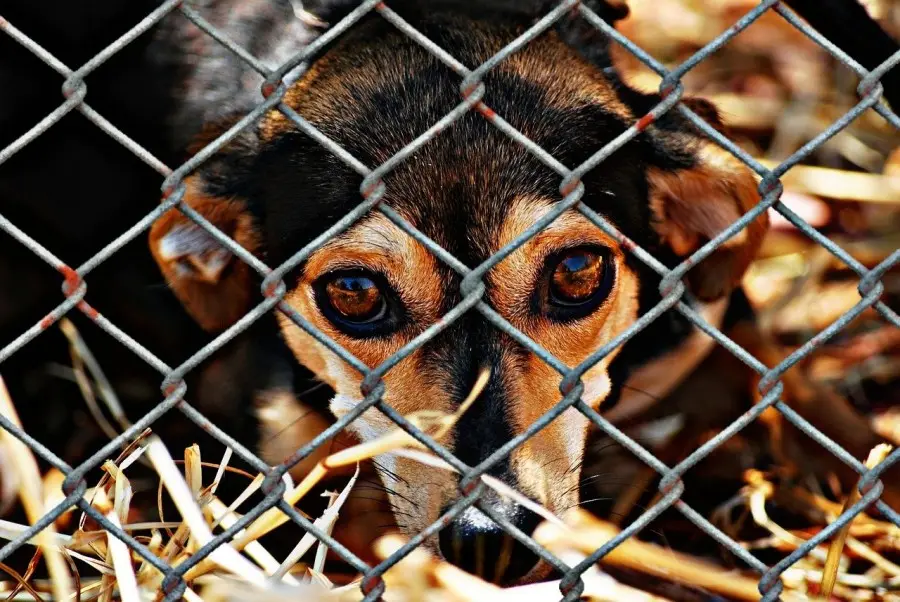
South Korea will suspend the consumption of dog meat! This practice is certainly not well viewed in many places outside Asia because dogs are considered "man's best friend." Recently, this topic has drawn attention from various media because the president of South Korea, Moon Jae-in, considered the possibility of banning dog meat consumption.
Dog meat has been consumed for a long time, but in isolated cases, so it is not part of the South Korean diet. At least up to a million of these animals would be consumed each year in this country. However, as South Koreans began to see dogs more as pets than as a food source, consumption started to decline, along with the existence of animal rights activists.
The consumption of dog meat is not as large as we imagine, but the small percentage (believed to be only 3.9%) that still exists causes an uproar. And younger people completely condemn this practice, which still exists due to social inequality.
Contents 5
Beginning of the practice
The exact moment when dog meat became common for South Koreans is not known, but it is believed to have been consumed more starting from the Goryeo Dynasty (918 - 1392), through Khitan refugees. In Joseon society, there was a nomadic people called Baekjeong, who were of low class, the first class of butchers.
The first to consume dog meat were the descendants of these classes. They were poor, elderly, and generally from rural areas. The government during the Joseon Period assigned the Baekjeong the task of dealing with ferocious animals, thus making them a food item for the poorest. But during this same period, there were already people against this type of consumption.
A book written by Korean scholar Hong Seok-mo in 1849 contains a recipe for a type of soup that has dog meat as the main ingredient (Bosintang) seasoned with green onions and chili powder. It is said that this dish serves to increase virility.
Dogs used
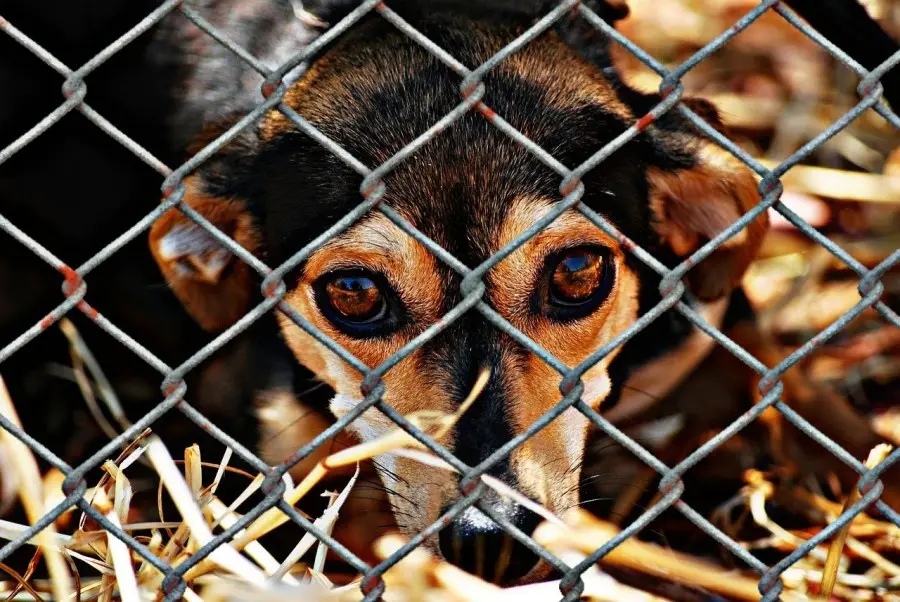
The dogs that are commonly used for meat consumption are Nureongi (누렁이), a mixed-breed dog with a yellowish color, and breeds like Labradors, Retrievers, and Cocker Spaniels. This information is from The Korea Observer. The dogs slaughtered are former pets or are raised specifically for this purpose.
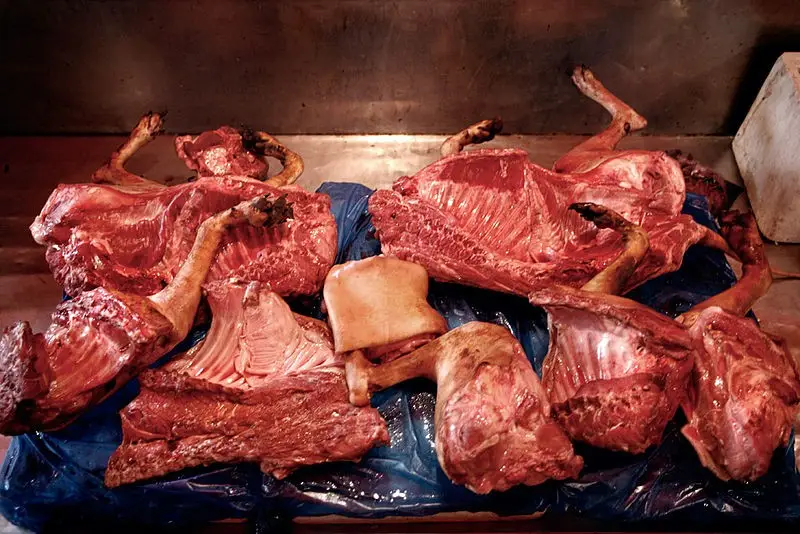
The methods of slaughter include electrocution, hanging, or being beaten on the head before bleeding. It is important to emphasize that practices like this are becoming increasingly rare due to animal protection laws. In 2015, it was reported that when Retrievers are sold as meat dogs, they cost more than 200,000 Korean wons.
Types of dog meat dishes
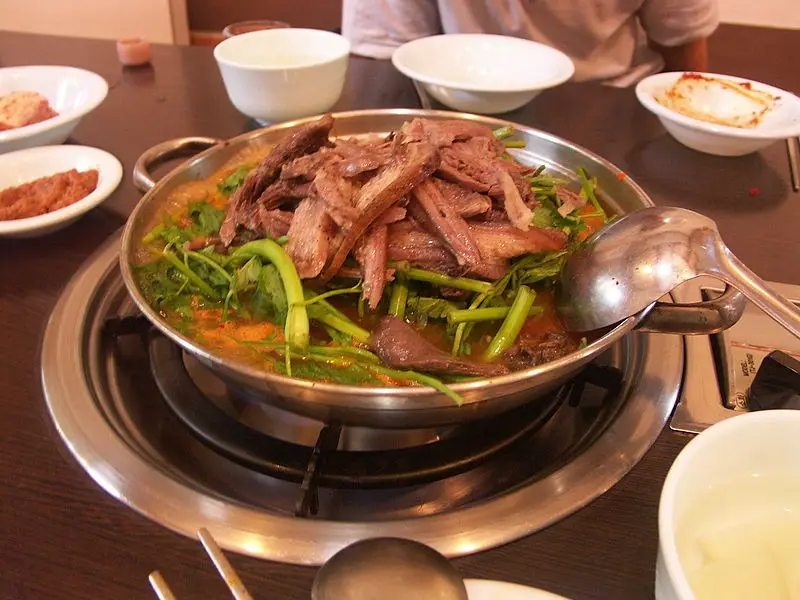
Bosintang (보신탕; 補 身 湯) - stew with cooked dog meat and vegetables.
Gaegogi Jeongol (개고기 전골) - dog meat stew in a large Jeongol pot.
Gae Suyuk (개 수육; 개 水 肉) - cooked dog meat.
Gaegogi Muchim (개고기 무침) - steamed dog meat with Korean leeks, vegetables, and spices.
Gaesoju (개소주; 개 燒酒) - Chinese medicinal drink with dog meat, ginger, chestnut, and jujube.
Prohibition laws
In May 1991, South Korea adopted the first Animal Protection Law. Article 7 does not explicitly prohibit the consumption of dog meat, but rather the brutal killing of animals. It also prohibits killing animals in open areas.
So there are no laws regarding the humane slaughter of these animals. But the way these animals are slaughtered is still subject to legal scrutiny. In 2008, the Seoul government requested that dogs be slaughtered under legal regulations, but they were attacked by activist groups.
Ten years later, the municipal court of Bucheon city ruled that killing dogs for their meat was illegal. By 2021, the president of South Korea, Moon Jae-in, expressed his desire to put an end to dog meat consumption once and for all.

Dog meat consumption today
The number of people who still consume dog meat in South Korea corresponds to 3.9% of the population, according to a 2018 survey. This low percentage believes in the use of dog meat for medicinal benefits, to improve health and virility.
However, the beginning of this consumption was marked by the issue of social inequality, as dog meat was more accessible than pork or chicken, for example. So much so that these dishes were not easily found in well-known restaurants.
In 2019, a dog meat market in Gupo, South Korea, was closed and a park was built in its place. The market was considered one of the largest of its kind in the country. In that same year, at least 100 restaurants served this type of dish, but the number has been decreasing.
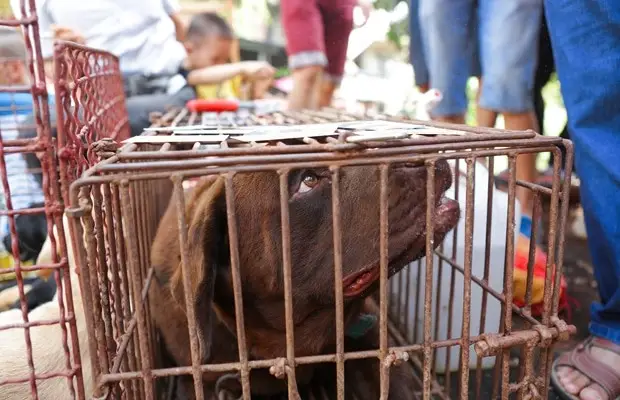
After months of negotiation, Korean authorities reached an agreement with the 19 dog meat vendors operating in the space. The Gupo market was known for keeping animals alive in cages for slaughter and serving fresh dog meat. In 2021, the last market in this sector closed. Slaughterhouses were also shut down.
Currently, many South Koreans have dogs as pets and many are against this type of consumption. Protests in defense of dogs and the definitive abolition of dog meat are even common.
There is still prejudice against South Koreans because of dog meat, but what is not known is that this practice belongs to an older minority and that South Korea is not the only country that consumes it; other countries like China, Vietnam, and Nigeria also eat dog meat.



Community
Comments
0 comments
There are no published comments in this language yet.
Send comment