
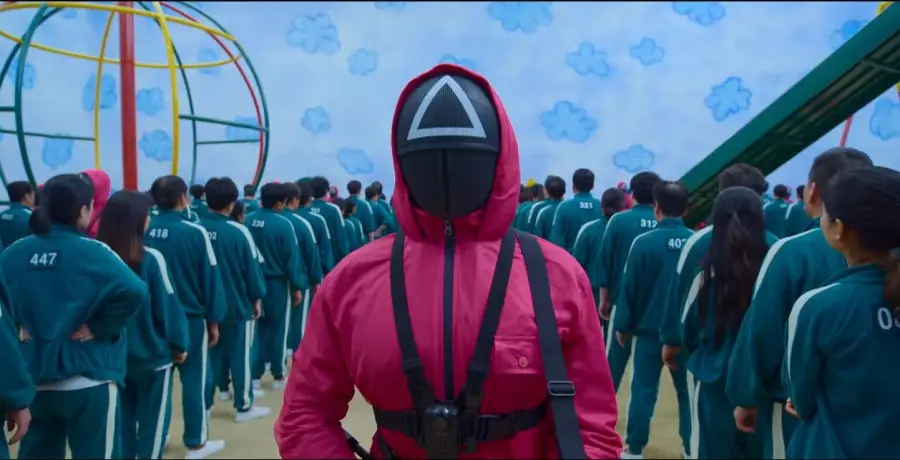
Squid Game turns familiar children’s games into a survival drama, but its pull comes from more than suspense. The series follows Seong Gi-hun, Player 456, as money, fear and loyalty push ordinary people into choices they would never make outside the arena.
This guide keeps spoilers light. It focuses on the people, games and production choices worth noticing across the complete three-season story, including the final season now available on Netflix.
Contents 13
1. Hwang Dong-hyuk is the creative force behind the series
Hwang Dong-hyuk created, wrote and directed Squid Game. That close control helps explain why the show feels so connected: the games, the characters and the larger question of who benefits from the contest all point in the same direction.
2. The Korean title is 오징어 게임
The original title is 오징어 게임 (Ojingeo Geim). It refers to squid, a Korean playground game named for the outline drawn on the ground. The series uses that childhood reference as a sharp contrast to the danger faced by its adult players.
3. Gi-hun is Player 456
Seong Gi-hun, played by Lee Jung-jae, enters the competition as Player 456. His number is easy to remember because it places him at the far end of the player list, while the story stays close to his shifting view of the games and the people around him.

4. The games are based on familiar childhood play
The central idea is not that the contestants learn an invented sport. They are asked to play versions of games that look simple enough to understand in seconds. That familiarity gives every round an uneasy rhythm: the rules are recognizable, but the consequence of losing is not.
5. Season 1 uses memorable games for a reason
Red Light, Green Light, dalgona carving, tug-of-war, marbles and the glass bridge each demand a different kind of decision. Some reward patience, some strength, some luck and some willingness to trust another player. Watching how the group reacts often matters as much as knowing who clears the round.
6. The show makes rules part of the tension
Every game has a clear objective, yet the pressure comes from what players do with limited information. A rule can sound fair until a participant realizes that another person has an advantage, a hidden motive or a different idea of what survival requires. That is where the drama moves beyond a simple elimination contest.

7. Color makes the arena easy to read
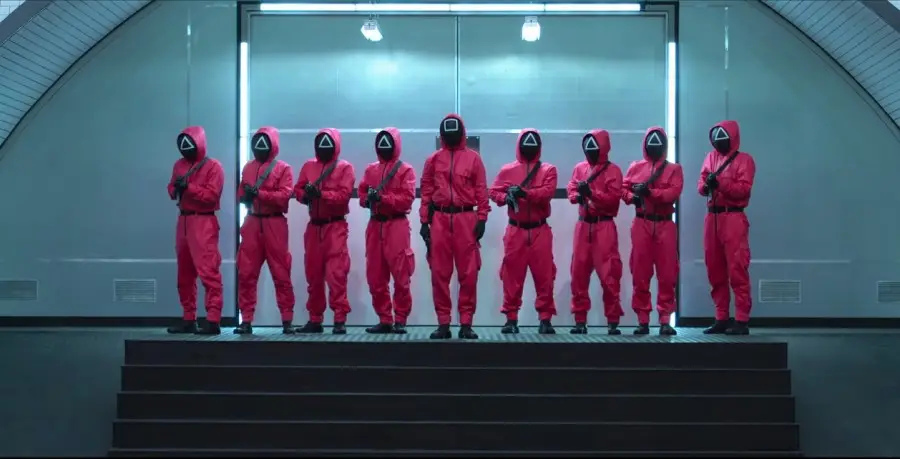
Bright tracksuits, pink uniforms, black masks and large geometric rooms create an instantly recognizable visual language. The cheerful colors do not soften the story; they make the cruelty of the setting more unsettling. Even a brief glimpse of a staircase or a dormitory can tell viewers where they are in the world of the show.
8. The supporting players carry much of the emotional weight
Gi-hun may be the viewpoint character, but the series works because it gives other contestants urgent reasons to be there. Kang Sae-byeok, Cho Sang-woo and Oh Il-nam are not interchangeable obstacles. Their different relationships with debt, family, pride and trust make alliances feel personal rather than tactical.
9. The Front Man changes how viewers read the contest
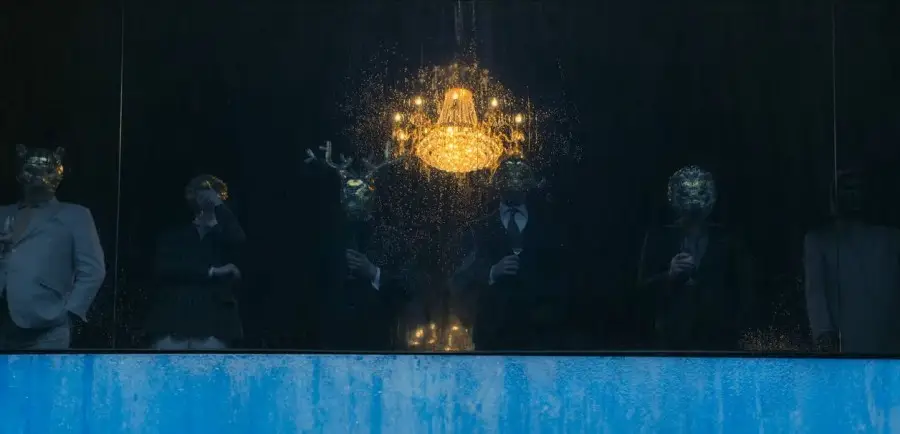
The masked Front Man represents the system that keeps the games moving even when individual contestants break down. His connection to detective Hwang Jun-ho adds another perspective outside the player dormitory and gradually widens the story beyond a single tournament.
10. The series is a drama first, not only a thriller
The violence is impossible to separate from the premise, but the lasting questions are social and personal. Who receives a second chance? What does a cash prize change? When people are treated as numbers, how much room is left for responsibility? The show lets those questions emerge through arguments, betrayals and small moments of care.
11. Season 3 completes the main story
Netflix presents the third season as the final round of Gi-hun’s story. Its six episodes continue directly from the aftermath of Season 2, with Gi-hun, the Front Man and Jun-ho still at the center of the conflict. Viewers starting late will get more from the final season by watching the earlier seasons in order.
12. The ending aims for closure, not a fourth season
Hwang Dong-hyuk has described Season 3 as the point where the story he wanted to tell through Gi-hun reaches its conclusion. That does not erase the many questions raised by the world of Squid Game, but it gives the central character arc a deliberate finish instead of stretching it indefinitely.
Where to start with Squid Game
Start with Season 1 and treat the early games as character tests, not only as spectacle. Then continue in order through Seasons 2 and 3. The details that seem small at first — a player number, a promise, a familiar game or a look between characters — gain more meaning as the series moves toward its final round.






Community
Comments
0 comments
There are no published comments in this language yet.
Send comment