
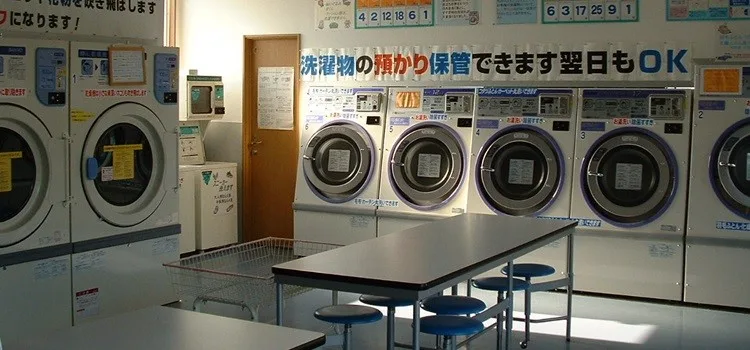
Are you in Japan but don’t know how to wash your clothes? Today we will talk about Coin Laundry or Koinrandorii [コインランドリー], a public place where you wash your clothes yourself and dry them in automatic machines that work with coins.
Public laundry places have existed for a long time and are not exclusive to Japan. I have seen them in various American movies and series. In other countries, they are usually called coin laundry, self-service laundry, coin wash, laundromat, and launderette. In Japan they are easy to spot once you know the name on the maps—and they matter a lot when hotels run out of machines or when rain keeps you from air-drying on a balcony.
Contents 8
Where to find a Coin Laundry?
Industry estimates put the number of coin laundries in Japan well above 20,000 shops, and the count has grown for years as more people live alone, work late, or need dryers that apartments rarely have. Most hotels, hostels, and even some onsens still keep machines somewhere on site. Finding a Coin Laundry is usually not difficult in cities.
To find a location using Google Maps, search for [コインランドリー] or “Coin Laundry.” You can also look for Sento [銭湯] or Onsen [温泉]: laundries often sit nearby, because locals still like to drop a load and take a bath while it runs. If you are still learning the maps interface, our guide on how to map your destination in Japan with Google Maps helps.
Many shops open from about 8 AM to 11 PM; plenty run 24 hours. Some machines show English instructions, and a few older places still mix in Portuguese. Not every laundry works the same way: newer drum machines often dose detergent (and sometimes softener) automatically, while smaller or older units expect you to add soap yourself.
You can usually buy detergent single-use packs, softener, and scent products on site or from a small vending unit. If you did not bring coins, look for a change machine first. Most washers and dryers take 100 yen coins; some also take 500 yen coins, and a growing number of modern shops accept IC transit cards or QR payments—still, cash change is the safe plan. If the shop has no changer, a nearby hanbaiki vending machine can turn a bill into coins when you buy a drink.
How much does a coin laundry cost?
Prices change by city, machine size, and whether detergent is included, so treat these as practical ranges rather than fixed menus:
- Wash only: often about 200–600 yen for a typical travel load; large machines (bedding, winter coats) can reach roughly 1,000 yen or more.
- Dry only: commonly 100 yen for about 6–10 minutes on big gas dryers; plan on several coins if the load is heavy or still damp.
- Wash + dry total: many travelers finish a medium load for around 600–1,200 yen.
- Washer-dryer combo: one drum that washes and dries, often around 1,000–1,500 yen depending on capacity.
Carry at least ten 100 yen coins if you can. To understand the coins themselves, see Japanese yen coins and how the currency works.
Washing clothes in Japan
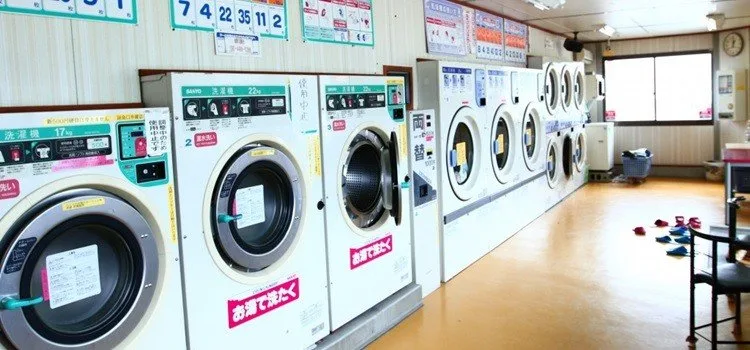
Take your dirty clothes to the washing machine, being careful not to confuse it with the dryer. Dryers are often stacked and have transparent doors. Each machine has a weight limit and a displayed wait time.
It is still smart to separate whites and colors when you can, especially if you are unsure about bleach or dye. Once you insert the coins (and press start if the panel asks), the cycle begins and the remaining time usually appears on the display.
Typical drum sizes run from small loads around 4–6 kg up to large 15–30 kg machines for futons and bedding. A wash cycle is often 20–40 minutes; drying may take another 20–50 minutes depending on thickness and how full the drum is. Fill washers to about 70–80% so clothes can move; dryers work better when they are not packed tight—many people aim closer to one-third full for air flow.
If you step out, leave a bag or basket on the machine so others know the cycle is yours. When you return late and someone needs the machine, they may move finished clothes into your bag or a shared basket—that is normal, not rude. Remove your load soon after the buzzer so the next person is not stuck waiting.
Some shops offer drinks machines, chairs, magazines, or Wi-Fi while you wait. When clothes come out of a good dryer, you can often fold them without ironing. Delicates, wool, and anything with special care labels are safer in a mesh laundry net or at a dry cleaner—avoid forcing them through a commercial drum.
Etiquette worth remembering: empty pockets (tissues and receipts shred everywhere), do not eat over other people’s laundry, and do not leave wet piles on open machines longer than you have to. Shared rooms stay pleasant when everyone treats them like a temporary kitchen, not a storage locker.
Hiring a laundry service
For suits, coats, and delicate fabrics, look for a neighborhood クリーニング (kurīningu) shop or hotel laundry service. Dry cleaning is common in Japan because businesswear is still part of daily office life. Budget chains can clean a shirt or simple item for a few hundred yen; a full suit often costs more, and premium chains charge higher—always check the board at the counter rather than assuming a single national price.
Compared with many countries, ordinary dry cleaning in Japan can feel more ordinary and available, but it is not always “cheap” if you send a whole wardrobe. Coin laundry remains the low-cost option for everyday cotton, towels, and travel clothes when you do the work yourself.
Coin laundry vs staffed laundries
Because coin laundry is self-service, it stays much cheaper than full-service cleaning. Students, solo travelers, and people in compact apartments without dryers use these shops the most. Staffed services win when you need pressing, stain work, or fabrics that cannot handle a commercial cycle.
Do hotels in Japan have laundry services?
Most hotels offer some form of laundry. Full-service laundry can run around 1,000 yen or more per delicate item, depending on the property. Business hotels, hostels, and budget ryokans are more likely to have coin-operated washers (sometimes with detergent vending). Guest rooms often include a bathroom drying rack if there is no dryer on site. Hotel machines can get busy in the evening after sightseeing—try off-peak hours if the room is full.
How to wash sneakers?
You do not always need a specialty shop. Some coin laundries have dedicated sneaker washers and dryers. Search maps with コインランドリー スニーカー (coin laundry sneakers). A typical sneaker wash is around 200 yen for about 20 minutes; drying may be another 100 yen for a short cycle, with shoes hanging on built-in racks. Leather dress shoes and boots usually do not belong in these machines—stick to canvas and athletic sneakers the shop allows.
Vocabulary of laundries
The list below helps you read panels on washing machines and dryers in Japan.
| English | Japanese | Romaji |
| Power | 電源 | dengen |
| On | 入 | iri / ireru |
| Off | 切 | kiri / kiru |
| Start | スタート | sutāto |
| Pause | 一時停止 | ichiji teishi |
| Unlock | ロック解除 | rokku kaijo |
| Wash | 洗濯 / 洗い | sentaku / arai |
| Rinse | すすぎ | susugi |
| Spin / drain | 脱水 | dassui |
| Dry | 乾燥 | kansō |
| Wash & dry | 洗濯&乾燥 | sentaku & kansō |
| Wash only | 洗濯のみ | sentaku nomi |
| Dry only | 乾燥のみ | kansō nomi |
| Remaining time | 残り | nokori |
| Minutes | 分 | fun / pun |
| Clothes | 衣類 | irui |
| Load / amount | 量 | ryō |
| Warm water | 温水 | onsui |
| Detergent | 洗剤 | senzai |
| Fabric softener | 柔軟剤 | jūnan-zai |
| Antibacterial | 抗菌 / 防菌 | kōkin / bōkin |
| Deodorizing | 消臭 / 防臭 | shōshū / bōshū |
| Coin slot | コイン投入口 | koin tōnyūkuchi |
| Wash / dry switch | 洗 / 乾切替 | sen / kan kirikae |
We will keep refining this list when useful terms show up on newer panels. If a button still looks mysterious, numbered diagrams on the machine usually tell you the order to press.




Community
Comments
0 comments
There are no published comments in this language yet.
Send comment