
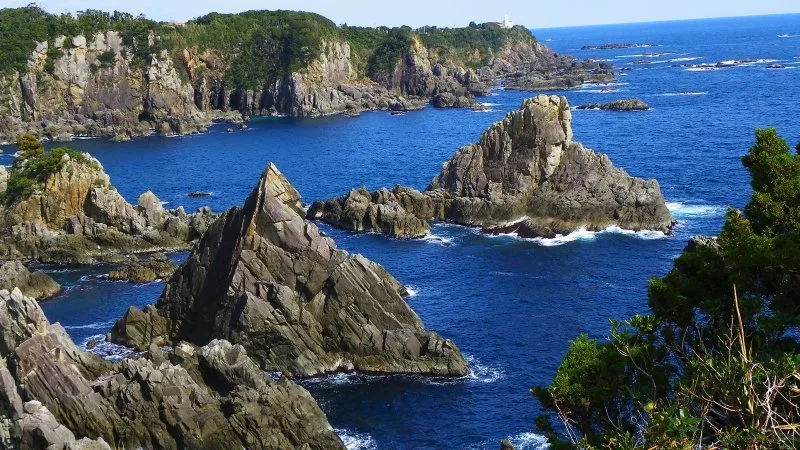
Do you know the Kamakura Period or the Kamakura Shogunate? In this article, we walk through what it was in Japan, who created it, how long it lasted, the conflicts that defined the era, and why it still matters.
In Japanese, the regime is called Kamakura Bakufu [鎌倉幕府] and is treated as officially established in 1192, although the power of Yoritomo was already effective from 1185.

Contents 5
What was the Kamakura Period?
The Kamakura Period was the first feudal military regime in Japan. It became widely known for the rise of the samurai and the consolidation of feudalism in Japan.
The Kamakura era, also called the Kamakura Shogunate, began in 1185 and takes its name from the fact that the administrative capital of the military government was moved to Kamakura, a town on Japan's eastern coast, south of present-day Tokyo.
The starting point was the appointment of Minamoto no Yoritomo as shogun (military dictator) by the emperor. This first shogunate went down in history as the Kamakura Bakufu.
From then on, the shogun was allowed to appoint his own vassals as administrators and protectors of the provinces. The shogunate was a form of government built heavily on the conduct codes of the samurai.
It was also the time when Bushidō began to take shape, the ethical code of the samurai. The samurai became the guardians of the regime, taking on civil, military, and protective duties.
The Hōjō clan's dominance
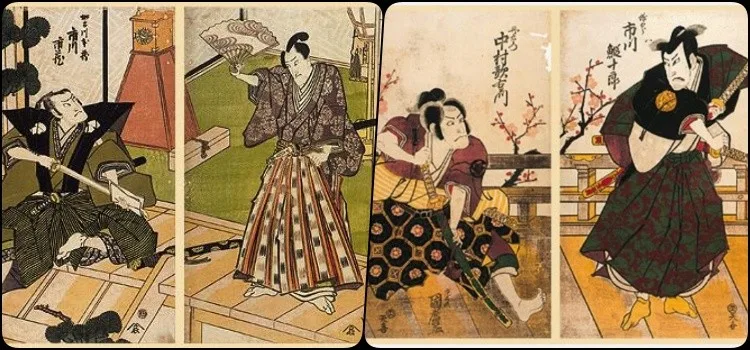
After the death of Minamoto and his sons, the Minamoto clan no longer had heirs for the title of shogun, which was passed down within the family. Hōjō Masako, the widow of Minamoto, then decided to adopt a child and grant him the title of shogun. This kept the Hōjō clan in power for several decades.
In 1232, Hōjō Yasutoki proclaimed the first samurai legislation, a set of 51 articles. It became known as the Goseibai Shikimoku and was the first codified feudal law in Japan.
During this period, Japan saw a measure of prosperity, with economic and population growth, alongside the spread of new agricultural techniques.
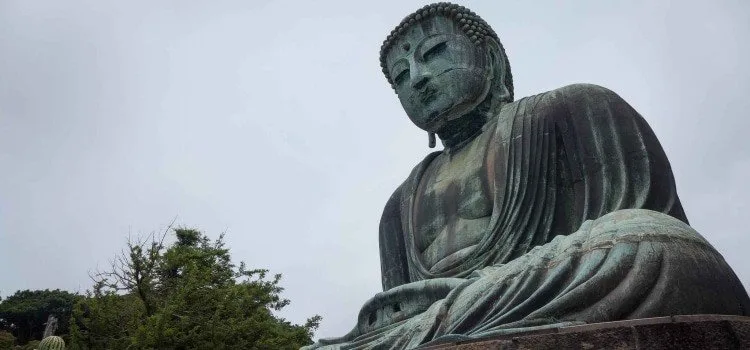
Buddhism also experienced a notable resurgence. Today, the main schools of Buddhism in Japan trace their roots back to schools that emerged during the Kamakura Period.
The war against the Mongols
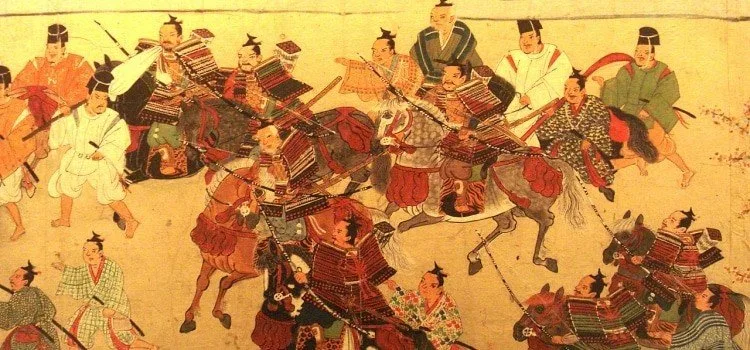
The Kamakura Period was marked by several wars and conflicts between clans and against outside powers. One of the most striking was the clash between the Japanese and the Mongols.
In 1274, Kublai Khan, the ruler of the Mongol Empire, decided to expand his domains by conquering Japan as well, believing the islands were rich in gold and other minerals. He sent an army of about 40,000 men to Hakata Bay.
Although the samurai fought hard to defend their territory, the numerical superiority of the Mongols was overwhelming. So the samurai lost the battle, right? Actually, no.
During a night of rest for the Mongols on their ships, a powerful typhoon sank several boats and forced the army to retreat. The samurai then took the opportunity to drive the Mongols away for good.
The Mongols did not give up, and in 1281 Kublai Khan sent another army, this time of more than 140,000 soldiers, who landed in the same area, on the coast of Hakata.
For two months, the samurai tried to hold their ground when, once again, a powerful typhoon swept the coast of Kyushu, forcing the Mongol fleet to withdraw.
Japan had thus defeated a much larger enemy twice, thanks in large part to the typhoons, which became known as Kamikaze, meaning "divine wind." In Japan, the belief grew that the islands were protected by the gods. These victories strengthened in Japan the belief that the country was under divine protection, even if the cost of those campaigns was high.
Despite these victories, the shogunate struggled to properly reward the warriors, as the expenses for defense weighed heavily on the regime, and the samurai gradually lost confidence in the Kamakura government.

The Battle of Sekigahara
Another decisive battle often associated with the long arc that began under the Kamakura Shogunate is the Battle of Sekigahara, sometimes called the "Division of the Kingdom." It took place in 1600, well after the Kamakura Period had ended, during the transition that brought the Tokugawa to power. It is included here only as historical context, since the same logic of clan rivalry that defined the Kamakura era continued to shape Japan for centuries.
The battle followed the death of the powerful daimyō Toyotomi Hideyoshi and began with a conspiracy against Tokugawa Ieyasu.
The main architect of that conspiracy was Ishida Mitsunari, who, together with several allies, declared war on Tokugawa. Mitsunari held a significant advantage in numbers and territory, yet, thanks to Tokugawa's military skill, he was defeated at Sekigahara in 1600.
Tokugawa then crushed the rebellion and rose as the founder of the next shogunate. The Tokugawa period was decisive in shaping the Japan we know today, and much of what is often thought of as "traditional" Japanese culture is rooted in those two and a half centuries.
Emperors and shoguns of the Kamakura Period
Below is a list of emperors who reigned during the Kamakura Period:
| No. | Reign | Emperor | Name in Kanji |
| 83rd | 1198 to 1210 | Tsuchimikado | 土御門天皇 |
| 84th | 1210 to 1221 | Juntoku | 順徳天皇 |
| 85th | 1221 | Chūkyō | 仲恭天皇 |
| 86th | 1221 to 1232 | Go-Horikawa | 後堀河天皇 |
| 87th | 1232 to 1242 | Shijō | 四条天皇 |
| 88th | 1242 to 1246 | Go-Saga | 後嵯峨天皇 |
| 89th | 1246 to 1260 | Go-Fukakusa | 後深草天皇 |
| 90th | 1260 to 1274 | Kameyama | 亀山天皇 |
| 91st | 1274 to 1287 | Go-Uda | 後宇多天皇 |
| 92nd | 1297 to 1298 | Fushimi | 伏見天皇 |
| 93rd | 1298 to 1301 | Go-Fushimi | 後伏見天皇 |
| 94th | 1301 to 1308 | Go-Nijō | 後二条天皇 |
| 95th | 1308 to 1318 | Hanazono | 花園天皇 |
| 96th | 1318 to 1336 | Go-Daigo | 後醍醐天皇 |
And here is a list of shoguns who held power during the Kamakura Period:
| No. | Shogun | Reign |
| 1 | Minamoto no Yoritomo (1147–1199) | 1192 to 1199 |
| 2 | Minamoto no Yoriie (1182–1204) | 1202 to 1203 |
| 3 | Minamoto no Sanetomo (1192–1219) | 1203 to 1219 |
| 4 | Kujō Yoritsune (1218–1256) | 1226 to 1244 |
| 5 | Kujō Yoritsugu (1239–1256) | 1244 to 1252 |
| 6 | Prince Munetaka (1242–1274) | 1252 to 1266 |
| 7 | Prince Koreyasu (1264–1326) | 1266 to 1289 |
| 8 | Prince Hisaaki (1276–1328) | 1289 to 1308 |
| 9 | Prince Morikuni (1301–1333) | 1308 to 1333 |
Looking at the Kamakura Period, it is striking how much of what we now think of as "medieval Japan" was set in motion in those 150 years: a shogun in Kamakura, a warrior code, codified feudal law, and two storms that turned into national myth. If you are curious about a particular corner of this era, the Hōjō regency, the Mongol campaigns, or the transition to the Tokugawa, tell us in the comments and we can dig into it in a follow-up.


Community
Comments
0 comments
There are no published comments in this language yet.
Send comment