
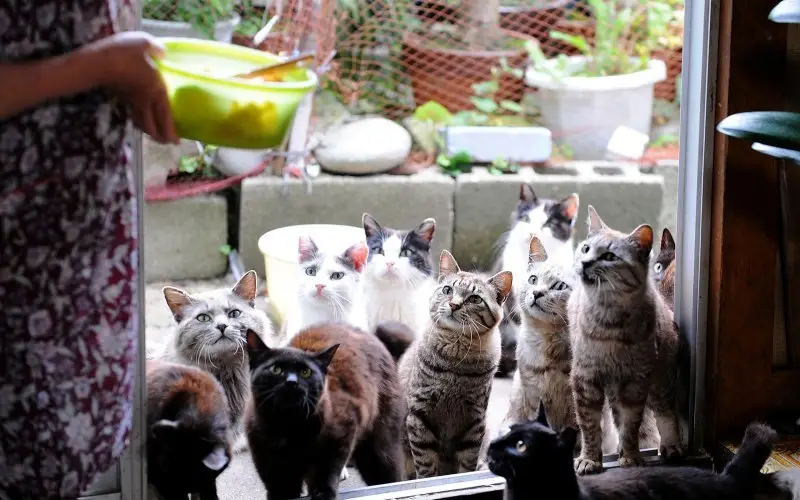
Neko (猫) means “cat” in Japanese. It is the everyday word for a cat, whether male or female. The word also appears in names for black cats, stray cats, cat cafés, the lucky maneki-neko, and several Japanese expressions.
Contents 8
What does neko mean?
Neko is written 猫 and pronounced roughly “neh-koh,” with short vowels. In an ordinary conversation, it is enough to say neko when you mean a cat. For example, 猫が好きです (neko ga suki desu) means “I like cats.”
Japanese does not require a separate everyday word for a male cat and a female cat. If the distinction matters, speakers can add more information, such as osu-neko for a male cat or mesu-neko for a female cat.
Useful cat words in Japanese
Many cat-related words combine neko with another term. These are more useful than a long list of rare translations:
- 黒猫 (kuroneko) – black cat;
- 飼い猫 (kaineko) – domestic or kept cat;
- 野良猫 (noraneko) – stray cat;
- 三毛猫 (mikeneko) – calico or three-colored cat;
- 虎猫 (toraneko) – tabby cat;
- 化け猫 (bakeneko) – supernatural cat in Japanese folklore;
- 猫缶 (nekokan) – canned cat food;
- 猫舌 (nekojita) – literally “cat tongue”; a person who struggles with very hot food or drinks;
- 猫耳 (nekomimi) – cat ears, often used for costumes or fictional characters;
- 猫カフェ (neko kafe) – cat café.
A cat’s meow is commonly written にゃーにゃー (nyā nyā). The sound is recognizable in manga, anime and casual online writing, but it is not another word for the animal itself.
Why are cats so visible in Japan?
It is too simple to say that every Japanese person is obsessed with cats. They are ordinary pets as well as recurring figures in art, shops, stories, animation and online culture. Their visibility comes from several different layers that should not be confused with one another.
Cats can suit urban homes because they do not need a daily walk like a dog. That practical point helps explain their place as pets, but it does not explain every religious or artistic image of a cat. In Japanese culture, the same animal can be a familiar household companion, a symbol of good fortune, or a strange creature in a folktale.
A short history of cats in Japan
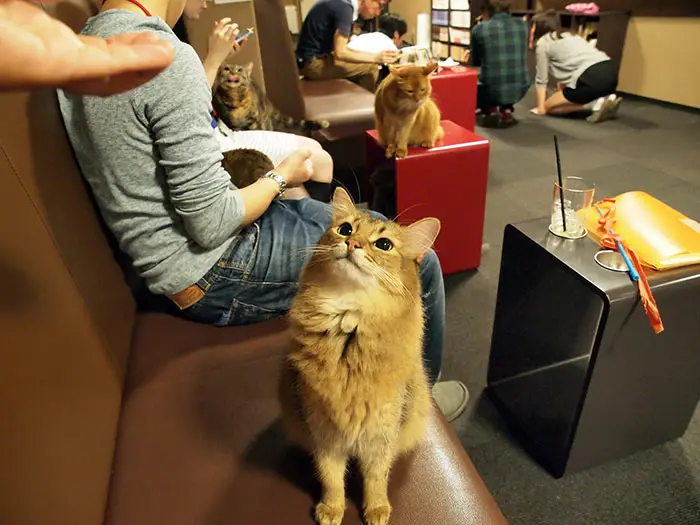
Cats reached the Japanese archipelago through contacts with the Asian mainland. Early cats were valuable animals in elite households, and their later practical role included protecting stored grain and documents from rodents. The exact story varied by period and place, so it is safer to describe their arrival as a long process than as one single event.
Cats also became subjects of Japanese art and literature. Utagawa Hiroshige and Utagawa Kuniyoshi depicted cats during the Edo period (1603–1868). In 1905, Natsume Sōseki published Wagahai wa Neko de Aru, usually translated as I Am a Cat. The novel’s narrator is a cat observing human society, which gives the animal an unusually sharp literary voice.
Maneki-neko and the image of the lucky cat
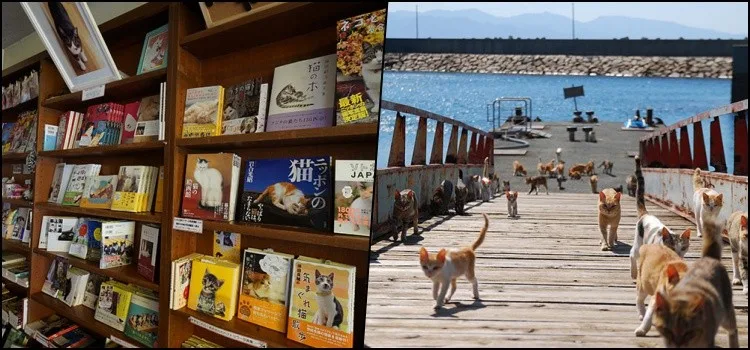
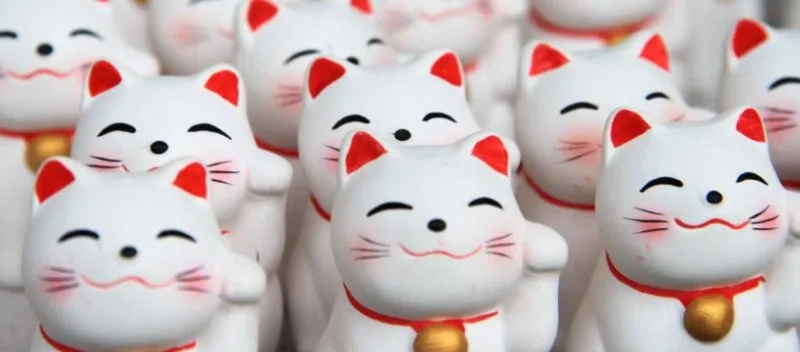
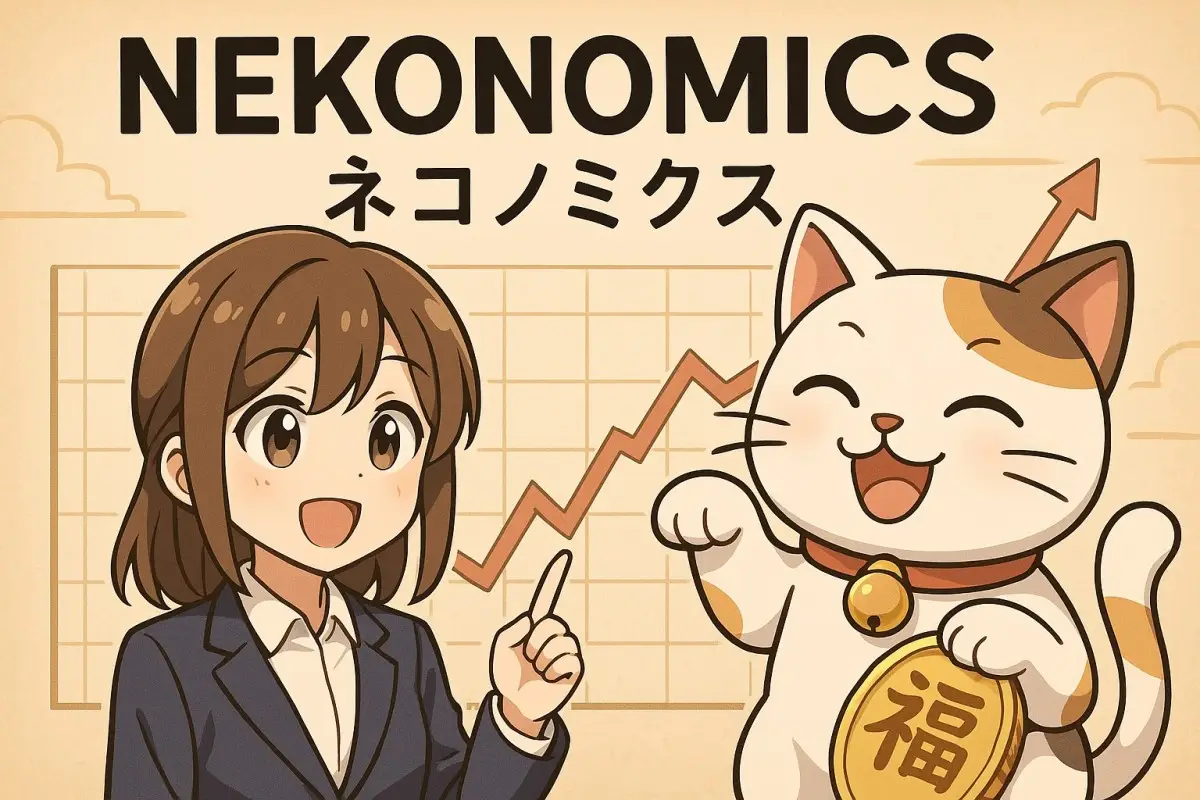
Maneki-neko (招き猫) is the beckoning cat figurine often displayed at the entrance of a shop, restaurant or home. The name joins maneku, “to invite” or “beckon,” with neko, “cat.” Its raised paw is commonly associated with inviting customers, luck or prosperity.
Colors, coins and paw positions receive different interpretations, and stories about the figurine’s origin vary. The reliable point is its modern role: maneki-neko is a familiar good-luck symbol, not a literal translation of the word “cat.”
See also the guide to maneki-neko, the Japanese lucky cat, for its symbolism and history.
Neko cafés and cat islands
Neko cafés give visitors a place to spend time with cats under house rules designed around hygiene and the animals’ comfort. They are different from ordinary cafés: visitors should follow staff instructions, avoid forcing contact and respect rest areas.
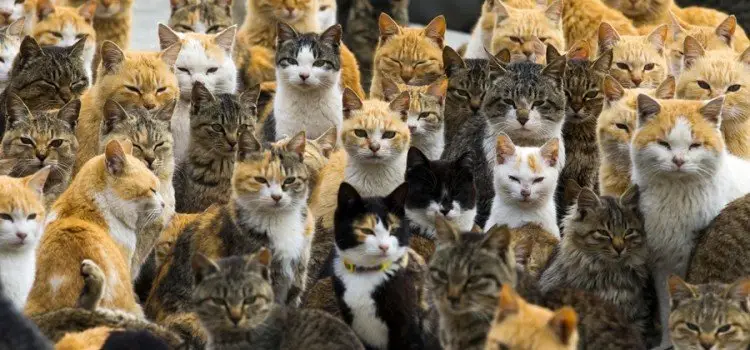
Some Japanese islands are known for their free-roaming cat populations. Conditions differ greatly from one island to another, and a high cat population does not automatically mean that the animals are healthy or that visitors should feed them. Anyone planning a visit should check local guidance first; the guide to Japan’s cat islands offers a starting point.
Japanese Bobtail and mi-ke
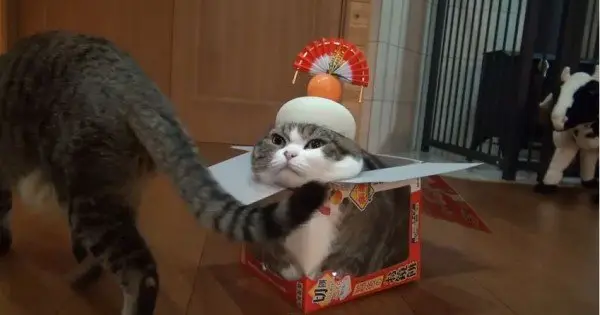
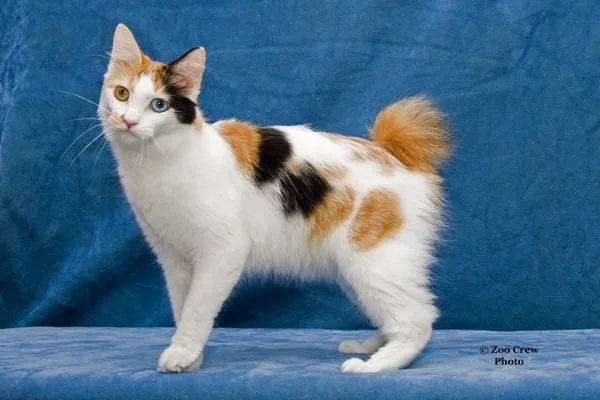
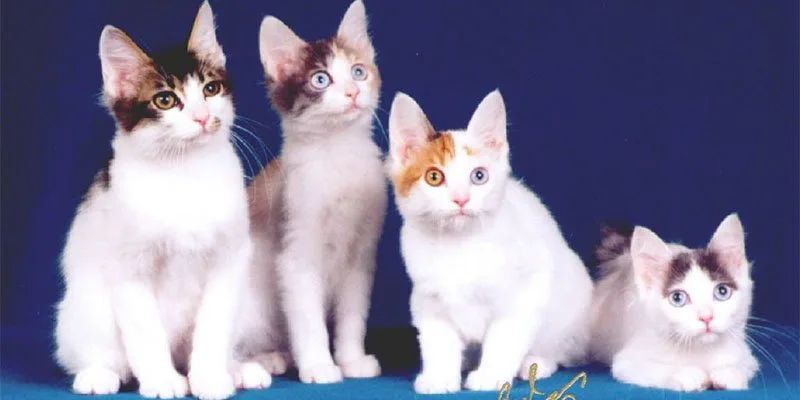
The Japanese Bobtail is known for its short tail, which can be bent or kinked in different ways. Mi-ke (三毛) means “three colors” and describes a calico coat pattern. It is not the name of every Japanese cat, and a calico cat is not automatically a Japanese Bobtail.
Calico cats are usually female because orange and black coat-color genes are linked to the X chromosome, although rare exceptions occur. The breed, the tail shape and the coat pattern are separate details, so they should not be treated as interchangeable.
Cats in Japanese pop culture
Cats appear in Japanese media as pets, mascots, comic characters and supernatural beings. Hello Kitty helped make a cat-shaped character part of global popular culture, while nekomimi became a familiar visual motif in anime, games and cosplay. Internet memes such as Nyan Cat added another layer to the international vocabulary around cats.
Some well-known examples include:
- Nyan Cat – an internet meme with a flying cat;
- Mi-ke – the calico lucky cat;
- Maru-chan – an internationally known cat;
- Bakeneko and nekomata – supernatural cats from Japanese stories.
If you only need to say “cat” in Japanese, remember neko (猫). The compound words, the maneki-neko and the many roles cats play in Japanese art and daily life explain why this short word carries so much cultural context.


Community
Comments
0 comments
There are no published comments in this language yet.
Send comment