
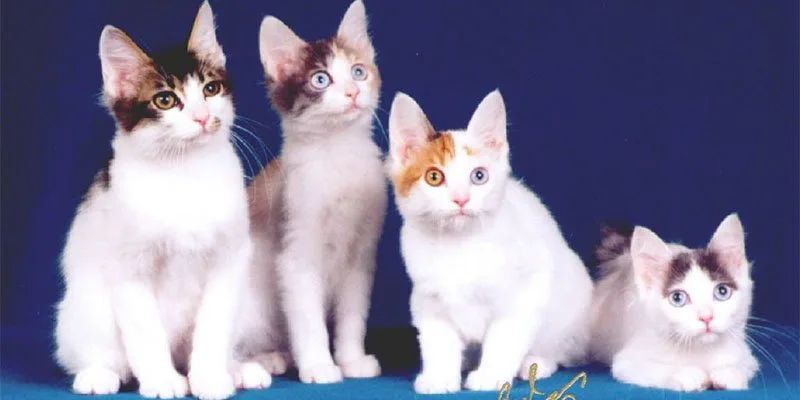
In Japan, the short-tailed cat with a fluffy “pom-pom” rear is impossible to miss—and the three-colored version often gets treated as if it were the whole story. Mi-ke (三毛, “three furs”) is not the breed’s official name: it is the prized calico pattern of black, red, and white. The breed itself is the Japanese Bobtail, known for a naturally kinked tail that looks more like a rabbit’s than a long feline plume.
That mix of street-cat history, court art, and shop-window luck is why the Bobtail still shows up in temples, folklore, and the famous beckoning cat. If you came here wondering whether “Mi-ke” and “Japanese Bobtail” are the same thing, the short answer is no—and the longer one is more interesting.
Contents 5
What is a Japanese Bobtail (and what Mi-ke really means)
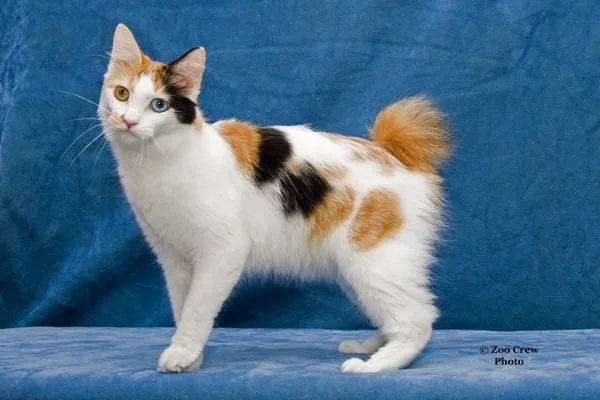
The Japanese Bobtail is a medium-sized domestic breed with a short, pom-pom-like tail caused by a dominant gene, not by docking. Each tail is unique: one or more curves, angles, or kinks, usually extending no more than about three inches from the body when measured for the show ring.
The name mi-ke [三毛] highlights a color pattern, not a separate breed. The character for three [三] points to three colors, and [毛] means hair or fur—so mi-ke literally means “three-colored fur.” In practice it is the classic calico of black, red (orange), and white, long associated with good fortune. Breed standards accept many other colors and patterns; mi-ke is simply the one tradition and cat fanciers treat as especially lucky, and it appears more often in females because of how calico genetics work.
In everyday Japanese, any calico can be called a mike-neko (三毛猫), whether or not it has a bobtail. What makes the Japanese Bobtail special is the combination of that cultural image with the signature short tail—and, for many people, the link to the maneki-neko, the beckoning “lucky cat” of shops and homes.
History of the Japanese Bobtail
Cats with shortened or kinked tails were known across Southeast Asia and southern China long before modern breed clubs. In Japan, domestic cats likely arrived with Buddhist monks and trade routes around the 6th–7th century, valued for protecting paper scrolls from rats. Bobtailed cats appear in Japanese art and everyday life for centuries afterward.
In 1602, authorities ordered cats released to fight rodents that threatened the silk industry. From then on, short-tailed cats became common farm and street companions. Western observers later described Japan’s distinctive multi-colored cats with bent, truncated tails. The modern show breed took shape after Elizabeth Freret imported Japanese Bobtails to the United States in 1968; the Cat Fanciers’ Association granted championship status to the shorthair in 1976 and to the longhair in 1993.
So the “lucky cat” image is old; the international pedigree category is much younger. Both layers matter if you want the full picture of the breed.
Characteristics of the Japanese Bobtail
The most noticeable trait is the short tail, often kept curved so it resembles a rabbit’s. Coat can be short or long, soft and silky, usually with little undercoat. Colors range widely; the most celebrated traditional look remains bold black, white, and red in bi-color or tri-color (mi-ke) patterns, but solids, tabbies, smokes, and other combinations are accepted.
- Head: forms an equilateral triangle (excluding the ears), with high cheekbones and a noticeable whisker break;
- Ears: large, erect, set wide apart, looking alert;
- Muzzle: fairly broad, neither pointed nor blunt;
- Eyes: large, oval rather than round, set at a slant;
- Body: medium size, males larger than females; long, lean, elegant torso with solid muscle and balance;
- Neck: neither too long nor too short, in proportion to the body;
- Legs: long and slender; hind legs longer than the front, angled so the back stays nearly level when standing;
- Paws: oval; five toes in front, four in back;
- Tail: clearly visible, made of one or more curved or kinked joints, with a fluffy pom-pom look.
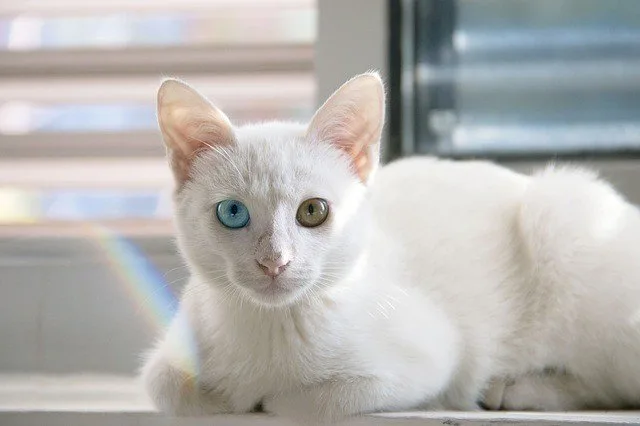
Some Japanese Bobtails—especially mostly white ones—show heterochromia: one blue eye (“silver” in older Japanese breeding language) and one gold or yellow. Odd eyes are allowed in the breed and stand out in photos almost as much as the tail.
Temperament of a Japanese Bobtail
Calm enough for apartments yet active enough to invent games, Bobtails are often described as loyal, friendly, curious, affectionate, and highly social. They adapt well to family life, children, and other pets when introductions are sensible.
They have a soft, melodic meow and enjoy “talking” with people. Eastern stories sometimes cast this chatty breed as a transformed human who still wants conversation—an old way of saying the cat sounds almost too intentional. Most of the time they are alert, intelligent, and oriented toward humans: easier to train for simple tricks, fetch, or leash walking than many breeds. Their range of tones even fed a popular belief that they can “sing.”
They thrive on interaction. A Japanese Bobtail that is ignored will usually ask for attention rather than disappear into the furniture for days. Give them climbing space, play, and company, and the short tail becomes the least interesting thing about them.
Luck, maneki-neko, and folklore
In Japanese tradition, owning a bobtailed cat has long been linked to prosperity and happiness. The mi-ke pattern is treated as the luckiest color combination for the breed—the same tricolor look that fills shop windows as ceramic maneki-neko figures with one paw raised.
The statue is an artistic interpretation, not a strict breed certificate, but the connection is cultural: the beckoning cat is widely read as a stylized short-tailed, often calico, companion. Folklore also contrasts short tails with long-tailed cats that might hide a nekomata—a supernatural feline of longer stories—so the bobtail carries a protective, auspicious image as well as a cute one.
If you want a wider view of how neko shows up in language and daily Japan, the Bobtail is only one chapter. Cat islands, cafés, and names all sit in the same soft power of feline affection that made this breed a cultural export long before CFA paperwork.
| Official / common name | Japanese Bobtail (mi-ke = calico color pattern, not the breed name) |
| Japanese writing | ジャパニーズ・ボブテイル; mi-ke 三毛 / mike-neko 三毛猫 |
| Size | Medium |
| Physical traits | Lean, elegant body; triangular head; large ears; oval eyes; unique short pom-pom tail |
| Average weight | About 2.5–4.5 kg (roughly 6–10 lb); males usually larger than females |
| Life expectancy | Often around 9–15 years, sometimes longer with good care |
| Coat colors | Many colors and patterns; mi-ke (black, red, white) especially prized |
| Coat type | Shorthair or longhair; soft, silky, little undercoat |
| Temperament | Loyal, friendly, curious, talkative, family-oriented |
Whether you meet one in a cattery photo or only as a statue at a convenience store, the Japanese Bobtail carries a double identity: a real, athletic companion with a fingerprint-unique tail, and a living emblem of luck that Japanese culture never quite put down.





Community
Comments
0 comments
There are no published comments in this language yet.
Send comment