
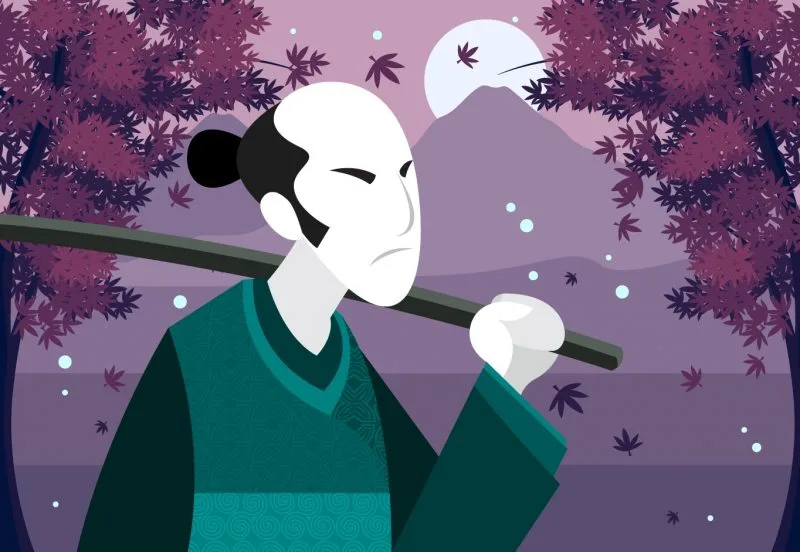
The Edo period is the longest stretch of peace in Japanese history, and it is also the period in which modern Japan takes shape. From 1603 to 1868, shoguns of the Tokugawa family ruled from Edo, the city that became Tokyo. It was an age of seclusion from the outside world, of a rigid social order at home and of a culture that still shapes how Japan is imagined today. At the end came the Black Ships, a civil war and the Meiji Restoration.
This overview follows the road from the wars of unification through Tokugawa rule to the fall of the shogunate. It explains the terms you need along the way and shows why the end of this era was more than a change of government.
Contents 7
What the Edo period was
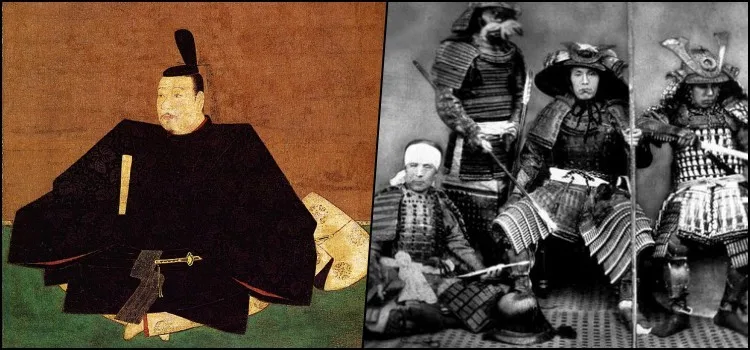
The Edo period ran from 1603 to 1868. It takes its name from the city of Edo, where the shogunate had its seat and which later became Tokyo. The title shogun (将軍) means literally "commander of the army". It was granted by the emperor, and whoever held it governed the country militarily, while the emperor in Kyoto kept mostly symbolic authority.
The system of government was called bakufu (幕府), literally "tent government". It brought together the shogun's central power and the regional domains of the daimyo, the han. That combination of bakufu and han is known as bakuhan, a bureaucratic order in which the daimyo held regional authority and the shogun national authority.
In this order every person had a place. Society was divided into warriors, peasants, artisans and merchants, a system known as shinokosho. Anyone who wants to understand those four classes in detail can start with Shinokosho and the four classes of the Edo period.
From Nobunaga through Hideyoshi to the Tokugawa
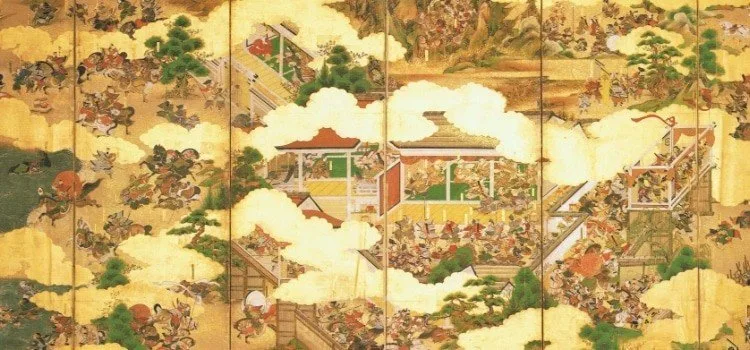
The Edo period did not appear from nowhere. It was preceded by a century of war. Oda Nobunaga began the unification: in 1559 he controlled the province of Owari, and in 1568 he entered Kyoto and at least formally restored the authority of the imperial court. In 1582 he was forced to take his own life at Honno-ji, ambushed by one of his generals, Akechi Mitsuhide.
His successor, Toyotomi Hideyoshi, completed the unification to a large degree, but he died in 1598 before his young son could hold power. At the battle of Sekigahara in 1600, Tokugawa Ieyasu defeated his opponents. In 1603 the emperor granted him the title of shogun. Ieyasu had already received the rich Kanto region in 1590 and held around 2.5 million koku of land; his headquarters was Edo, a castle town in a strategically useful position.
In 1614 and 1615 the last pockets of Toyotomi resistance fell at Osaka. After that, Tokugawa rule was no longer seriously threatened militarily. It would last more than 250 years.
Order, control and the persecution of Christians
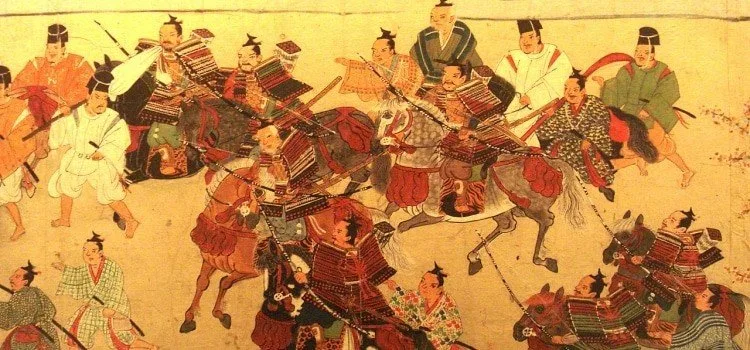
The Tokugawa secured their power with a set of controls. Daimyo had to live in Edo in alternate years; this sankin-kotai tied them to the court and cost them a great deal of money. Marriages between the great houses were overseen, and castle building was restricted. Wealth was measured in koku, the amount of rice a field could be expected to feed a person for a year. A daimyo's rating in koku fixed his rank and his obligations.
The order applied to belief as well. The shogunate saw Christianity as destabilizing and persecuted it from the 1610s onward. In 1637 and 1638, mostly Christian peasants and samurai rose up in Shimabara on Kyushu against the bakufu. Edo eventually had the rebels' fortress bombarded by Dutch ships. The revolt ended in bloodshed and marked the end of organized Christianity in Japan for more than two centuries.
Seclusion, everyday life and culture
From the 1630s Japan largely closed itself off. This policy is called sakoku. Foreign trade ran through only a few channels, above all the artificial island of Dejima in Nagasaki, where the Dutch kept a trading post. Through that post European knowledge entered the country as rangaku, "Dutch learning": medicine, astronomy, cartography and military technology.
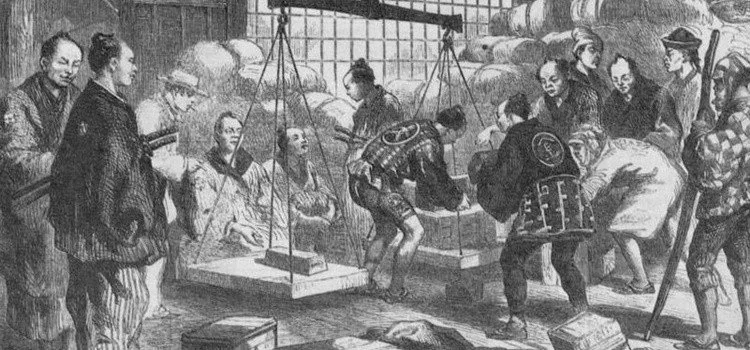
Inside the country, the population and the cities grew. By around 1720 Edo had more than a million inhabitants, while Osaka and Kyoto each had roughly 400,000. A census in 1721 counted about 26 million people and some four million members of samurai households and their servants. Osaka and Kyoto became centers of craft and trade, while Edo became the hub for goods and urban supplies.
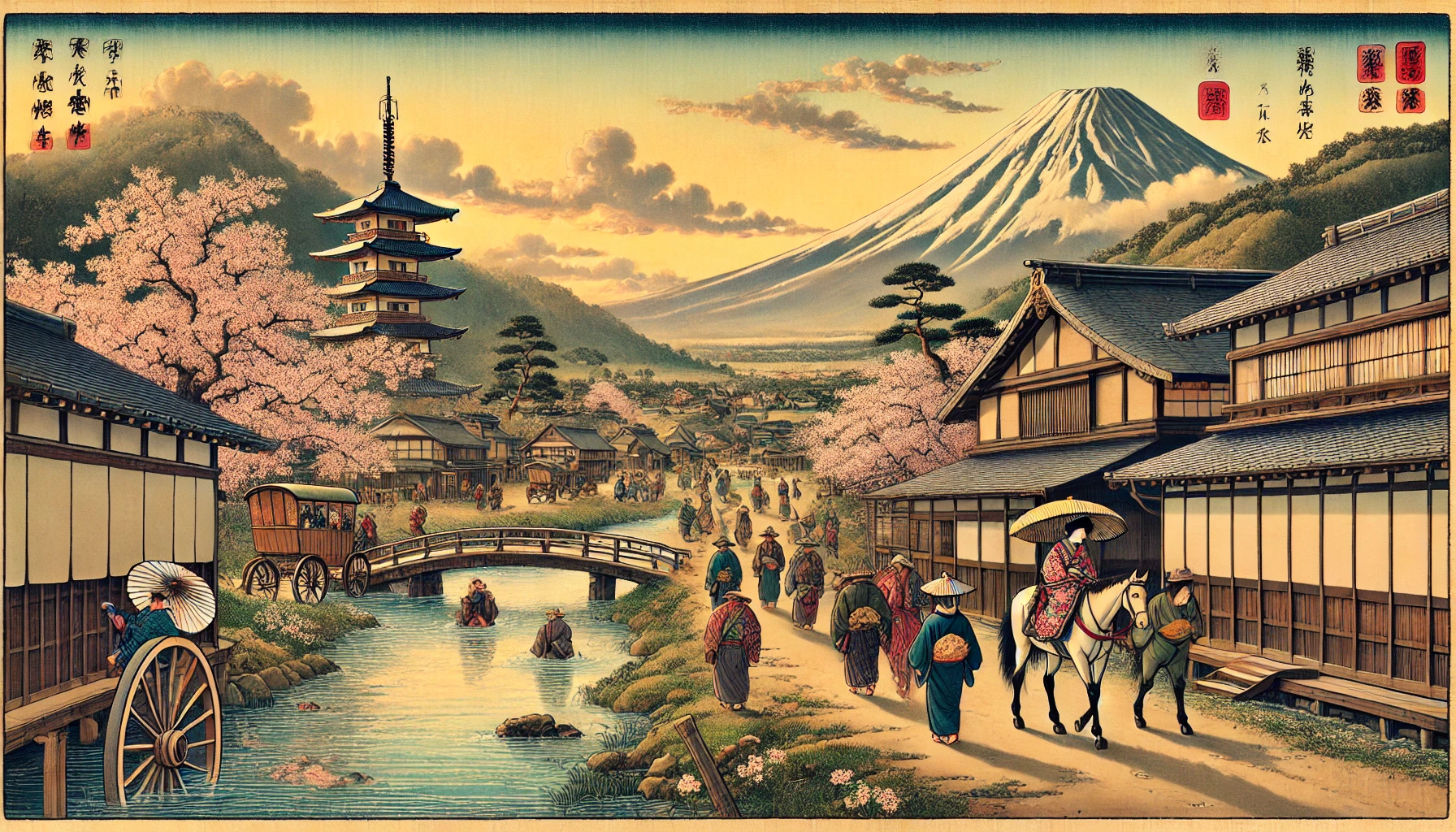
On that base an urban culture emerged that still echoes today: kabuki theater, the bunraku puppet theater, woodblock prints and the world of ukiyo, the "floating world". The famous ukiyo-e prints show geishas, actors and city life. At the same time agriculture remained vulnerable. Droughts and poor harvests led to at least 20 major famines between 1675 and 1837.
Pressure from outside: the Black Ships and Bakumatsu
In the 19th century the pressure from outside grew. Russian ships appeared on Karafuto, today Sakhalin, and on the Kuril Islands. The First Opium War of 1839 to 1842 in China showed what Western gunboats could do. Then, in 1853, the "Black Ships" of the American commodore Matthew Perry entered Edo Bay and demanded that the country open up.
In 1854 the Treaty of Kanagawa was concluded, and in 1858 further treaties followed, including the Harris Treaty with the United States and agreements with five other nations. Japan had to open ports and grant foreigners rights. The results were inflation, rising prices and resentment, especially among younger samurai. The slogan sonno joi ("revere the emperor, expel the barbarians") became the program of a movement directed against both the bakufu and the foreigners.
The political leadership in Edo was divided. The hereditary supporters, the fudai, prevailed and made Tokugawa Yoshinobu shogun. At the same time, opponents of reform were sidelined, and in 1859 the intellectual Yoshida Shoin was executed for agitating against the treaty with the Americans. His ideas lived on in the movement of the Ishin Shishi, the "men of the restoration", who included men from Satsuma and Choshu.
In 1855 the Ansei earthquake destroyed large parts of Edo, and the economy remained strained. The bakufu lost control step by step over the provinces, especially over the southern domains that modernized their own troops. What began as an attempt at reform became a struggle for power.
The fall of the shogunate
In 1867 Tokugawa Yoshinobu returned the title of shogun, the taisei hokan, and nominally handed power to the emperor. The conflict was not over. In early January 1868 the imperial troops proclaimed the restoration of direct rule by the Tenno, the Meiji Restoration. Yoshinobu tried to regain control of the court in Kyoto and lost the decisive engagements.
In the Boshin War of 1868 to 1869, imperial troops fought the remaining supporters of the Tokugawa. Edo, the future Tokyo, was handed over without a fight in the spring of 1868. The last resistance collapsed on Hokkaido in 1869. The new government abolished the domains in 1871, and in 1876 the samurai class finally lost its privileges. Anyone who wants the link between shogunate and warrior class can read the article on the shogunate in Japan and the piece on Bushido, the way of the samurai.
Why the era still matters
The Edo period shaped Japan economically, technologically and culturally: cities, trade networks, education and a culture of theater and print emerged that still define the country. At the same time it left a legacy of seclusion and distrust of the outside world that would matter again in the 20th century.
The fall of the shogunate was therefore not a simple change of government but the transition from a feudal order to a modern nation-state. What came next is covered in the history of imperial Japan and the Meiji Restoration. For the periods before, see the history of Japan told in ages and the Jomon and Yayoi periods.

Community
Comments
0 comments
There are no published comments in this language yet.
Send comment