
Japanese sentences happily mix katakana, hiragana, and kanji—sometimes even in the same verb stem and ending. That much is ordinary.
What trips learners up is the next step: can a single word carry both hiragana and katakana at once? Or can the same word jump from hiragana to katakana depending on the writer’s mood? The short answer is more interesting than a simple yes or no.
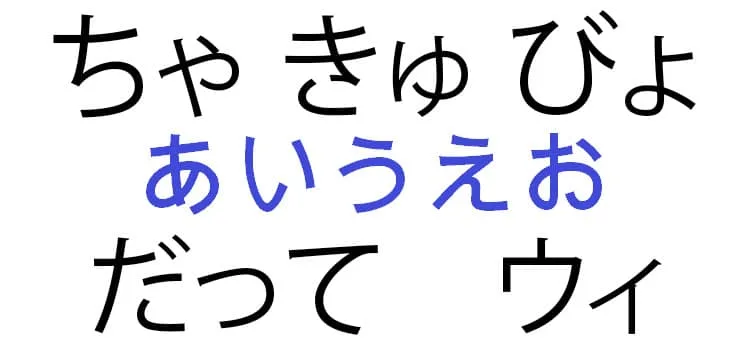
When one word mixes hiragana and katakana
Randomly pasting both scripts inside one word is rare and usually looks wrong. Japanese does not treat spaces the way English does, so beginners often wonder whether mixed kana must be common—but free mixing is not the everyday rule.
There are clear patterns, though. A productive one is loanword slang turned into a verb: take a katakana base and attach a hiragana ending. The casual verb スタバる (sutabaru) means “to go to Starbucks”—スタバ plus the hiragana る, as if the brand nickname were conjugating like a native verb. Other foreign-rooted casual verbs tend to end with that same hiragana る as well.
Compounds can also look mixed. 消しゴム (keshigomu), “eraser,” joins the native verb root 消す (kesu, “to erase”) with ゴム (gomu), the katakana loan for “rubber.” It is one dictionary entry, but historically it is two pieces glued together—native material meeting a loan. Similar blends show up in 歯ブラシ (haburashi), toothbrush, and レジ袋 (rejibukuro), a plastic shopping bag from the register, even when kanji share the page with the kana.
Another word learners meet early is イケてる (iketeru)—“cool,” “attractive,” “looking good.” You also get サボる (saboru), from French-rooted sabotage, used for cutting class, slacking, or zoning out. Patterns like ググる (guguru), “to google,” work the same way: katakana stem + hiragana verb ending. That is not “breaking Japanese”; it is Japanese absorbing slang through its own morphology.
Prefixes, suffixes, and honorifics create mixed-looking strings too. Names with titles such as san, kun, or senpai sit next to different scripts in real text, and hiragana and katakana each keep their usual jobs inside the phrase.
Can the same word be written in either script?
Yes—many items can appear entirely in hiragana or entirely in katakana without changing pronunciation. Personal names, some everyday objects, and stylistic choices all flex. Manga creators often push a word into katakana to shout emphasis the way English italics might, even when that word “normally” lives in hiragana.
There is no single switch that declares “this word may never be written in the other kana.” Clarity still wins: if another reading becomes confusing, or if two homophones collide, the usual script (or kanji) is safer. Casual rewrite is closer to slang or stylistic play than to a second official dictionary form.
Something similar has happened with kanji over time. Words once fixed in characters drifted into hiragana in everyday writing when the kanji felt heavy or less familiar, and the hiragana form became the default for many speakers.
So there is no absolute ban on rewriting a word in another script when the context supports it. You will meet 日本 as ニッポン or にっぽん, and you will also hear the reading nihon. Song titles and media branding lean hard into those choices—for example ニッポン笑顔百景 (Nippon Egao Hyakkei).
If you have other everyday words that hop between scripts or that glue katakana to hiragana endings, they almost always follow one of these patterns: compound, loan verb, emphasis, or branding. Once you spot the pattern, the mix stops looking random.






Community
Comments
0 comments
There are no published comments in this language yet.
Send comment