
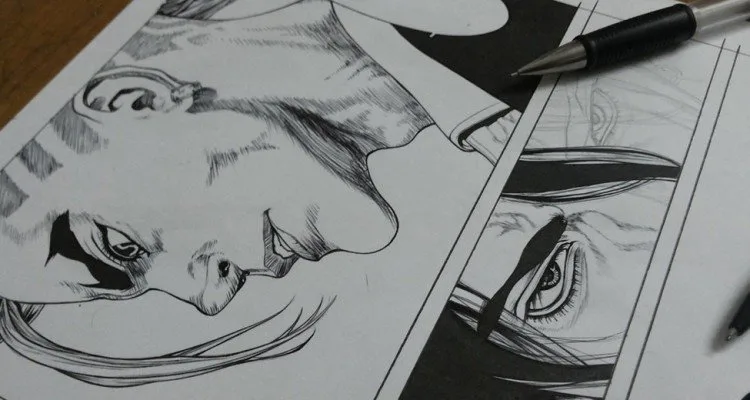
When people outside Japan talk about “the biggest mangaka,” the same few names usually surface first. Inside Japan, fan polls can flip that script: the chart below comes from an open reader survey where visitors typed their favorites freely—no shortlist of pre-selected candidates—so votes spread across dozens of artists and the top ten still lands on a mix of household legends and names that surprise Western timelines.
Some creators stay carefully private and rarely appear in public photos; where reliable personal details are thin, this page sticks to the work and the vote count rather than inventing a biography. The ranking is a snapshot of fan preference in that survey, not a ranking of all-time sales—and that distinction matters once you see who sits at number one.
Contents 11
Top 20 mangakas according to Japanese readers
- 20 – Kentaro Yabuki (To Love-Ru)
- 19 – Kenjiro Hata (Hayate the Combat Butler)
- 18 – Nakaba Suzuki (The Seven Deadly Sins)
- 17 – Mizuho Kusanagi (Yona of the Dawn)
- 16 – Yana Toboso (Black Butler)
- 15 – Yusei Matsui (Assassination Classroom)
- 14 – Masakazu Katsura (Video Girl Ai)
- 13 – Takeshi Konomi (The Prince of Tennis)
- 12 – Hirohiko Araki (JoJo’s Bizarre Adventure)
- 11 – Haruichi Furudate (Haikyu!!)
- 10 – Izumi Tsubaki (Monthly Girls’ Nozaki-kun)
- 9 – Akira Toriyama (Dragon Ball)
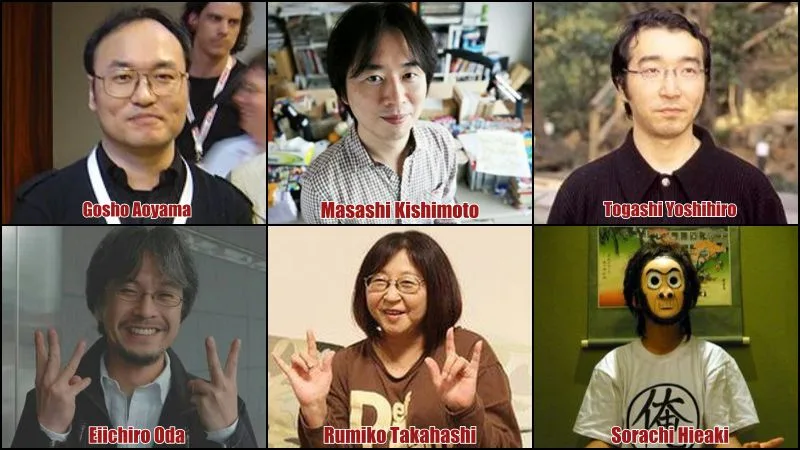
- 8 – Gosho Aoyama (Detective Conan / Case Closed)
- 7 – Rumiko Takahashi (Inuyasha)
- 6 – Hiromu Arakawa (Fullmetal Alchemist)
- 5 – Masashi Kishimoto (Naruto)
- 4 – Yoshihiro Togashi (Hunter × Hunter)
- 3 – Eiichiro Oda (One Piece)
- 2 – Sui Ishida (Tokyo Ghoul)
- 1 – Hideaki Sorachi (Gintama)
10th place – Izumi Tsubaki
With 203 mentions, Izumi Tsubaki opens the top ten. Best known for Monthly Girls’ Nozaki-kun (Gekkan Shōjo Nozaki-kun), a comedy about a high-school shōjo mangaka and the classmates who crash into his deadlines, Tsubaki is usually described as a woman born on December 11 in Saitama Prefecture. Public photos of the author are scarce, which is common among creators who prefer the page to do the talking.

9th place – Akira Toriyama
Ninth place with 257 mentions still feels almost understated for Akira Toriyama, the creator of Dragon Ball (and earlier of Dr. Slump). His sense of humor, clean action staging, and character designs shaped generations of shōnen artists—including creators who sit higher on this very list. Toriyama died on March 1, 2024, at 68; the work remains a permanent reference point for manga and anime worldwide. There is already a longer profile of his career here on Suki Desu.

8th place – Gosho Aoyama
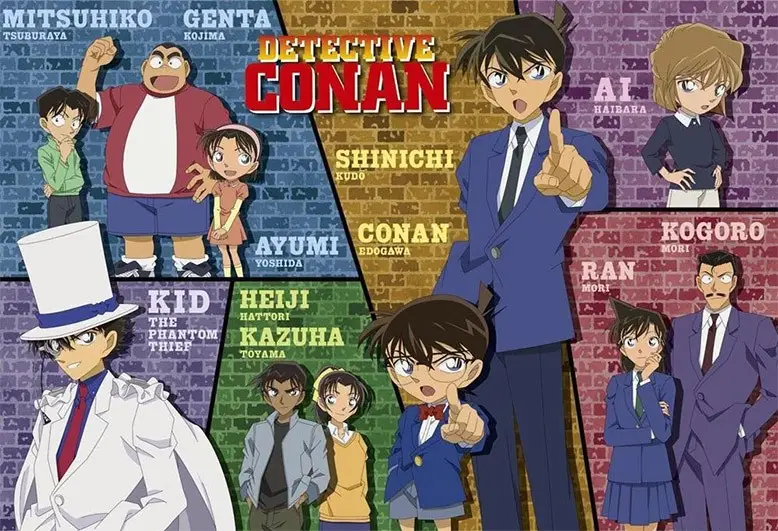
With 275 opinions, Gosho Aoyama takes eighth place as the creator of Detective Conan (published in English as Case Closed). Born on June 21, 1963, in Hokuei, Tottori Prefecture, he has kept the mystery series running for decades. By early 2023 the manga had surpassed 270 million copies in circulation worldwide—far beyond the 200 million figure often cited for 2017—and new volumes and films still land as major events in Japan.
7th place – Rumiko Takahashi
With 358 votes, Rumiko Takahashi holds seventh place. She is one of the industry’s most successful creators of any gender—author of Urusei Yatsura, Maison Ikkoku, Ranma ½, Inuyasha, and more. Born on October 10, 1957, she built a career that spans comedy, romance, and fantasy without losing a signature character-driven humor. As of 2024, her collected works have exceeded 230 million copies in circulation worldwide.
6th place – Hiromu Arakawa
Another major female creator on the list, Hiromu Arakawa received 370 nominations. She is the author of Fullmetal Alchemist, whose Brotherhood anime adaptation still sits near the top of long-running community rankings. Born on May 8, 1973, in Hokkaido and raised on a dairy farm, she often draws herself as a cow with glasses. Her birth name is Hiromi; she chose the masculine reading “Hiromu” as a pen name because the first character can be read either way.
5th place – Masashi Kishimoto
With 404 nominations, Masashi Kishimoto—creator of Naruto—sits in fifth. The story of a rejected orphan who wants to become Hokage helped define 2000s shōnen for a global audience: long friendships, village politics, and fight choreography that still get quoted years after the final chapter. If you want a deep-dive article just on Kishimoto, say so in the comments and we can prioritize it.
4th place – Yoshihiro Togashi
Fourth place with 425 mentions goes to Yoshihiro Togashi, the mind behind Yu Yu Hakusho and Hunter × Hunter. Born on April 27, 1966, in Yamagata, he started drawing early and became known for intricate battle systems and characters who refuse simple hero-villain labels. He is married to Naoko Takeuchi, the creator of Sailor Moon—one of manga’s more famous creative couples.
3rd place – Eiichiro Oda
Eiichiro Oda collected 539 opinions for the bronze of this poll. Born on January 1, 1975, he has serialized One Piece in Weekly Shōnen Jump since 1997, building a pirate world whose circulation figures sit at the top of all-time manga charts. Readers joke that the story “never ends”; the more accurate line is that Oda keeps expanding the map, the crew, and the payoff with a consistency few long-running series manage.
2nd place – Sui Ishida
Sui Ishida earned 551 nominations for second place. The mangaka behind Tokyo Ghoul (and its sequel Tokyo Ghoul:re) told the story of a student pulled into a world of flesh-eating ghouls living under modern Tokyo. The anime brought the title to a huge international audience; the manga remains the denser, darker original, with Ishida’s stark art and moral gray zones as the main draw.
1st place – Hideaki Sorachi
And the leader of this fan survey is Hideaki Sorachi, with 746 nominations—nearly two hundred more than second place. Born on May 25, 1979, he is best known for Gintama, serialized mainly from December 8, 2003, through its multi-stage conclusion in 2019 (ending on the official app after runs in Weekly Shōnen Jump and Jump Giga). The mix of sci-fi Edo parody, slapstick, and sudden drama built a hardcore following in Japan that often outvotes “safer” global franchises in open ballots like this one. By November 2024 the manga had surpassed 73 million copies in circulation in Japan—well above the 50 million reported in May 2016.

Open polls like this will never match pure sales charts—and that is the point. They catch the artists Japanese readers were actively cheering for at the time of the vote, including comedy kings who dominate domestic fandom even when overseas conversations start with pirates, ninjas, or Dragon Ball. If your personal top three looks completely different, that is normal: popularity is always a moving target, and mangaka careers keep rewriting the board.






Community
Comments
0 comments
There are no published comments in this language yet.
Send comment