
In the horoscopes of Japan and China, luck and the future are determined through animal zodiacs, different from what we are used to in Astrology. There are several popular horoscopes and zodiacs in Japan, in this article we will try to briefly explain each of them and share a vocabulary list for you to conduct your personal research.
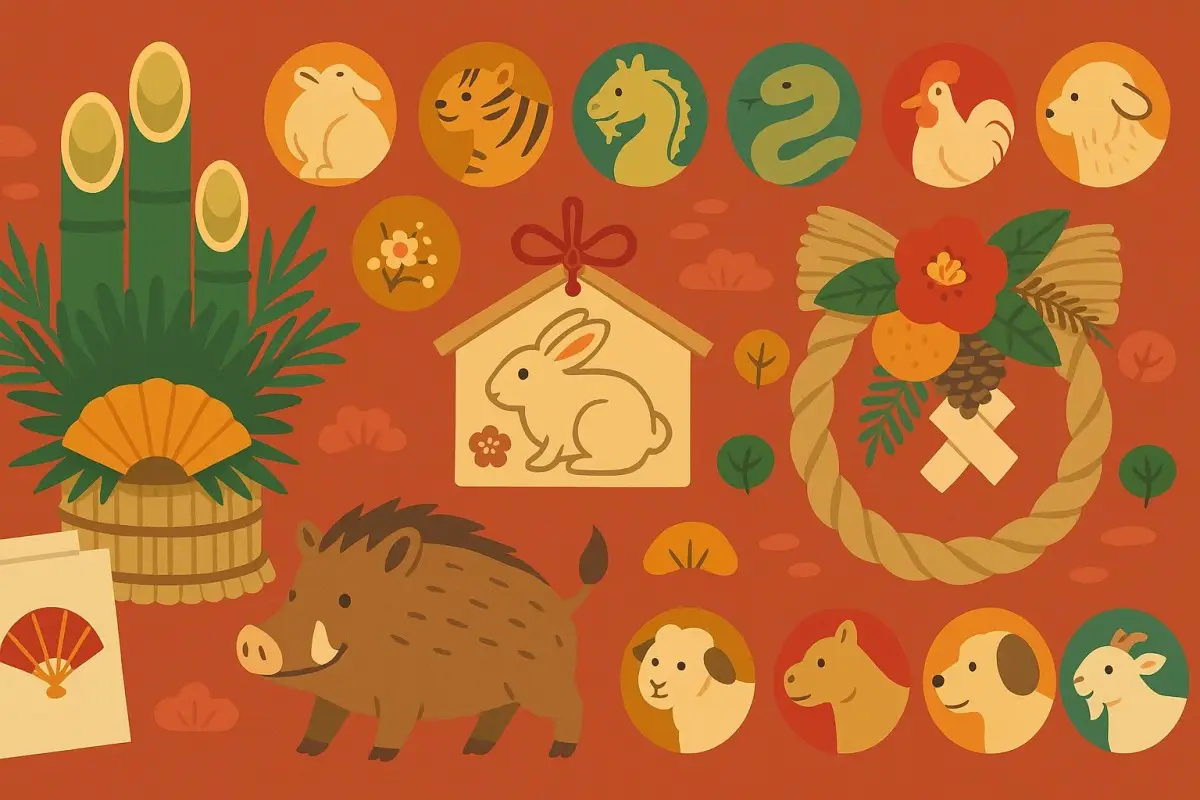
Unlike the zodiac signs we are accustomed to, Chinese and Japanese horoscopes are usually represented only by animals and by year of birth instead of months. The only difference between the Chinese horoscope and the Japanese one is that the animals buffalo, sheep, and pig are replaced by ox, goat, and boar in Japan.
In the Japanese horoscope, the year starts being counted on the first day of our solar calendar (oshogatsu) while in China the Chinese New Year of the lunar year is used, which lasts 12 months and 29 days. Another difference is that the rulers of the signs in Japan are replaced by Shinto gods.
Contents 5
Chinese Horoscope in Japanese
Below we will present the Chinese horoscope:
Responsive Table: Scroll the table sideways with your finger >>
| Portuguese | Kanji | Romaji |
| Chinese zodiac | 十二支 | juunishi |
| year of the snake | 蛇年 | hebidoshi |
| year of the sheep | 羊年 | hitsujidoshi |
| year of the pig | 猪年 | inoshishidoshi |
| year of the dog | 犬年 | inudoshi |
| year of the rat | 鼠年 | nezumidoshi |
| year of the monkey | 猿年 | sarudoshi |
| year of the dragon | 竜年 | tatsudoshi |
| year of the tiger | 虎年 | toradoshi |
| year of the rooster | 鳥年 | toridoshi |
| year of the horse | 馬年 | umadoshi |
| year of the rabbit | 兎年 | usagidoshi |
| year of the ox | 牛年 | ushidoshi |
Astrologers claim that the precise positions of the planets and zodiac signs at the moment a person is born can influence the course of their life. Do you believe in that?
The purpose of this article is purely informative, just to clarify the names of the zodiacs in Japanese and the years. We will not go into details about each horoscope, but we will briefly list some common characteristics.
Although the horoscope in Japan is quite similar to the Chinese one, there are some differences in the ideograms that represent the animals. Below we will provide a list of the Japanese zodiacs and the years each represents along with some of their qualities.
The Year of the Animals and Their Qualities
Rat (Nezumi - 子)
Years: 1900, 1912, 1924, 1936, 1948, 1960, 1972, 1984, 1996, 2008, 2020
Qualities: Responsible, intuitive, charming, tolerant, persuasive, optimistic, loyal, idealistic
Ox (Ushi - 丑)
Years: 1901, 1913, 1925, 1937, 1949, 1961, 1973, 1985, 1997, 2009, 2021
Qualities: Practical, full of vitality, persistent, hardworking, conservative, reliable, and disciplined
Tiger (Tora - 寅)
Years: 1902, 1914, 1926, 1938, 1950, 1962, 1974, 1986, 1998, 2010, 2022
Qualities: Intelligent, inventive, humanitarian, active, and prudent.
Rabbit, Hare (Usagi - 卯)
Years: 1903, 1915, 1927, 1939, 1951, 1963, 1975, 1987, 1999, 2011, 2023
Qualities: Intuitive, original, friendly, creative, conscientious, responsible, versatile, and principled.
Dragon (Tatsu - 辰)
Years: 1904, 1916, 1928, 1940, 1952, 1964, 1976, 1988, 2000, 2012, 2024
Qualities: Competitive, generous, dynamic, hardworking, optimistic, lively, and leaders.
Snake, Serpent (Mi - 巳)
Years: 1905, 1917, 1929, 1941, 1953, 1965, 1977, 1989, 2001, 2013, 2025
Qualities: Stable, conservative, practical, reasonable, loyal, responsible, carefree, sincere, patient, and hardworking.
Horse (Uma - 午)
Years: 1906, 1918, 1930, 1942, 1954, 1966, 1978, 1990, 2002, 2014, 2026
Qualities: Flexible, versatile, strong, imaginative, self-confident, intelligent, creative, curious, and cordial.
Goat (Hitsuji - 未)
Years: 1907, 1919, 1931, 1943, 1955, 1967, 1979, 1991, 2003, 2015, 2027
Qualities: Patriotic, sincere, patient, hardworking, persevering, protective, intuitive, and tenacious.
Monkey (Saru - 申)
Years: 1908, 1920, 1932, 1944, 1956, 1968, 1980, 1992, 2004, 2016, 2028
Qualities: Friendly, creative, idealistic, honorable, sincere, reliable, responsible, hardworking, generous, and kind.
Rooster (Tori - 酉)
Years: 1909, 1921, 1933, 1945, 1957, 1969, 1981, 1993, 2005, 2017, 2029
Qualities: Discerning, punctual, efficient, analytical, practical, judicious, reliable, patient, and open-minded.
Dog (Inu - 戌)
Years: 1910, 1922, 1934, 1946, 1958, 1970, 1982, 1994, 2006, 2018, 2030
Qualities: Sincere, diplomatic, respectful, fair, cheerful, sensitive, rich, refined, romantic, and charming.
Boar (Inoshishi - 亥)
Years: 1911, 1923, 1935, 1947, 1959, 1971, 1983, 1995, 2007, 2019, 2031
Qualities: Developed, achievers, magnetic, determined, versatile, shrewd, reliable, and creative.
Astrology in Japanese
The Japanese also tend to use the traditional horoscope of monthly signs, see a list of the signs of the horoscope and astrology terms in Japanese:
Responsive Table: Scroll the table sideways with your finger >>
| Portuguese | Japanese | Romaji |
| Horoscope | 星占い | Hoshiuranai |
| Constellations | 星座 | Seiza |
| Aries | 牡羊座 | Ohitsujiza |
| Taurus | 牡牛座 | Oushiza |
| Gemini | 双子座 | Futagoza |
| Cancer | 蟹座 | Kaniza |
| Leo | 獅子座 | Shishiza |
| Virgo | 乙女座 | Otomeza |
| Libra | 天秤座 | Tenbinza |
| Scorpio | 蠍座 | Sasoriza |
| Sagittarius | 射手座 | Iteza |
| Capricorn | 山羊座 | Yagiza |
| Aquarius | 水瓶座 | Mizugameza |
| Pisces | 魚座 | Uoza |
Kyuuseiki - Ki Horoscope of the 9 Stars
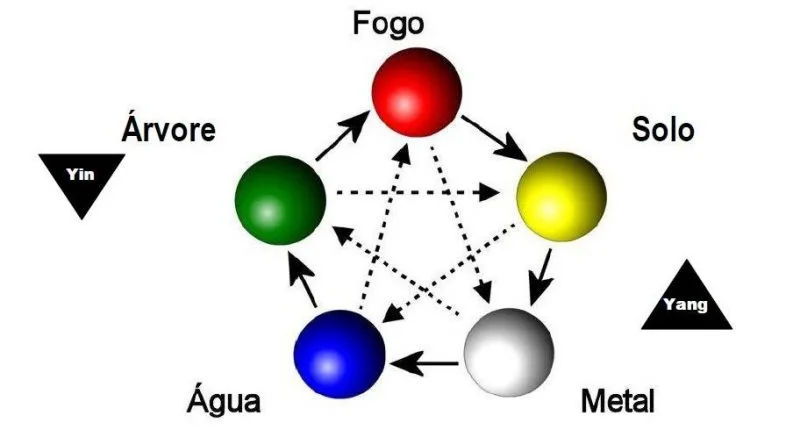
In this horoscope, each year is assigned to a sign using Japanese astronomy called kyuuseiki (九星気) which totals 9 stars. These 9 stars give each person the influence of a number, color, and natural element, in addition to an animal.
The Twenty-Eight Mansions
Ancient Chinese astronomers divided the ecliptic sky into four regions, collectively known as the Four Symbols, each assigned to an animal. They are the Blue Dragon (青龍) of the east, the Black Tortoise (玄武) of the north, the White Tiger (白虎) of the west, and the Red Bird (朱雀) of the south.
Each region contains seven mansions, totaling 28 mansions. These mansions correspond to the longitudes along the ecliptic that the Moon traverses during its 27.32-day journey around the Earth and serve as a means to track the Moon's progress.
Responsive Table: Scroll the table sideways with your finger >>
| Portuguese | Kanji | Rōmaji |
|---|---|---|
| Tail | 尾 | Bi |
| Beaked Turtle | 觜 | Shi |
| Sifted Basket | 箕 | Ki |
| House Roof | 危 | Ki |
| Stomach | 胃 | I |
| Ghost | 鬼 | Ki |
| Diver | 斗 | To |
| Net | 畢 | Hitsu |
| Star | 星 | Sei |
| Link | 婁 | Rô |
| Neck | 亢 | Kô |
| Legs | 奎 | Kei |
| Chariot | 軫 | Shin |
| Hairy | 昴 | Bô |
| Three Sisters | 参 | Shin |
| Wings | 翼 | Yoku |
| Wall | 壁 | Heki |
| Well | 井 | Sei |
| Girl | 女 | Jyo |
| Void | 虚 | Kyo |
| Room | 房 | Bô |
| Heart | 心 | Shin |
| Camp | 室 | Shitsu |
| Horn | 角 | Kaku |
| Willow | 柳 | Ryû |
| Ox | 牛 | Gyû |
| Extended Net | 張 | Chô |
| Foundation | 氐 | Tei |
Research sources: Wikipedia and the books below:



Community
Comments
0 comments
There are no published comments in this language yet.
Send comment