

“Japanese? Why Japanese? Why a language so useless? Why not English, Spanish, French...” That is still one of the first replies you get when you say you are learning Japanese.
For a lot of people, English is the language that counts and Japanese is a hobby you should drop before it costs you time. The twist is that “harder” and “more useful” are not the same question — and they are not even the same answer for every speaker.
Contents 5
Is Japanese really easier than English?
I personally found Japanese easier than English. Some people are shocked by that, and they should be: it is an opinion, not a universal ranking. Coming from Portuguese, I felt Japanese was simpler to speak than English, and in some stretches even simpler than Portuguese itself.
For a native English speaker the picture is different. The U.S. Foreign Service Institute puts Japanese in its hardest group, Category V: about 88 weeks, or 2,200 classroom hours, to reach professional working proficiency. Spanish or French sit closer to 600–750 hours. If your first language is English, Japanese is not “easier” in the sense of fewer hours.
The wall is the writing. Hiragana and katakana are finite; kanji is the long climb. Spoken Japanese, though, is more regular than the reputation suggests: five vowel qualities, no plural endings on nouns, no articles, and only a handful of truly irregular verbs. English spelling and stress, by contrast, fight the learner at every turn. That is why I still say pronunciation is the part of English that made it feel harder for me — Portuguese vowels sit closer to Japanese than to English.
A person who already lives inside English will usually pick up more English faster than Japanese. Speed is not the same as ease, and ease is not the same as a reason to study. Plenty of Japanese learners and plenty of Brazilians never really speak English well, not because the grammar is impossible, but because they never wanted the language in the first place.

English grammar is lighter than Portuguese in several places. Japanese goes further: no plural, no gender on nouns, and conjugations that do not change for “I / you / they.” Once you can read, the script even starts to help you parse a sentence instead of hiding it. If you want the other side of this argument — the parts that really are tough — there is a longer look at whether Japanese is actually difficult.
The advantages of studying Japanese and English
What if you study both? They do not cancel each other out. Japan took in a huge wave of Western vocabulary in the modern period, and a large share of everyday loanwords now sits in katakana. Knowing English does not magically teach you Japanese, but it does make a slice of that lexicon less foreign — computer, hotel, coffee — even when the pronunciation has been rebuilt for Japanese syllables.
There are thousands of these gairaigo, and most recent ones come from English. Portuguese, Dutch, French, and German left older traces too. The three historical layers of the vocabulary — native words, Chinese-origin kango, and Western loans — are mapped in the article on wago, kango and gairaigo.
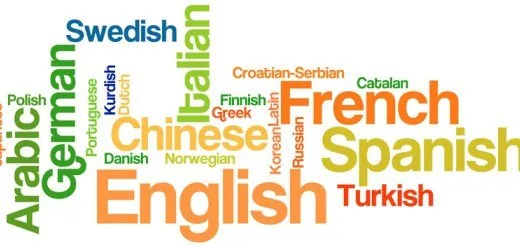
If you already speak English and want another language, Japanese is a different kind of work, not a duplicate of French or Spanish. You will notice the two languages filling different holes: English for the wider web of science, travel, and jobs; Japanese for the country, the media, and the people you actually want to talk to.
Don't learn a language out of obligation
Ask someone who is learning English why they are studying it. You often hear things like:
- Because I want a good job;
- Because I need to get into a college;
- Because my parents force me;
- Because this is a useful language;
- Because it is the language the world expects;
- Because everyone else is doing it.
If you pay attention, those reasons sit outside the person. The motivation is an obligation. That is why so many English courses stall: there is pressure, but no hunger. People who stick with Japanese usually answer differently:
- Because I like anime;
- Because I like the culture;
- Because I find it interesting;
- Because I want to understand games and novels without a filter;
- Because I have a Japanese partner;
- Because I like J-pop or Vocaloid.
Those reasons can sound silly from the outside. They are also the ones that keep you at the desk. The word “like” is weaker than “love,” but it still points inward: you, not a résumé. If the motivation is genuine and comes from inside, the chances of sticking with the work go up.

Learn the language you actually want. English remains enormously useful. Japanese is not a replacement for it. The failure mode is studying either one only because someone told you that you must.
There is no useless language
People say Japanese is useless, that it will not help you at all. That idea is lazy. Utility is not a ranking of speaker counts.
Catalan is a fair test case. It is a Romance language with about 9 million speakers in total — native and additional — concentrated in Catalonia, Valencia, the Balearic Islands, Andorra, and a few neighboring areas. That is far fewer than English or Spanish. It is still a language you can live in, study in, and travel with. Nobody serious calls it a toy.

Japanese has over 120 million speakers and a country where daily life still runs in Japanese, not in English. Knowing it can help you compete for study routes and scholarships in Japan. English will open more doors worldwide. That is real. It is also real that most people who treat English as a chore never get far enough for those doors to matter.
The number of speakers is a weak reason to start and a weaker reason to quit. If the pull is strong, it is enough to keep studying. If the pull is only “I should,” English and Japanese will both feel heavy.
Where to start
If you are still unsure about Japanese, start with a small, concrete piece rather than a five-year plan. The site has a long list of reasons people keep studying Japanese, and a practical path through the hiragana and katakana before you drown in kanji.
For a first book, Minna no Nihongo is still the classroom workhorse many beginners meet. Pair it with something you already like — a show, a game, a song — so the hours do not depend only on willpower. English can wait in the same week without becoming the language you resent.
Anyway, it does not matter which language you are studying, or how many people speak it, if you have a reason that belongs to you. That is the part the “just learn English” lecture never covers. Happy studying.





Community
Comments
0 comments
There are no published comments in this language yet.
Send comment