
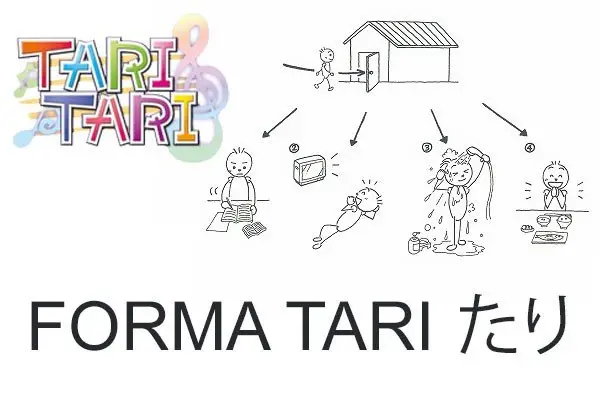
The pattern たり is used when you want to mention representative actions or states instead of giving a strict, complete list. In practice, it often means “do things like A and B,” “sometimes A and sometimes B,” or “A, B, and so on.” You will usually see it in the structure 〜たり〜たりする.
Unlike the -te form, which can show a clear sequence such as one action happening after another, たり presents examples without focusing on order. That nuance is what makes it so common in daily Japanese.
Contents 4
What たり means
The easiest way to understand たり is to think of it as a partial list. The speaker gives a few examples and leaves the rest implied.
休みの日は、本を読んだり、音楽を聞いたりします。
Yasumi no hi wa, hon o yondari, ongaku o kiitari shimasu.
Translation: “On my days off, I do things like read books and listen to music.”
This is different from a sentence with the -te form. Compare the nuance below:
昨夜は歌って踊った。
Sakuya wa utatte odotta.
Translation: “I sang and danced last night.” The sentence simply connects actions.
昨夜は歌ったり踊ったりした。
Sakuya wa utattari odottari shita.
Translation: “I spent the night doing things like singing and dancing.” Here the actions are examples, and the order is not the important part.
When to use たり
This pattern appears in a few very common situations:
- When you talk about habits, hobbies, or what someone usually does.
- When you mention examples instead of a complete list.
- When actions or states alternate, such as something changing back and forth.
休日は食べたり寝たりして過ごしています。
Kyuujitsu wa tabetari netari shite sugoshite imasu.
Translation: “I spend my days off doing things like eating and sleeping.”
今日は雨が降ったりやんだりだ。
Kyou wa ame ga futtari yandari da.
Translation: “Today it rains on and off.”
You may also hear a single たり in conversation, especially before する or している. It sounds casual and leaves the rest understood:
休みの日は何をしますか。
本を読んだりします。
Yasumi no hi wa nani o shimasu ka.
Hon o yondari shimasu.
Translation: “What do you do on your days off?” “I do things like read books.”
For learners preparing for the JLPT, this pattern shows up early and is often grouped with other everyday grammar in guides such as our article on Japanese grammar structures for JLPT N4.
How to form たり
With verbs, the rule is simple: take the plain past form and add り. If you are still reviewing verb basics, it helps to look again at the dictionary form and masu form of Japanese verbs.
| Base form | Past form | たり form |
|---|---|---|
| する | した | したり |
| 食べる | 食べた | 食べたり |
| 書く | 書いた | 書いたり |
| 読む | 読んだ | 読んだり |
The pattern is not limited to verbs. You can also use it with nouns and adjectives:
- Nouns: 静かだったり、にぎやかだったりする
- Na-adjectives: 便利だったり、不便だったりする
- I-adjectives: 忙しかったり、暇だったりする
私の店は忙しかったり、暇だったりです。
Watashi no mise wa isogashikattari, himadattari desu.
Translation: “My shop is sometimes busy and sometimes slow.”
That broader use is important because many beginner articles only show verb pairs, while real Japanese also uses たり to show alternating states and qualities.
Common points and mistakes
The most frequent mistake is treating たり as if it were the same as the -te form. They overlap, but the nuance is different. Use -te when you want to connect actions directly or show sequence. Use たり when you want examples, repetition, or alternating actions and states.
Another point is that the classic pattern usually repeats たり at least twice: 読んだり書いたりする. In natural conversation, a single たり can appear, but it sounds more casual and incomplete by design.
It is also common to use affirmative and negative forms together to show something happens irregularly:
学校に来たり来なかったりする。
Gakkou ni kitari konakattari suru.
Translation: “Sometimes they come to school, and sometimes they do not.”
Once you get used to this pattern, you will hear it everywhere in conversations about routines, hobbies, weather changes, and everyday descriptions. It is a small grammar point, but it makes your Japanese sound much more natural.




Community
Comments
0 comments
There are no published comments in this language yet.
Send comment