
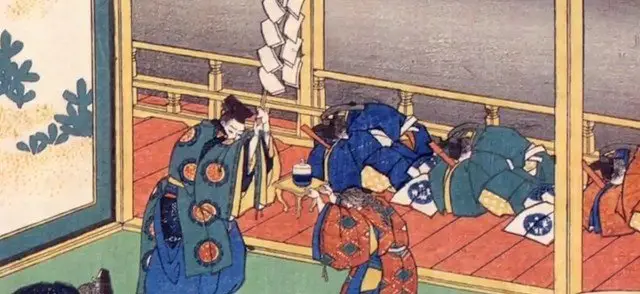
There was no single answer to what sex was like in feudal Japan. The label covers centuries, regions, and social classes. The best-documented material often comes from the Edo period (1603–1868), when cities such as Edo grew large, publishing flourished, and the Tokugawa government regulated many parts of public life.
That evidence is valuable, but it has limits. Official rules, fiction, erotic prints, temple records, and later recollections each show a different angle. They do not give us a complete diary of private life. A careful view starts with social rank, household duties, and the difference between representation and everyday experience.
Contents 6
Start with the Edo context
In the Edo period, family status and household continuity shaped marriage for many samurai and elite families. Marriage could join households, protect inheritance, or secure alliances; affection existed, but it was not the only consideration. Expectations changed across social groups, and the experience of a shōgun’s household cannot stand in for that of farmers, artisans, merchants, or performers.
The same caution applies to the broad phrase “feudal Japan.” Medieval warrior culture, early-modern Edo cities, and late nineteenth-century reforms belong to different settings. When a source refers to the Tokugawa era, it is more accurate to say so than to make it a rule for all Japanese history.
The Ōoku: intimacy as succession politics
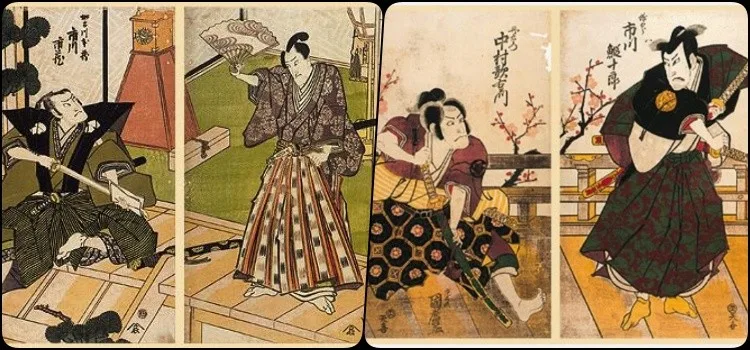
The Ōoku, or inner chambers of Edo Castle, makes the connection between intimacy and power especially clear. It housed women serving the Tokugawa shōgun and was central to producing an heir. Accounts of the later Edo period describe visits between a shōgun and a concubine as heavily supervised, with attendants, formal preparation, and close attention to a possible pregnancy.
That does not mean every relationship in Japan followed palace rules. It shows the opposite: at the very top of the political order, private life could become a matter of government. The shōgun’s bedroom was part of a system concerned with security, lineage, and succession.
Yoshiwara, courtesans, and geisha were not the same
Edo’s licensed pleasure district, Yoshiwara, is often reduced to a glamorous backdrop of silk robes and woodblock prints. It was a regulated commercial district with sharp status differences and strict rules. High-ranking courtesans could be trained in arts and conversation, while many women in the wider sex trade had far less autonomy and faced harsh economic conditions.
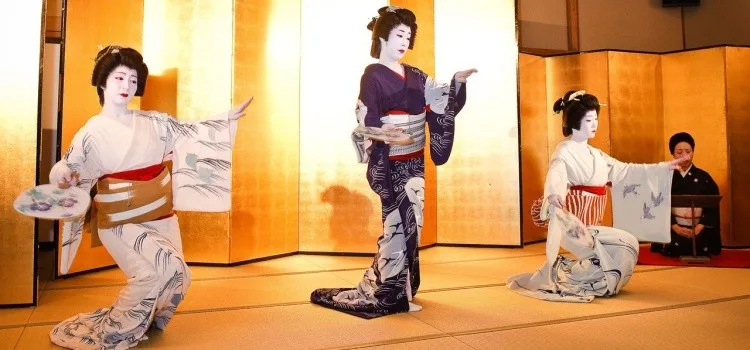
Oiran were high-ranking courtesans. Geisha developed as professional entertainers whose work centered on music, dance, conversation, and social performance. Treating geisha as another name for a sex worker repeats a long-standing misconception and erases the distinction between these professions.
Popular literature set many stories in Yoshiwara, but fiction can dramatize a place as much as it documents it. It is useful for seeing the language, fantasies, and anxieties of its readers; it should not be read as a neutral report on every worker’s life.
Same-sex relationships and historical language
Historical material also records relationships between men, including traditions described with terms such as nanshoku (男色) and wakashudō (若衆道). These terms belong to particular social and literary worlds. They should not be treated as exact equivalents of modern identities such as gay, bisexual, or straight.
Some texts connect male–male relationships with Buddhist institutions, warrior culture, and theater. They also reveal strong differences of age, rank, and power. Reading them responsibly means avoiding two easy myths: that Japan had no social restrictions at all, or that every historical relationship maps neatly onto present-day categories. For a present-day perspective, see our article on how Japan faces homosexuality.
Religion, myth, and images
Japanese religious traditions cannot be summarized by one rule about sex. Shinto creation myths include the union of deities, while Buddhist ethical practice has its own disciplines, especially for monastics. Neither point proves that all people in the past held the same views or lived without constraint. Belief, law, family obligation, and local custom could pull in different directions.
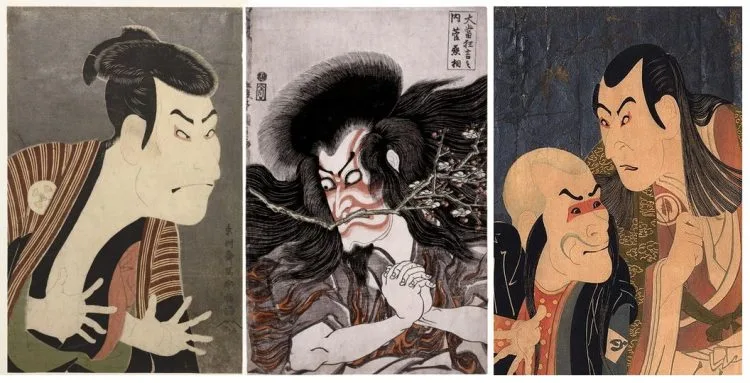
Woodblock prints and stories are equally tempting shortcuts. They show that erotic subjects were produced, circulated, and discussed, but an image is not a census. Art can be playful, commercial, satirical, idealized, or deliberately provocative. Its existence tells us about a visual culture; it does not settle how every household behaved.
What to remember about intimacy in feudal Japan
- Use a period and a social setting before making a broad claim: Edo castle, a merchant city, a temple, or a theater world did not operate in the same way.
- Separate courtly and commercial culture from the lives of ordinary households.
- Distinguish courtesans, geisha, and other workers instead of treating them as one category.
- Read surviving art and literature as evidence with a point of view, not as a complete record of private behavior.
Feudal Japan is fascinating precisely because it resists a simple story of either freedom or repression. The surviving record shows hierarchy, commerce, affection, performance, and regulation living side by side. Context makes that record more interesting—and far more accurate.



Community
Comments
0 comments
There are no published comments in this language yet.
Send comment