
If you watch enough anime, you have already met an oni (鬼) — the horned figure with wild hair, a tiger-pelt loincloth, and a spiked club. In Japanese mythology and folklore, that silhouette is not a random monster design. It grew out of centuries of stories about fear, outsiders, hell, and the things people could not quite name.
The catch is that “oni” never meant only one thing. The word shifted from hidden spirits and calamity to the red-and-blue ogres of fairy tales, Setsubun bean-throwing, and modern fiction. Here is how the figure took shape — and why it still shows up everywhere from festivals to Demon Slayer.
Contents 5
What does oni mean? What are they?
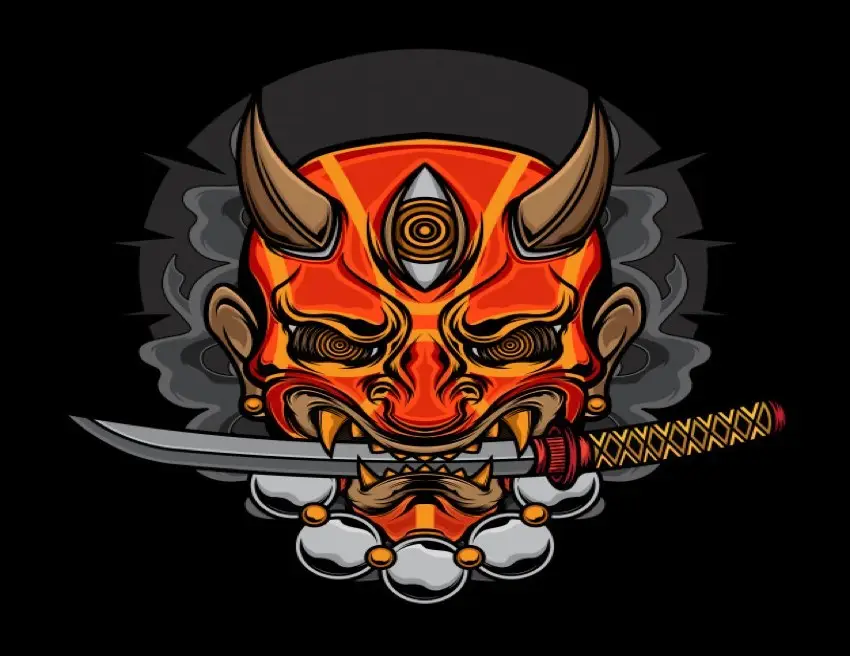
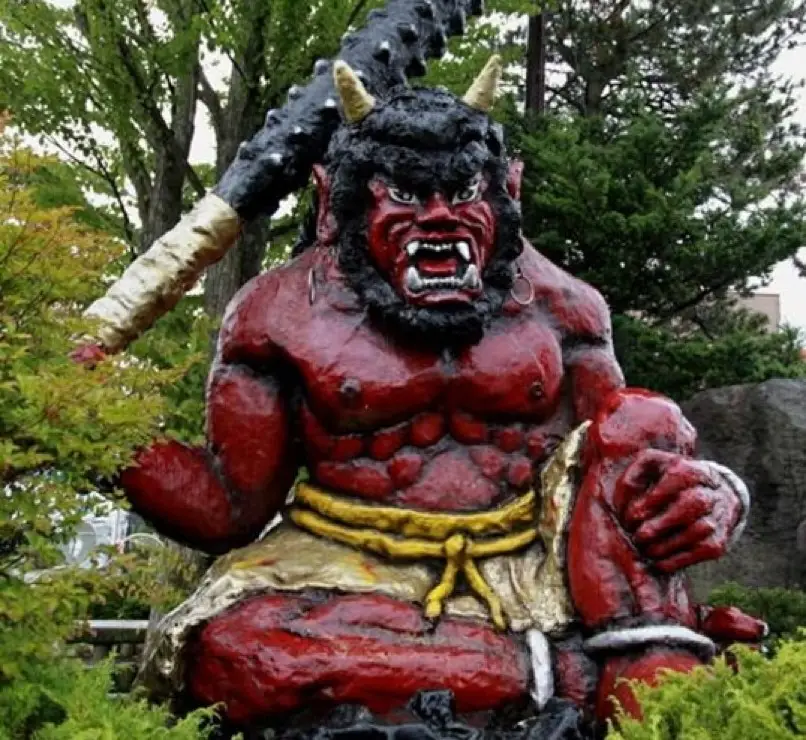
The term oni (鬼) is often translated as ogre, demon, or troll, but none of those English words covers the full range. In popular image, an oni is a hulking humanoid with one or more horns, fierce teeth, clawed hands, and skin commonly shown as red, blue, black, or yellow. Many carry an iron club called a kanabō (金棒) and wear a loincloth made from animal pelt — often tiger skin in later art.
Older Japanese explanations link the reading oni to ideas of something hidden or concealed. The kanji 鬼 came from Chinese notions of the dead and the unseen, yet in Japan the word settled toward beings that were solid, dangerous, and often evil — not every ghost of the underworld. Folklore places them in remote mountains, caves, islands, abandoned strongholds, or the Buddhist hells of Jigoku.
Two origin stories appear again and again in popular tellings:
- A person of extreme wickedness dies and is reborn among the torturers of hell, serving under Enma Daiō (閻魔大王), the king who judges the dead.
- Someone so far beyond redemption becomes an oni while still alive, then preys on the living — the kind of oni that fills fairy tales and horror legends.
They are not “flawed gods” in a neat theological sense. People long used the label for calamity, disease, thunder, outsiders, and pure malice. Red (aka-oni) and blue (ao-oni) are famous color types in art and children’s stories, not a closed cast of only two individuals.
How Buddhism shaped the classic oni look
Buddhism helped fix the image most people recognize today. As Buddhist ideas of hell, judgment, and wrathful beings spread in Japan, oni were drawn toward the roles of wardens and punishers of the damned. Their visual language also absorbed traits from broader Asian religious art — fierce faces, horns, animal-like features, and raw physical power — until the humanoid ogre became the default.
The loincloth and the kanabō belong to that stock portrait. So do the horns: sometimes a short protrusion, sometimes huge and unmistakable. Faces can lean human, bestial, or something in between. Female demonic figures often travel under related names such as kijo rather than the everyday word “oni,” though modern fiction blurs those lines freely.
Among named legends, Shuten-dōji stands out as one of Japan’s most famous oni chiefs — a drinker of terrible strength whose defeat by warriors such as Minamoto no Yorimitsu filled picture scrolls, nō, kabuki, and later popular retellings. Stories like Momotarō made the “oni island” pattern familiar to children: heroes set out, gather companions, and drive the creatures back.
Difference between oni and yōkai
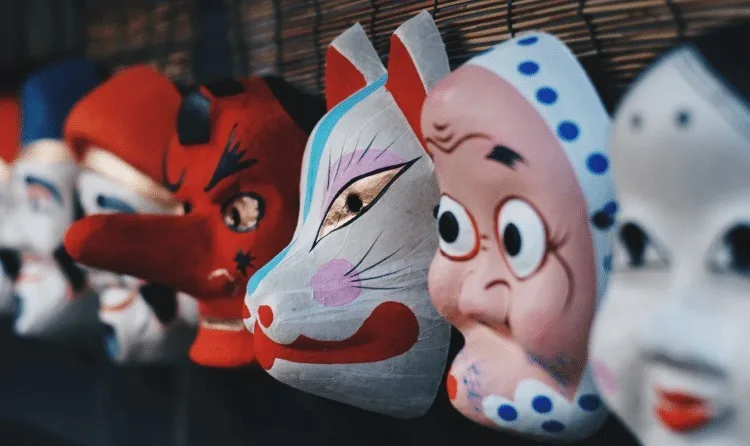
Yōkai (妖怪) is a broad umbrella for supernatural beings in Japanese folklore — strange, uncanny, sometimes terrifying, sometimes mischievous, sometimes almost charming. An oni is usually treated as one famous kind of yōkai (or, in older language, as part of the wider world of spirits and monsters that people once simply called “oni” before categories hardened).
So the difference is scale of meaning, not a perfect wall. “Yōkai” can cover shape-shifters, haunted objects such as tsukumogami, regional oddities, and creatures that never look like an ogre. “Oni” points more tightly at the horned strongman of hell and fairy tale — though historical usage was messier than any modern chart.
Affectionate human–yōkai pairings in fiction produce han’yō (半妖), half-yōkai characters with mixed traits and powers. That is storytelling language more than a fixed religious taxonomy. For a wider map of creatures beyond the ogre type, see our A–Z list of Japanese yōkai and legendary creatures.
Anime that lean into government-meets-supernatural bureaucracy — such as Midnight Occult Civil Servants (真夜中のオカルト公務員) — treat yōkai as neighbors and paperwork problems as much as monsters. That tone is modern, but it still depends on the older idea that the unseen world has rules, ranks, and local personalities.
The oni today: Setsubun, luck, and living culture
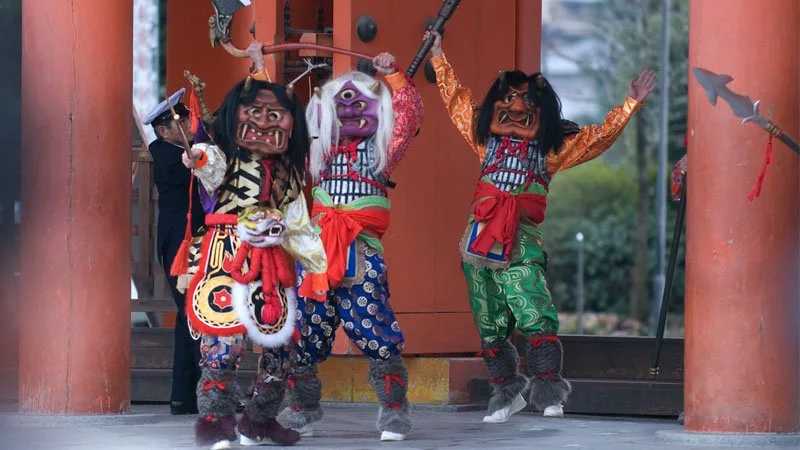
One of the clearest places to meet oni in ordinary Japanese life is Setsubun (節分), the seasonal rite that marks the turn toward spring. People throw roasted soybeans while chanting “Oni wa soto! Fuku wa uchi!” — “Oni out! Fortune in!” Participants may wear oni masks, and the ritual turns fear into a household performance of driving misfortune away.
That double face matters. Oni still signal danger in fairy tales, yet they also appear as parade figures, protective roof tiles (onigawara), game characters, and soft mascots. Children’s stories such as Naita Aka-Oni (The Red Ogre Who Cried) even let a lonely red ogre become sympathetic. The monster never fully disappeared; it learned new jobs.
In literature, theater, painting, and manga, oni keep changing sex, size, humor, and moral alignment. Heroes still defeat them — and sometimes the story asks whether the “oni” was ever only a monster in the first place.
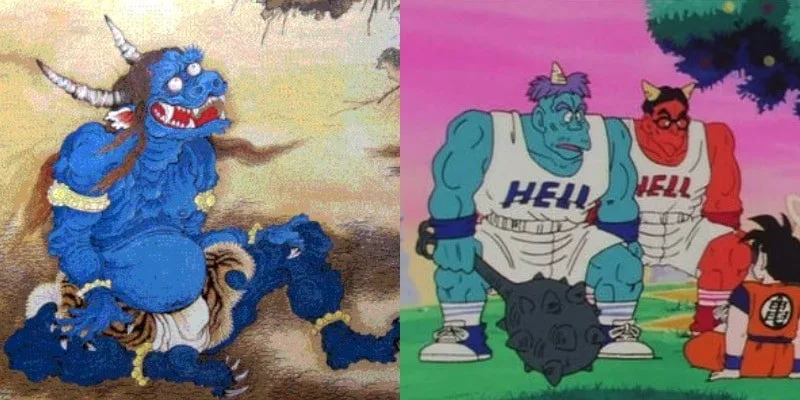
Oni in anime
Demon Slayer (Kimetsu no Yaiba) builds its whole conflict around beings called oni: they feed on humans, spread transformation through injury and blood, and force the hero Tanjiro into a long search for a cure after his family is destroyed and his sister is changed. The series uses the English word “demon” in many translations, but the Japanese frame remains 鬼.
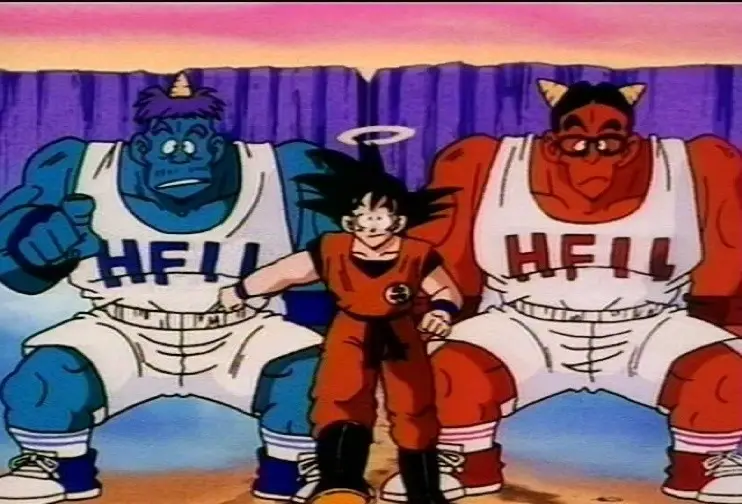
Elsewhere, the label stretches. In Dragon Ball, the comic red and blue attendants of the afterlife borrow the popular aka/ao-oni color code and spend time in Hell with a lighter touch than folklore allows. In many shows, localizers swap “oni” for ogre, monster, creature, or demon, so English-speaking fans meet the same idea under different names.
Whether you meet them as festival masks, fairy-tale villains, or anime antagonists, oni stay useful because they hold more than one meaning at once: punishment and protection, outsider and icon, nightmare and joke. They make stories hotter — and they still work best when left on the page or the screen.

Community
Comments
0 comments
There are no published comments in this language yet.
Send comment