
Naita Aka Oni (泣いた赤おに) is Hamada Hirosuke's children's story about a red oni who wanted human friends and cried when he saw the price. The first serialization ran from the August 1933 issue of Kashikoi Shōgaku Ninensei, a Seibunkan magazine for second-graders, under the title Oni no sōdan (おにのさうだん). In 1934 another children's magazine ran it as Oni no namida (鬼の涙). The first book printing came in July 1935, inside Hirosuke Hiragana Dōwa from Okamura Shoten. The title Naita Aka Oni itself showed up in 1937. English versions often call the two of them ogres, and Hamada's word for them is oni.
There is another children's story on the site, the tale of the old man who made the trees bloom.
Contents 3
The sign, the plan, and the children
Once there were two oni. One was red and the other was blue. The red oni wanted to become friends with the children who lived in a nearby village, so he put a sign in front of his house:
- House of a kind-hearted oni
- Everyone is welcome
- Tasty tea and sweets are ready
Nobody showed up, and the red oni was left puzzled, sad, and angry. "I am a kind oni. Why will nobody visit me?" He pulled the sign down. "This is useless."
His friend, the blue oni, moved by what he saw, said, "Look, I have a plan." The blue oni would pretend to terrorize the children. While that was going on, the red oni would step in, drive him off, and look like the one who had saved them. The red oni thought it was a poor way to treat his friend. The blue oni took him down to the village anyway, and the plan went through. The children started coming to the red oni's house to play.
The letter beside the door
After a stretch of those visits, the red oni noticed that the blue oni never came by. The welcome in the village existed because of him, so the red oni went to his house to say how things stood. The door was shut. A letter was posted beside it.
The letter asks the red oni to live happily among the humans. If the two of them keep meeting, people may decide that the red oni is a bad oni too, so the blue oni is leaving on a long journey. He says he will not forget his friend, tells him to take care, and signs as the blue oni, still his friend.
The red oni read it two or three times without speaking. Then he shouted, "The blue oni is gone. A dear friend of mine. He is gone." And he cried. His tears could no longer undo what had happened.
Why the red oni cries
The departure is the blue oni's own decision. He took the villain's part so the village would trust the red oni, and then he went away so that trust would hold. The red oni sees what it cost only when the letter is in his hands. People say we notice the worth of a thing once it is gone. In this story the line fits the friend who is already gone.
Not many of us have a friend who would do this. That kind of friendship is rare. The story ends when he cries, and the title comes from that cry.
Japanese children still meet this text in school. The Sankei Shimbun, writing on March 29, 2026 about a new collection of Hamada's stories, describes 泣いた赤おに as the piece printed in the fourth-grade moral textbook from Mitsumura Tosho. Hamada was born in 1893 in Takahata, Yamagata, and across his life he wrote about a thousand children's stories and songs.
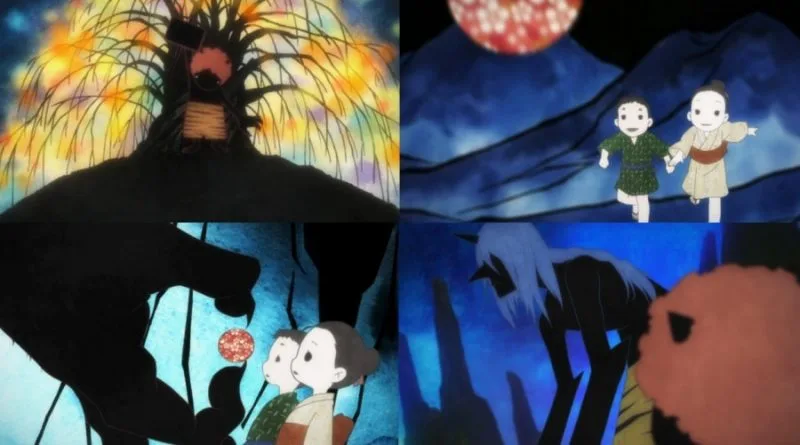
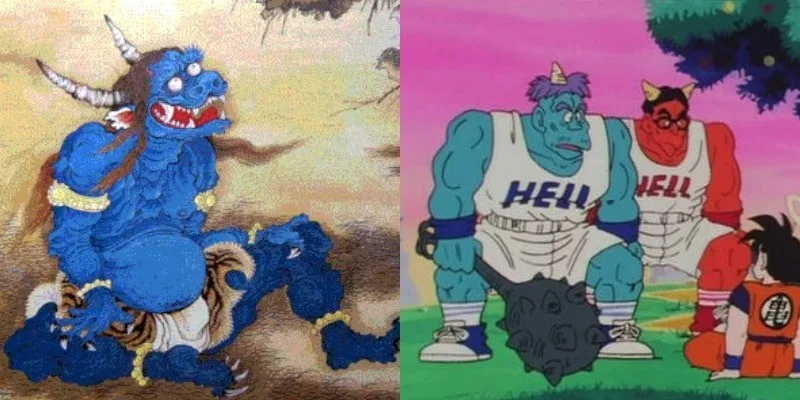
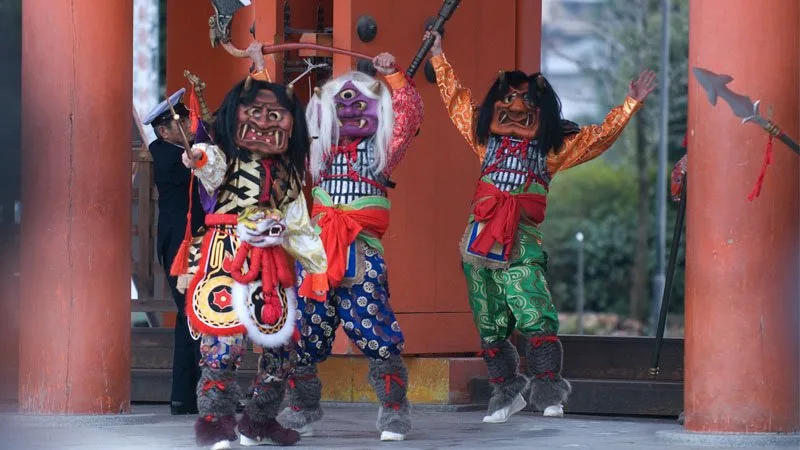
In 2011, Takashi Yamazaki and Ryuichi Yagi directed the 3D CG film Friends: Naki on Monster Island, drawn from Hamada's story. The pictures below are the likeness I had noticed in anime. Four animated frames show a dark horned figure with two children in old clothes. A painted blue oni stands beside Dragon Ball's Goz and Mez, the guards in shirts that read HELL, with kid Goku at their feet. Zero Two, in Darling in the Franxx, has red skin, small horns, and wet eyes. The shared marks are the colors, the horns, and a face in tears. The letter on the door is the scene Hamada wrote.






Community
Comments
0 comments
There are no published comments in this language yet.
Send comment