
Most youkai (妖怪) announce themselves with claws, tricks, or a body you can point at. Itsuki (縊鬼) does not. The terror is a command: hang yourself—and the old stories insist the urge can land on someone who, minutes earlier, had nowhere near that thought.
Recorded in Edo-period notes and still retold as a strangling ghost, Itsuki sits where folklore, fear of hanging, and the weight of a spoken promise meet. Not a hanging tree spirit, not a monster you fight with a sword—something quieter, and harder to shake.
Contents 4
What is Itsuki? Name, nature, and other names
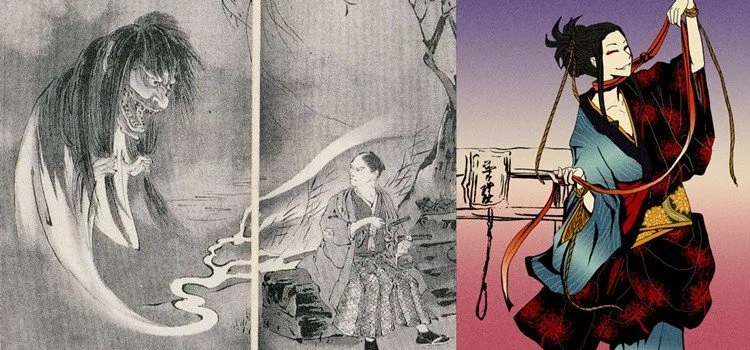
Itsuki (いつき) is read from the characters 縊鬼—literally a “strangling” or “hanging” oni/ghost. Folklore collectors also list it as iki, kubire-oni (くびれ鬼), chōsatsuki, and chōshiki (“hanging ghost”). Those names circle the same idea: a spirit tied to death by hanging, not a tree-spirit that lives in a branch.
In classic tellings, Itsuki are the restless dead of people who died by hanging. They are said to dwell in a shadowy underworld (often called Meikai in folk cosmology) where the number of souls stays fixed. A spirit can only leave when another soul arrives in a similar way—so waiting becomes hunger, and hunger becomes coercion. The ghost does not need to overpower the body; it only needs to plant an order the victim cannot refuse.
That origin is often traced to older Chinese ideas about spirits that call the living toward suicide, later woven into Japanese ghost belief. Physical descriptions stay thin on purpose: no fixed face, no agreed costume. The lack of a body is part of the scare. You cannot outrun a voice that seems to come from inside the decision itself.
The recorded story of Itsuki
One well-known account appears in Edo-period material associated with Notes on the Reverse of Drafts (反故の裏書), which preserves strange incidents alongside everyday bureaucratic life. A version set around old Edo (including the Kōjimachi area and the Kuichigai gate in later retellings) runs roughly like this.
A host expects a friend at a gathering. The friend arrives late, agitated, and tries to leave at once: he cannot stay—someone is waiting. Pressed for an answer, he says he promised to hang himself. Guests hold him back, force sake on him, and wait until the fever seems to cool.
Then news arrives from the gate: another man has just hanged himself at the very place named in the promise. The host concludes an Itsuki had seized his friend. The ghost, tired of waiting, took a substitute. When asked what he remembered, the friend described the night as a dream: a voice at the gate ordered him to die there; he begged leave only to excuse himself from the banquet first, swore he would return, and then found he could not refuse. Even after the danger passed, he mimed a noose at his own throat and muttered how terrifying it was.
Other short legends share the pattern—an inn, a traveler, a woman with a rope, a dark shape in the rafters urging her on—until someone cuts the rope and the compulsion breaks. Memory of the act often vanishes. The “someone waiting” is never a person you can introduce at dinner.
The signature move: not a physical attack, but a forced promise of hanging—and, in the worst tellings, a death that still happens somewhere nearby if the first victim is stopped.
Why Itsuki still feels so disturbing
Compared with youkai that trip travelers or haunt kitchens, Itsuki works on the mind. It leans on ideas that already mattered in Edo society: the binding force of a word given, the shame of breaking a vow, and the quiet horror of hanging as a private, final act.
Three details keep the legend sharp:
- Invisible pressure: without a stable physical form, the threat is a command and a mood, not a monster in the doorway.
- Fate by appointment: the victim does not merely feel sad; they “have an appointment” with a rope—someone is waiting.
- Substitute death: even when friends intervene, the story often delivers a body at the gate, as if the underworld still collected its due.
Modern readers sometimes treat Itsuki as a folk image of despair or sudden suicidal impulse. That reading is an interpretation, not a clinical claim in the old texts. The historical stories are clearer about social panic, rumor, and the fear that a voice in the dark can outrank reason. Japan has long discussed suicide as a public and cultural problem; the youkai is one way older communities named a terror that felt external, contagious, and unfair.
How to read the legend without turning it into a checklist
Useful questions the story answers better than a dictionary entry:
- Is Itsuki a tree youkai? No. The hanging is the method and the chain of death, not a botanical habitat.
- Is it the same as every “ghost that kills”? No. The mechanism is coercion toward hanging—often framed as a swap so the spirit can leave the underworld.
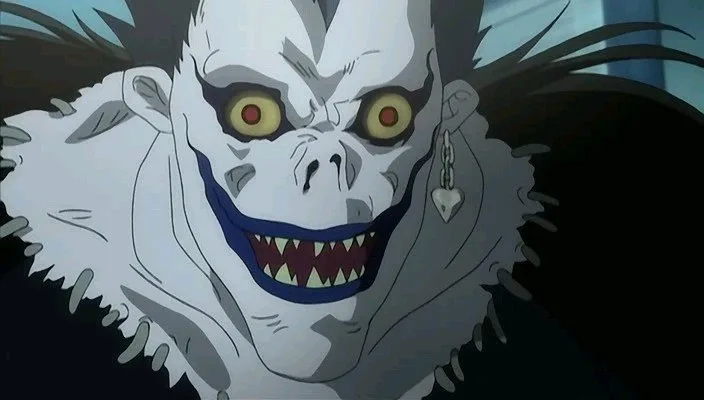
- Why so few pictures? The sources prioritize the incident and the voice over costume design. Popular art later invents looks; the Edo anecdote barely needs one.
If you are mapping Japanese ghosts more broadly, put Itsuki next to other spirits of unfinished death and social dread—not next to playful kitchen youkai. The legend is less about gore than about agency: who owns a decision when a promise has already been extracted?
Itsuki remains a dark corner of the youkai map because it refuses the comfort of a fight scene. There is no sword swing that ends the story cleanly—only a gate, a voice, and the terrible hope that someone at the table will refuse to let a friend walk out into the night.


Community
Comments
0 comments
There are no published comments in this language yet.
Send comment