
Momotarō [桃太郎] is a character and popular story from Japanese folklore that tells the tale of a boy who was born from a giant peach and was adopted by a couple. The story continues with Momotaro traveling to the island of demons accompanied by a dog, a monkey, and a pheasant.
The story may vary according to the source consulted. Basically, it is a children's story told mainly in children's books with the aim of encouraging the triumph of good over evil with the iconic battle against the demons.
In some versions of Momotaro, an elderly couple rejuvenated after eating a peach and had him as their son. In both stories, he fights to protect the villagers from the terrible oni carrying a rice cake called kibidango that grants a thousand strengths.
Contents 5
The Story of Momotaro
Previously, I tried to summarize the story a bit, but let's tell it properly below:
Once upon a time, there was an old woman from Okayama who was washing clothes by the river as usual when she found a giant peach and took it home intending to eat it with her husband. To their surprise, they found a baby inside and named him Momotaro.
The couple, who had no children, heard the child say: “Do not be afraid. I am not a demon or a fairy. The heavens heard your requests and sent me to be your son and take care of you in your old age.
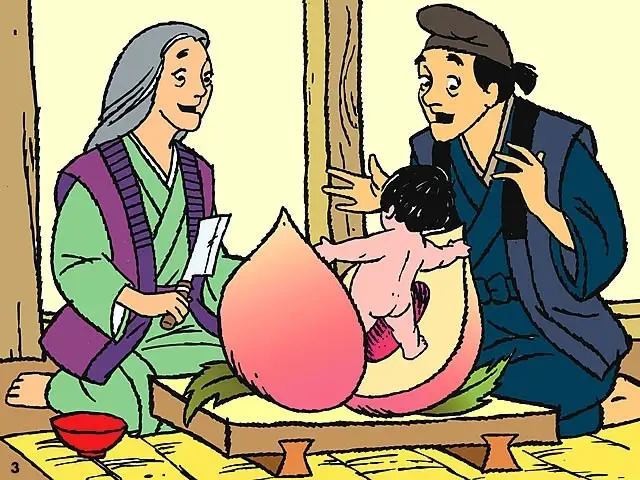
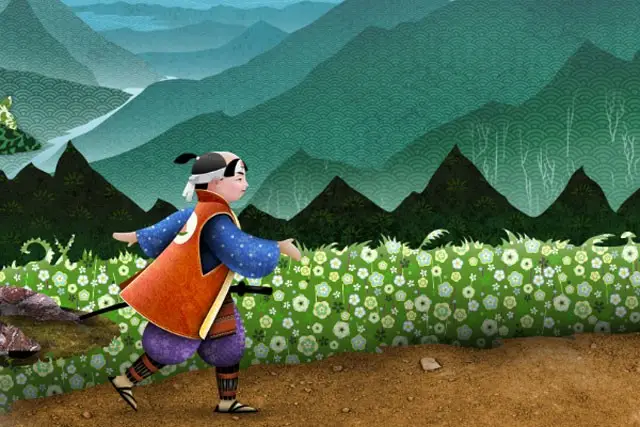
The old couple raised Momotaro to be big and strong. One day, he decided to leave home to defeat the onis (demons) that lived on Onigashima. The onis were causing terror in the village, killing and plundering the residents.
Despite their sadness, the couple had confidence in Momotaro and supported his departure. For his journey, he received several kibidango [黍団子], a type of cake made from mochiko (rice flour). Before he left, the elderly couple said: “Go with all care and speed. We hope that with the blessings of the gods, you return soon and victorious!”.
On his journey, a monkey, a dog, and a pheasant joined him, promising to help him against the oni in exchange for kibidango cakes. Upon arriving at the island, they discovered that the gate of the fortress where the onis were was locked.
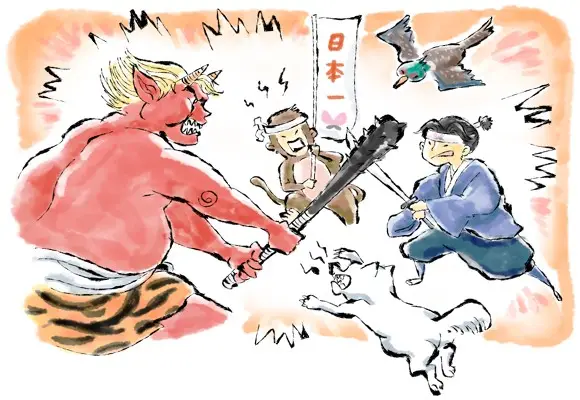
The pheasant flew inside the fortress and got the key to open the gate. Once inside, they fought against the onis. The pheasant pecked their eyes, the dog bit their legs, and the monkey jumped on the backs of the demons. In the end, the demons cried for mercy! To have their lives spared, they gave Momotaro all the stolen treasure.
Momotaro and his companions returned to the village and were welcomed with a great feast, being declared heroes by their people. The treasure was shared among all the villagers, and his elderly parents were able to live comfortably until the end of their days.
The Importance of Momotaro
Although it is a simple story among many Japanese stories, its purpose is to serve as a model for children since its origin in the Meiji Era. The story highlights bravery, strength, and care for parents.
It is believed that in the original version, Momotaro was born from a natural birth after the elderly couple rejuvenated by eating a peach; it seems quite different, but to avoid confusing children, the giant peach version was adopted.
What is the Origin of Momotaro?
There are several theories about the origin of the stories based on the legend of Momotaro, and each one is controversial. Some claim that the story may have originated in another province like Aichi and Kagawa, but became popular in Okayama due to its promotion in 1960 after the war.
The exact date of its formation as a story is unknown, but the origin of the prototype (literature) is said to be from the late Muromachi period to the early Edo period. Since then, it has been generalized through publications like the red book.
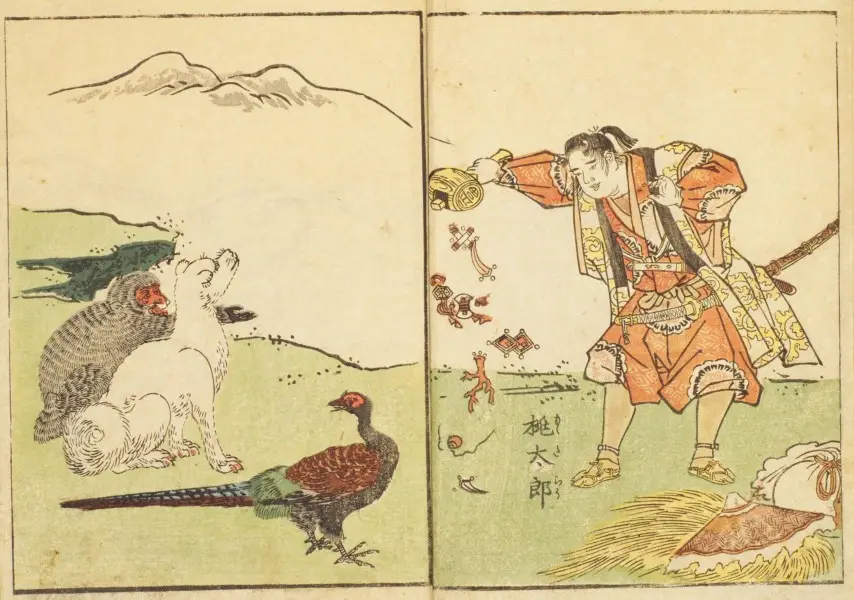
In Edo period literature, the treasures that Momotaro brings back are swords, caps, hammers, gold, silver, and bags that prolong life. In other stories, gold jewels and coral are added.
The legend of Momotaro is quite similar to the Okinawan legend of a princess named Urikohime [瓜子姫] who is born from a melon. Others have found similarities with the Indian legend of Ramayana.
There are theories that say both Japanese legends came from similar legends of people who appear from within things. Some claim that the gate of the Oni island refers to beliefs of Fengshui.
Japanese Version of the Momotaro Legend
Below is a popular version of the Japanese Legend of Momotaro:
むかしむかしの おはなしです。
おばあさんが かわで せんたくをしていると…
どんぶらこっこ どんぶらこっこ。
「おやまあ、おおきな ももが ながれてきたよ」

いえに もってかえると、
ぱかっ!
「おんぎゃあー!」
なかから おとこのこが うまれました。

「げんきなこだねえ」
おばあさんが にこにこすると、
「ももからうまれた ももたろうだね」
おじいさんも うれしそうに いいました。

ももたろうは もりもり ごはんをたべて
ぐんぐん おおきくなりました。

あるひ むらの たからものが おにに ぬすまれてしまいました。
つよくて やさしい ももたろうは
「ぼくが とりかえしてくるよ!」
そういって、おにがしまへ いくことにしました。

「ももたろう、これを もっておいき」
おばあさんが おいしい きびだんごを
つくってくれました。

「きびだんご ひとつ くださいわん」
「うん、いいよ」
いぬが ももたろうに ついてきました。

「きびだんご ひとつ くださいうきー」
「うん、いいよ」
さるも ももたろうに ついてきました。

「きびだんご ひとつ くださいっぴー」
「うん、いいよ」
きじも ももたろうに ついてきました。

とうとう おにがしまに つきました。
「こらー、おにたち。たからものを かえすんだ!」
「かえすわん!」
「かえすうきー!」
「かえすっぴー!」
みんなで おおきなこえを だしました。

「かえせー!」
「わんわん!」
「うきーうきー!」
「ぴーぴー!」
あまりにもうるさいので、おには みみがいたくて かないません。

「やめてくれー、たからものは かえすから」
「もう わるいことを してはいけないよ」
「ごめんなさい、もうしません」
おには やくそくしました。

ももたろうは たからものをもって
むらに かえりました。
「おかえり、ももたろう」
「ありがとう、ももたろう!」
おじいさんも おばあさんも むらのみんなも とてもよろこびました。
The Songs of Momotaro
There is a song about Momotaro written by the Ministry of Education that first appeared in Ordinary Elementary School Song in 1911 composed by Sadaichi Okano. See the lyrics in Japanese below:
- 桃太郎さん、桃太郎さん、お腰につけた黍団子、一つわたしに下さいな。
- やりましょう、やりましょう、これから鬼の征伐に、ついて行くならやりましょう。
- 行きましょう、行きましょう、貴方について何処までも、家来になって行きましょう。
- そりや進め、そりや進め、一度に攻めて攻めやぶり、つぶしてしまへ、鬼が島。
- おもしろい、おもしろい、のこらず鬼を攻めふせて、分捕物をえんやらや。
- 万万歳、万万歳、お伴の犬や猿雉子は、勇んで車をえんやらや。



Community
Comments
0 comments
There are no published comments in this language yet.
Send comment