
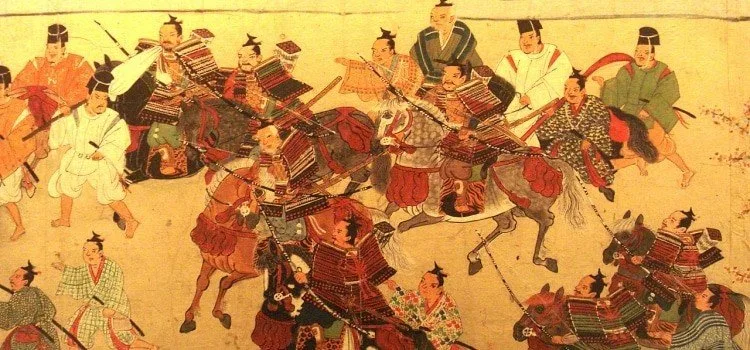
Schoolbook Japan often looks like an emperor on a throne and samurai waiting in the wings. The historical joke is the reverse: for most of the last millennium, the emperor kept the rituals in Kyoto while a military house ran the country from a headquarters that began, quite literally, as a field tent.
That headquarters became the bakufu — the shogunate. The shogun was the de facto governor of Japan; the emperor remained the de jure sovereign. Once you see that double floor, Kamakura, Ashikaga, and Tokugawa stop looking like costume changes and start looking like one long experiment in warrior government.
Contents 5
What a shogun actually was
The title is an abbreviation of sei-i taishōgun (征夷大将軍): commander-in-chief of the expedition against the “barbarians.” In the Heian period it was a campaign rank, used against the Emishi of the north and then put away. After 1185 it stopped being temporary. Minamoto no Yoritomo (1147–1199) already held military hegemony after the Genpei War; in 1192 the court made the title the capstone of a new government.
English calls that government a shogunate. Japanese later used bakufu (幕府), “tent government”: the staff around the shogun, not the man alone. Legally the shogun answered to the emperor. In practice, control of the armies became control of the country. The court in Kyoto kept ceremonies, appointments on paper, and the idea that sovereignty still lived there.
The era is usually divided into three bakufu: the Kamakura period (1185–1333), the Ashikaga or Muromachi period (1336–1573), and the Tokugawa or Edo period (1603–1868). The dates wobble by a few years depending on whether you count a battlefield victory or a formal appointment. The machinery is the same: warrior houses governing in the emperor’s name.
Kamakura Shogunate
The first shogunate sat in Kamakura, on the eastern coast, far from the old capital. Yoritomo did not simply “usurp a throne.” He built offices — the samurai-dokoro for vassals, courts for land disputes — and won the right to appoint shugo (provincial constables) and jitō (estate stewards). That network, more than any single battle, is what made a bakufu.
After Yoritomo’s death in 1199 the Minamoto line as working rulers collapsed within a generation. Power passed to the Hōjō, his in-laws, who ruled as shikken (regents). The shogun became a figurehead: Fujiwara boys and imperial princes were imported from Kyoto to sit in the chair. If you only remember “the shogun ran Japan,” Kamakura is the first correction: sometimes the shogun was furniture, and the regent ran the bakufu.
Emperor Go-Daigo (1288–1339) did topple Kamakura in 1333, in the Kenmu Restoration. Civilian rule lasted long enough to disappoint the warriors who had helped him. Ashikaga Takauji broke with the court, drove Go-Daigo south, and in 1336–1338 set up a new bakufu in Kyoto. The first shogunate was over; the second would live in the emperor’s city and still fail to own the provinces.
Ashikaga Shogunate
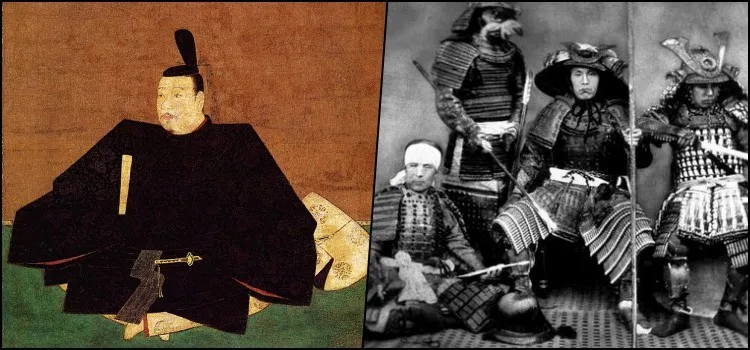
The Ashikaga Shogunate was founded in 1336 by Ashikaga Takauji, who sidelined Go-Daigo and took political control from the Muromachi district of Kyoto. For decades Japan even had two courts: a Northern one backed by the bakufu and a Southern one loyal to Go-Daigo’s line (Nanboku-chō), until reunification in 1392.
This era was not one long civil war from day one. The early Ashikaga decades saw a cultural flowering: the tea ceremony, ikebana, Noh theater, and the architecture of the Kinkaku-ji (Golden Pavilion) in Kyoto all take their Muromachi shape here. Zen aesthetics stuck to the warrior elite more firmly than any law the bakufu managed to enforce in the countryside.
The break is the Ōnin War (1467–1477), a succession fight in Kyoto that burned the capital and advertised that the shogun could no longer police his own city. That collapse is what people mean by the Sengoku period (Warring States). Daimyō fought for land; the Ashikaga name survived on paper. In 1573 Oda Nobunaga expelled the last shogun, Ashikaga Yoshiaki, and the second bakufu was finished — even if Yoshiaki kept claiming the title for years afterward.
Tokugawa Shogunate
The Tokugawa Shogunate, also called the Edo Shogunate, was established in 1603 when Tokugawa Ieyasu was appointed shogun after his victory at Sekigahara in 1600. It was the longest and most stable of the three, lasting a little over 250 years, with the capital at Edo — today’s Tokyo.
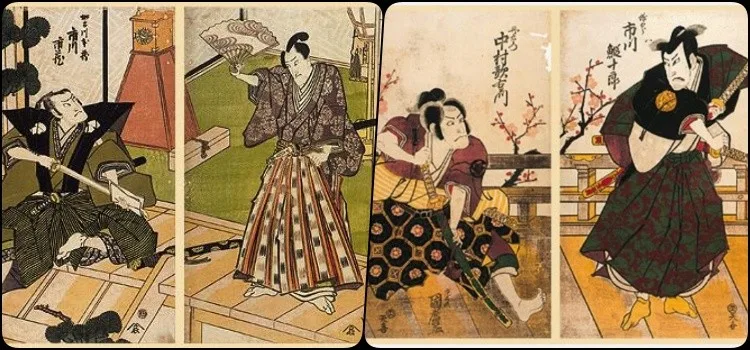
The regime ranked society in a stiff order — samurai, peasants, artisans, merchants, the four-class map of Edo Japan — and kept daimyō rotating through Edo under sankin-kōtai, the alternate-attendance rule that left families in the city as a kind of hostage. Sakoku closed most of the country to overseas traffic. Relative peace did the rest: ukiyo-e woodblock prints, Kabuki, and a city culture that later tourists still chase through Hokusai.
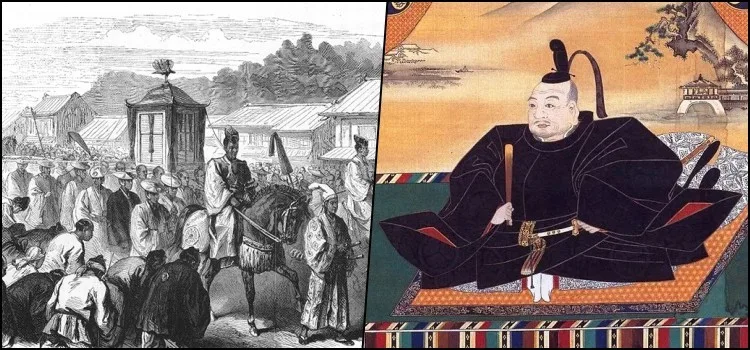
Peace was the point, and also the trap. A warrior government with no war still had to pay stipends. By the nineteenth century the bakufu was negotiating with foreign fleets it could not easily fight, starting with the American squadron under Commodore Perry in 1853–1854. That pressure did not “end feudal Japan” overnight. It made the last shogun’s job impossible.
How the shogunate ended
Tokugawa Yoshinobu, the fifteenth and last Tokugawa shogun, relinquished the office in 1867. On 3 January 1868 the Meiji Restoration announced that executive power had returned to the emperor. The Boshin War (1868–1869) was the military argument that followed. Japan did not wake up as a parliamentary constitutional monarchy on the same morning; that legal shape came later. What ended in 1868 was bakufu rule.
The samurai class lost its privileges in stages, not in a purge. The right to wear swords in public was abolished by the Haitōrei edict of 28 March 1876. Former samurai were recast as shizoku, stipends were converted and then cut, and some of those men walked into the new army, the bureaucracy, or rebellion. They were not “nearly wiped out.” The costume was outlawed; the people remained.
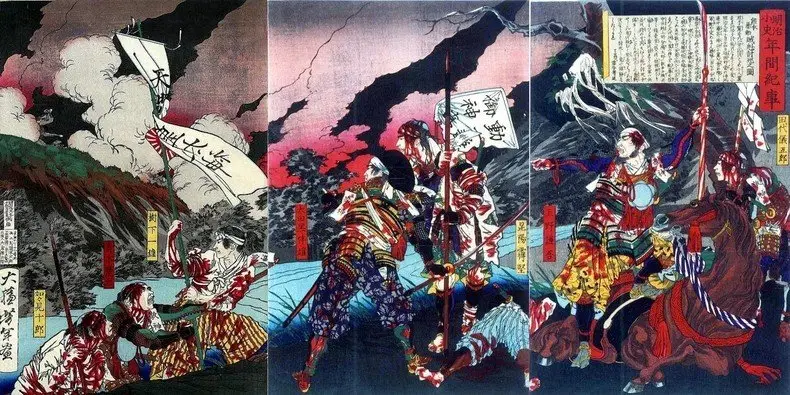
The shogunate era was far from being only a dark, war-torn stretch. Across those 700 years Japan produced the samurai ethic later packaged as bushido, Zen-inflected arts, the great castles of Honshu, and the woodblock prints of Hokusai. The bakufu was a military government that learned, in Edo, how to keep the country quiet — until quiet was no longer enough.

Community
Comments
0 comments
There are no published comments in this language yet.
Send comment