
Anime and manga return to the seven deadly sins because the framework gives a character an instant shape. A name such as Greed or Wrath suggests conflict before the character even speaks. Some stories make that connection explicit; others invite a looser thematic reading.
In Japanese, the familiar expression is 七つの大罪 (Nanatsu no Taizai), or “the seven deadly sins.” It is also the Japanese title of The Seven Deadly Sins. The idea itself comes from a Western moral tradition, but Japanese creators have used its language, symbols and contrasts in very different ways.
It helps to separate official labels from interpretation. In Fullmetal Alchemist, the seven homunculi are literally named for the sins. In The Seven Deadly Sins, the central knights carry sin titles tied to their histories. In other anime, a sin can be a useful lens for a character without being a canon label. That distinction makes the comparisons below more interesting and less misleading.
Contents 9
Which anime use the seven deadly sins?
These series use the idea directly, either in names, titles or character design:
- Fullmetal Alchemist;
- The Seven Deadly Sins / Nanatsu no Taizai;
- Sin: Nanatsu no Taizai;
- Inuyasha;
- Bleach;
- Digimon.
Anime also relies on shorthand archetypes in less formal ways. A proud rival, a wrathful avenger or a character driven by envy can signal their role quickly, much as the deredere character types signal familiar personality patterns.
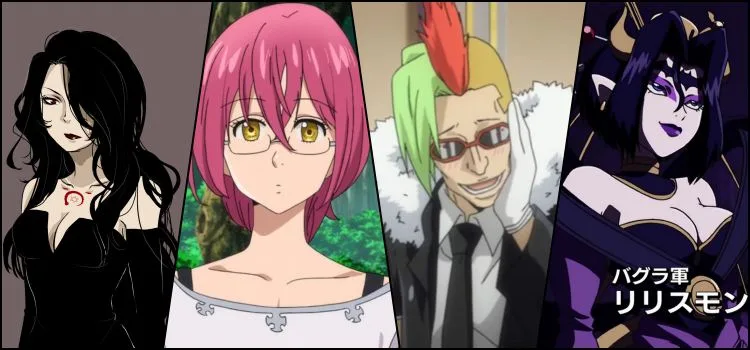
Lust — 肉欲 (Nikuyoku)
Lust concerns desire that has become uncontrolled. In Fullmetal Alchemist, Lust is one of the homunculi; in The Seven Deadly Sins, Gowther bears the Goat Sin of Lust. Elsewhere, the connection is usually thematic rather than official.
- Lust (Fullmetal Alchemist);
- Gowther (The Seven Deadly Sins);
- Mukotsu (Inuyasha);
- Szayelaporro Granz (Bleach);
- Asmodeus (Angel Sanctuary);
- Lussuria (Katekyo Hitman Reborn!);
- Laylamon (Digimon).
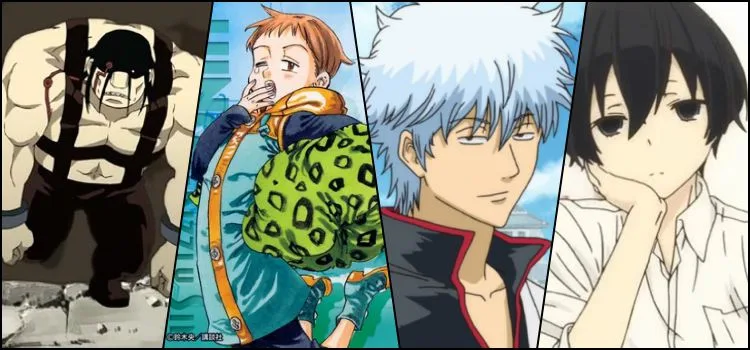
Sloth — 怠惰 (Taida)
Sloth is more than sleeping late. It points to inaction, avoidance and the refusal to carry a responsibility. That is why quiet or unhurried characters can be read as slothful even when they are not simply lazy.
- Sloth (Fullmetal Alchemist);
- King (The Seven Deadly Sins);
- Suikotsu (Inuyasha);
- Coyote Starrk (Bleach);
- Astharote and Astarte (Angel Sanctuary);
- Belphegor (Katekyo Hitman Reborn!);
- Belphemon (Digimon);
- Shikamaru (Naruto), Gintoki (Gintama), Shunsui (Bleach) and Tanaka-kun.
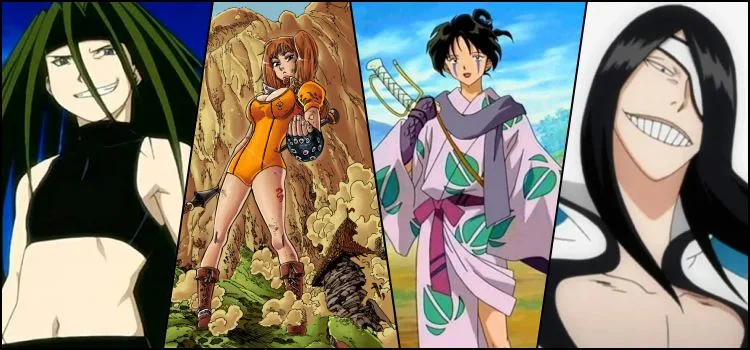
Envy — 嫉妬 (Shitto)
Envy is the pain of seeing someone else possess what you want, mixed with resentment. Japanese shitto can cover both envy and jealousy, which makes it a useful term when a rivalry turns personal.
- Envy (Fullmetal Alchemist);
- Diane (The Seven Deadly Sins);
- Jakotsu (Inuyasha);
- Nnoitra Gilga (Bleach);
- Leviathan (Katekyo Hitman Reborn!);
- Leviathan (Angel Sanctuary);
- Leviamon (Digimon).
Wrath — 激怒 (Gekido)
Wrath is anger pushed into aggression, impatience or revenge. It suits the hot-headed hero, but it can be just as effective for an antagonist whose rage becomes a method of control.
- Wrath (Fullmetal Alchemist);
- Meliodas (The Seven Deadly Sins);
- Ginkotsu (Inuyasha);
- Yammy Llargo (Bleach);
- Xanxus (Katekyo Hitman Reborn!);
- Barbelo (Angel Sanctuary);
- Daemon (Digimon);
- Katsuki Bakugo (My Hero Academia).
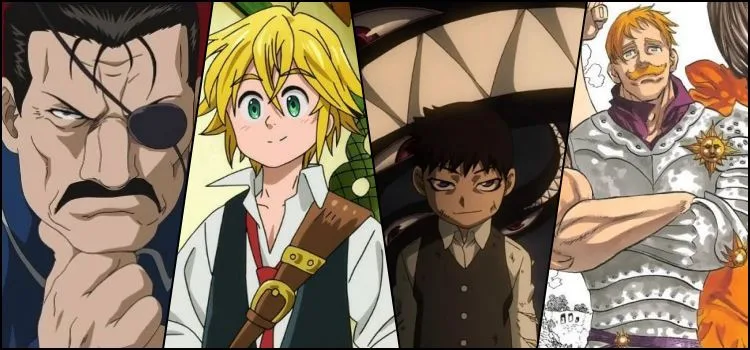
Pride — 傲慢 (Kouman)
Pride becomes a vice when confidence hardens into contempt or superiority. That makes it a natural fit for rulers, prodigies and rivals who cannot bear to be challenged.
- Pride (Fullmetal Alchemist);
- Escanor (The Seven Deadly Sins);
- Bankotsu (Inuyasha);
- Baraggan Louisenbairn (Bleach);
- Belial (Angel Sanctuary);
- Superbi Squalo (Katekyo Hitman Reborn!);
- Lucemon (Digimon).
Gluttony — 暴食 (Boushoku)
Gluttony begins with excessive eating and drinking, but stories can stretch it into consumption without restraint. The distinction matters: a character with a famous appetite is not automatically a symbol of gluttony.
- Gluttony (Fullmetal Alchemist);
- Merlin (The Seven Deadly Sins);
- Kyokotsu (Inuyasha);
- Aaroniero Arruruerie (Bleach);
- Gola Mosca (Katekyo Hitman Reborn!);
- Beelzemon (Digimon);
- Beelzebub (Angel Sanctuary);
- Rize Kamishiro (Tokyo Ghoul).
Luffy, Goku, Natsu and Usagi are memorable for how much they eat. They are useful examples of the visual gag, not proof that their stories cast them as embodiments of gluttony.

Greed — 貪欲 (Donyoku)
Greed is the urge to possess more: wealth, power, objects or even other people. In Fullmetal Alchemist, Greed makes that desire explicit; Ban carries the Fox Sin of Greed in The Seven Deadly Sins.
- Greed (Fullmetal Alchemist);
- Ban (The Seven Deadly Sins);
- Renkotsu (Inuyasha);
- Grimmjow Jaegerjaquez (Bleach);
- Mammon (Katekyo Hitman Reborn!);
- Barbamon (Digimon);
- Mammon (Angel Sanctuary);
- Nabiki Tendo (Ranma ½).
Why this pattern works in anime
The seven sins give a writer a shared vocabulary for flaws, desires and reversals. Fullmetal Alchemist turns the framework into named antagonists; The Seven Deadly Sins turns it into titles that complicate first impressions. Other series borrow a trait for a rival, villain or comic character without adopting the entire system.
So the best question is not whether every character neatly represents one sin. Ask what the comparison reveals about that character’s choices, role and relationships. That is where the reference becomes more useful than a simple list.





Community
Comments
0 comments
There are no published comments in this language yet.
Send comment