
Aikido is a Japanese art that translates to "the way of Unification with the energy of life," or "the way of harmonious spirit." In this article, we will talk about the martial art aikido and its curiosities.
We will discuss the origin of aikido, what aikido is for, the correct ways to use aikido, among various other explanations about this Japanese martial art. The summary below will help you navigate:
Contents 9
What is aikido?
Aikido or Aiquidô [合気道] is a martial art created in Japan after World War II by the master Morihei Ueshiba between 1883-1969. This martial art consists of the principle of harmony between practitioners and the universe.
In all martial arts, fighters should defeat or destroy the enemy, as they were developed and transmitted through generations by ancient Samurai and their experiences in battles.
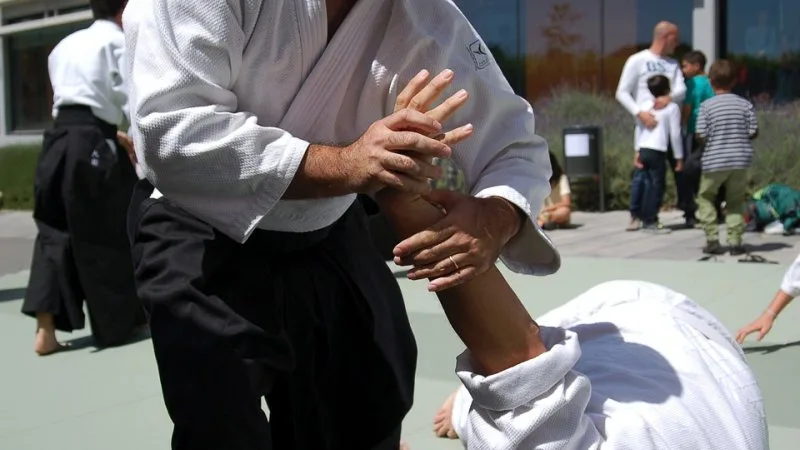
Unlike fighting techniques, aikido uses a combination of techniques and the opponent's strength to harm themselves. Thus, aikido consists of using the opponent's force against themselves.
One of the advantages is that these skills allow the fighter to exit a violent battle without taking damage by simply using their strength or other attack techniques.
the founder of aikido
To understand more deeply about Aikido, we need to know the history of Morihei Ueshiba, the founder of the martial art aikido, who was also called Great Sensei (oosensei -[大先生]).
In 1919, Morihei Ueshiba met Onisaburo Degushi from the Omoto-kyu sect, who taught a spiritual technique called Chin Kon Kishin, through concentrated meditation, increasing his serenity and making him more relaxed, reinforcing the concepts of harmony within him.
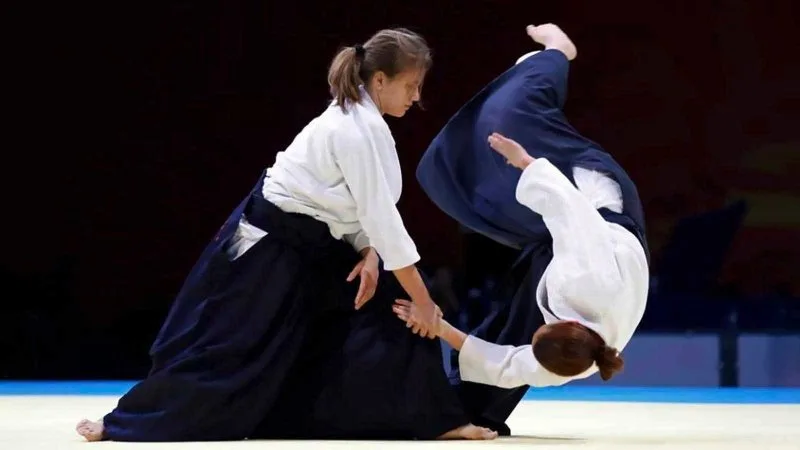
Knowing that there could be no harmony in his battles, Morihei Ueshiba began to create concepts for his own Martial Art, where the goal was not to win or destroy an enemy, but to end a conflict.
Then he opened a small school called “Ueshiba School,” in 1923, he named his martial art Aiki Bujutsu, and began traveling throughout Japan teaching others his incredible skill that quickly spread and became popular.
what does the word aikido mean?
The word aikido is formed by three kanji ideograms:
The term Ai [合] means Harmony which refers to the characteristic of Aikido that, to control your opponent, it is necessary to become one with them, so that as a single unit, you end up dominating your opponent.
The Ki[気]means the Energy employed in the act. It is a universal energy, existing in things, which anthropologists refer to as animism.

The Do [道] means the Way, in the sense of a path to personal and spiritual evolution; it has the same meaning as Tao, in Taoism. The do [道] often accompanies the name of other martial arts.
The term AIKI [合気] refers to the beginning of the fight, where the movement of the attackers is absorbed to control their actions with little effort.
characteristics of aikido
In aikido, as is practically the case in all Japanese martial arts, training is based on physical and mental exercises. The physical training in aikido encompasses both fitness and physical conditions as well as preparation and training in specific techniques of the martial art.
One of the other characteristics of Aikido, also characterized as a Budo, is to enhance one's personal and spiritual form through wisdom and experience in it.
When a fighter is confronted, they must evade their opponent's strikes as much as possible so that they do not get hurt too much in their daily battles or in their everyday defenses.
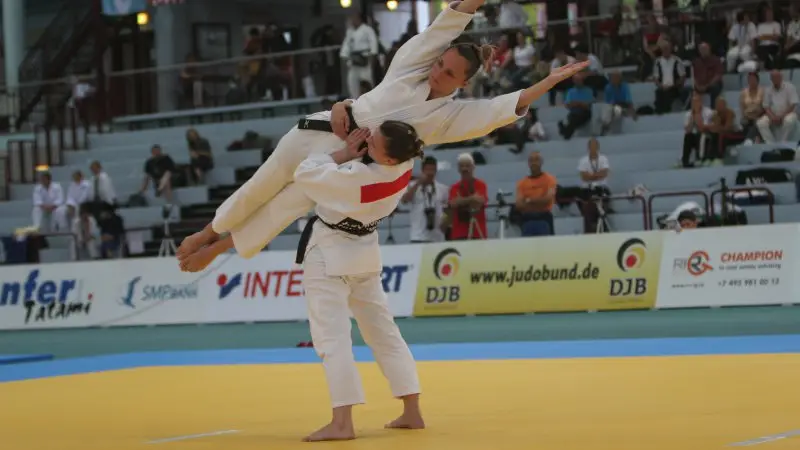
The idea of this principle is to never oppose the opponent's strike or effort; if they pull, push; if they push, turn the body, in both cases, to use the opponent's momentum to your advantage.
Another characteristic of Aikido is that it prioritizes peaceful solutions to conflicts; it is always better that demands are not resolved through combat, but rather through dialogue. This is important for both the inner plane [internal conflicts] and the outer plane [external conflicts].
Another characteristic of Aikido is that this martial art is not used for combat or confrontation but rather for personal defense, so if you are looking for a martial art to use in your fights, it is better to find another type of martial training, but if you want to learn to defend yourself, aikido is the right art.
Distinguishing the physical world from the spiritual
Ancient masters taught that warriors did not distinguish between the physical and spiritual worlds; their technique was elegant and refined, just as was their spirit; therefore, by giving their all in training to improve and refine their technique, the practitioner also enhanced their spirit.
But they can control themselves not only in confrontations that require physical effort but also in the difficulties and setbacks that occur in daily life, leading them to trust even more in their effective personal defense techniques.
Thus, in Aikido, there is no competition, attacking strikes, or any other type of manifestation of aggressiveness or violence, but in fact, the learner manages to control their aggressiveness, becoming calm, patient, and balanced in any situation.
How did aikido arrive in Brazil?
Aikido arrived in Brazil on January 9, 1963, through Shihan Reishin Kawai, 8th Dan of Aikido. His disciples affectionately call him “Kawai Sensei”.
He founded the South American Union of Aikido, being a teacher of the classes at the Central Academy that he himself built. Over time, the art spread throughout Brazil and became one of the most popular in the country.
This entity ended up being one of the largest current organizations with Dojos throughout Brazil, Peru, Uruguay, Argentina, Denmark, and Spain.
What are aikido trainings like?
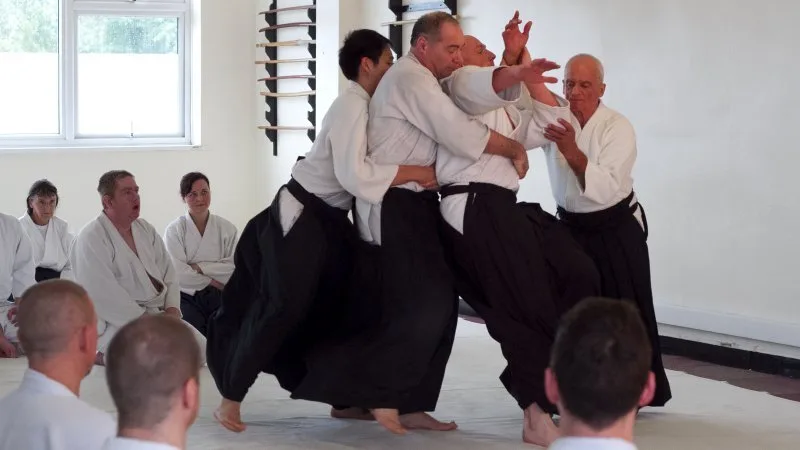
The training of aikido is primarily based on the participation of two partners practicing specific movements. The pattern consists of sequences of attack movements performed by the uke.
Uke [受け] means the receiving body, the receiver of the technique, who usually initiates an attack against the rival applying the technique.
The rival applying the technique is called tori [取り], which means the one who grabs, or shite [仕手], which means the one who executes. When a throwing technique is performed, they can also be called nage [投げ], which means thrower.
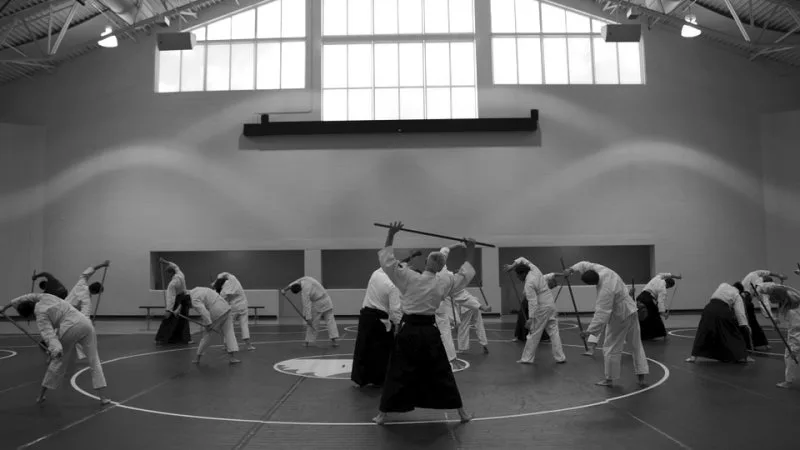
One of the trainings that are part of aikido develops the BODY with physical activity for the movements of the techniques in an aerobic manner, but it requires muscle strength.
It is also necessary to develop the MIND by promoting concentration, perception, discipline, respect, and self-confidence.
It is also necessary to develop the SPIRIT, creating within oneself honor, gratitude, emotional balance, peace, and finally harmony.
14 rules used in aikido
There are 14 rules used in aikido that we can take into consideration, they are:
- 1-Maintain Discipline;
- 2-Do not get angry;
- 3-Do not get sad;
- 4-Do not harbor hostile feelings;
- 5-Be understanding and tolerant;
- 6-Be calm;
- 7-Be peaceful;
- 8-Maintain ethics;
- 9-Make friends with everyone;
- 10-Respect God and people;
- 11-Be humble;
- 12-Be fair and honest;
- 13-Be aware that Aikidô is one of the paths that lead to God;
- 14-Be aware that the practice of Aikidô is based on self-knowledge;
the great masters of aikido
To conclude the article, let's list some aikido masters for you to research. I hope you enjoyed the article; if you did, please share and leave your comments.





Community
Comments
0 comments
There are no published comments in this language yet.
Send comment