
The Northern Alps of Japan are home to one of the country's most impressive routes: the Tateyama Kurobe Alpine Route. It is famous for its towering snow walls, which can reach up to 20 meters high in spring. But the route offers much more than frozen scenery: it combines history, engineering, and mountain landscapes into a journey that stays with visitors.
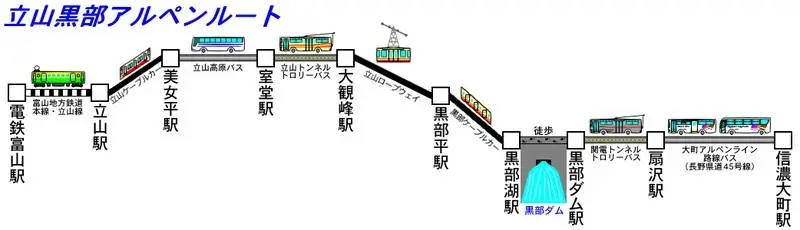
Connecting Toyama with Omachi in Nagano Prefecture, the Alpine Route is a striking example of how nature and infrastructure can coexist. The route itself is part of the experience, with different transport systems and viewpoints unfolding along the way. Let's take a closer look at what makes it so special.
Contents 7
The Alpine Route: a journey through the Northern Alps
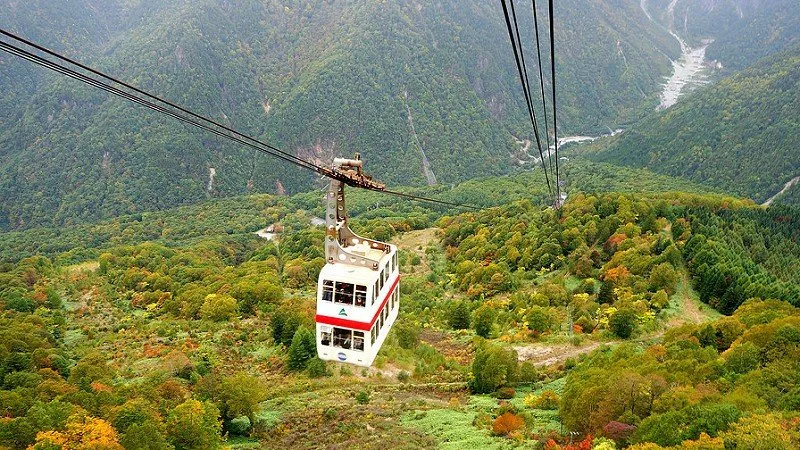
The Tateyama Kurobe Alpine Route spans 37 km between Toyama and Omachi, combining buses, trolleybuses, trams, and cable cars. This integrated system lets visitors cross the Northern Alps while taking in constantly changing views.
Murodo and the snow walls
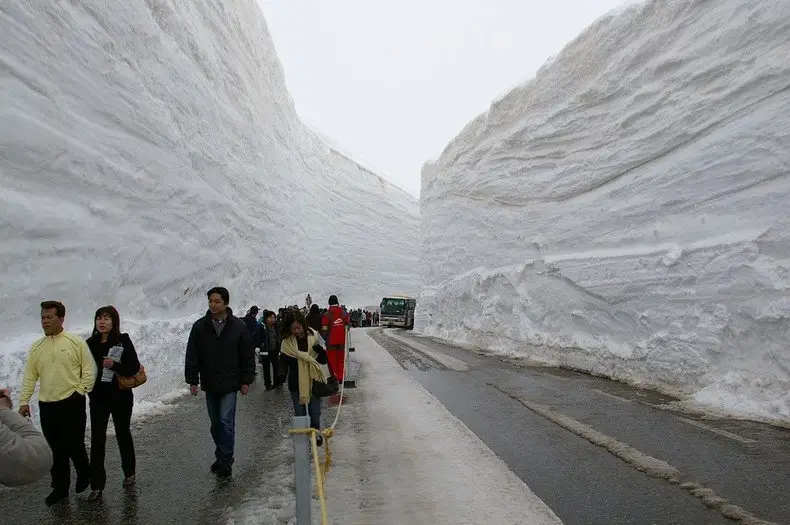
In spring, the massive snow walls of Murodo are the highlight. Rising up to 20 meters, they form the famous white corridor known as "Yuki no Otani." Visitors can walk along the prepared paths beside the walls, an almost surreal experience that attracts travelers from around the world.
Other activities on the route
Besides the snow walls, the Alpine Route offers several other attractions for visitors who want to stay close to nature. Some options include:
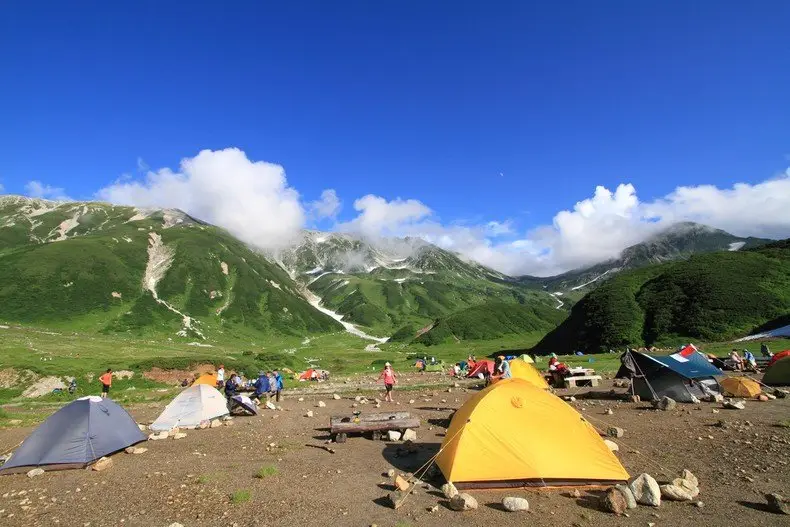
- Hiking trails and alpine flowers: In summer, the mountain paths open to rare flowers and wide-open views.
- Lodging: Cabins and hotels make it possible to explore the route at a slower pace.
- Viewpoints: Several stations invite you to look out over the mountains from different elevations.
The powerful Kurobe Dam
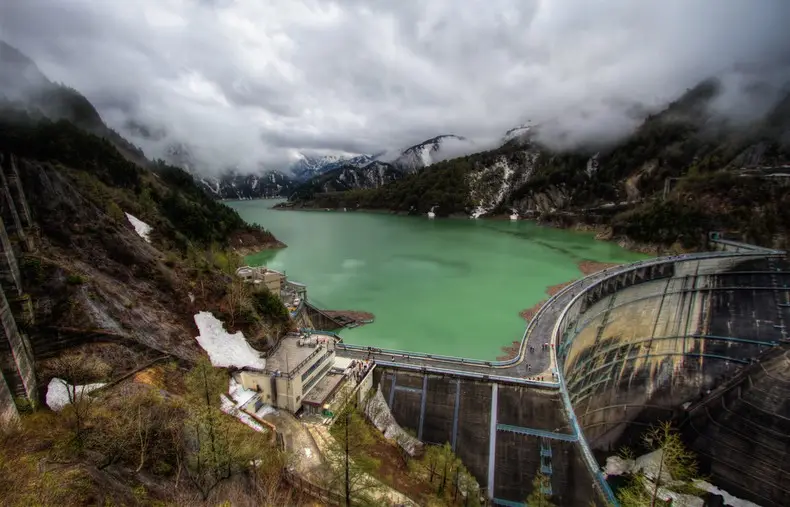
Another highlight of the route is the Kurobe Dam, Japan's tallest dam. Built in the 1950s, it became a landmark of Japanese engineering, and its construction required years of difficult work and a heavy human toll.
The dam is 492 meters long and 186 meters high. In summer, the controlled release of water creates a dramatic sight that draws thousands of visitors. To reach the dam, travelers ride a trolleybus through tunnels cut into the mountains, which adds a sense of adventure to the trip.
History and cultural significance of the region
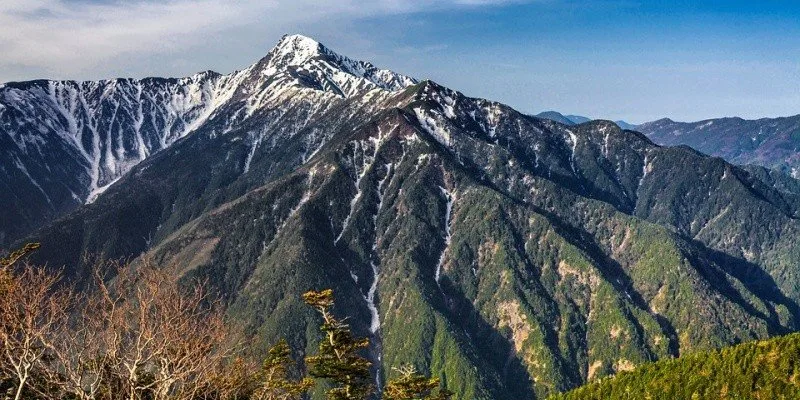
The Tateyama Kurobe Alpine Route is more than a sightseeing route; it also has deep historical and cultural meaning. Tateyama is considered sacred in Japan and is associated with Mount Tateyama, one of the country's Three Sacred Mountains, alongside Mount Fuji and Mount Haku. For centuries, pilgrims crossed these mountains as part of spiritual rituals, believing they offered a path to the spirit world.
The Kurobe Dam, built in the 1950s, also symbolized Japan's postwar effort to rebuild its infrastructure and secure vital hydroelectric power for economic recovery. That mix of spirituality and engineering gives the region its distinct character.
Practical tips for visitors
If you plan to visit the Tateyama Kurobe Alpine Route, it is worth planning ahead, especially if the snow walls are your main goal. The route opens seasonally, and each part of the year shows a different side of the mountains.
These tips can help make the trip smoother:
- Best time to visit: The snow walls are most impressive between April and June. In summer, the hiking trails and alpine flowers offer a different kind of appeal.
- What to bring: Warm clothing, even in spring, and sturdy walking shoes are essential.
- Avoid weekends: The area can get busy, especially during Japanese holidays, so weekdays are usually more relaxed.
- Book lodging early: If you want to stay overnight on the route, plan ahead because accommodation options are limited.
If you want to experience the snow walls and the Kurobe Dam, it is best to keep the short season and changeable mountain weather in mind.
Videos of Tateyama Kurobe
A short video gives a better sense of the route and the scale of the snow walls.

Community
Comments
0 comments
There are no published comments in this language yet.
Send comment